

In the modern age of ultra-compact, polymer-framed, space-age semi-automatic pistols, why would anyone own a revolver? There are actually several valid reasons to choose a revolver over an auto-loader. But to really understand the virtues of wheel guns, it’s important to delve into the history of revolvers and truly understand why they were made and how they’re still relevant.
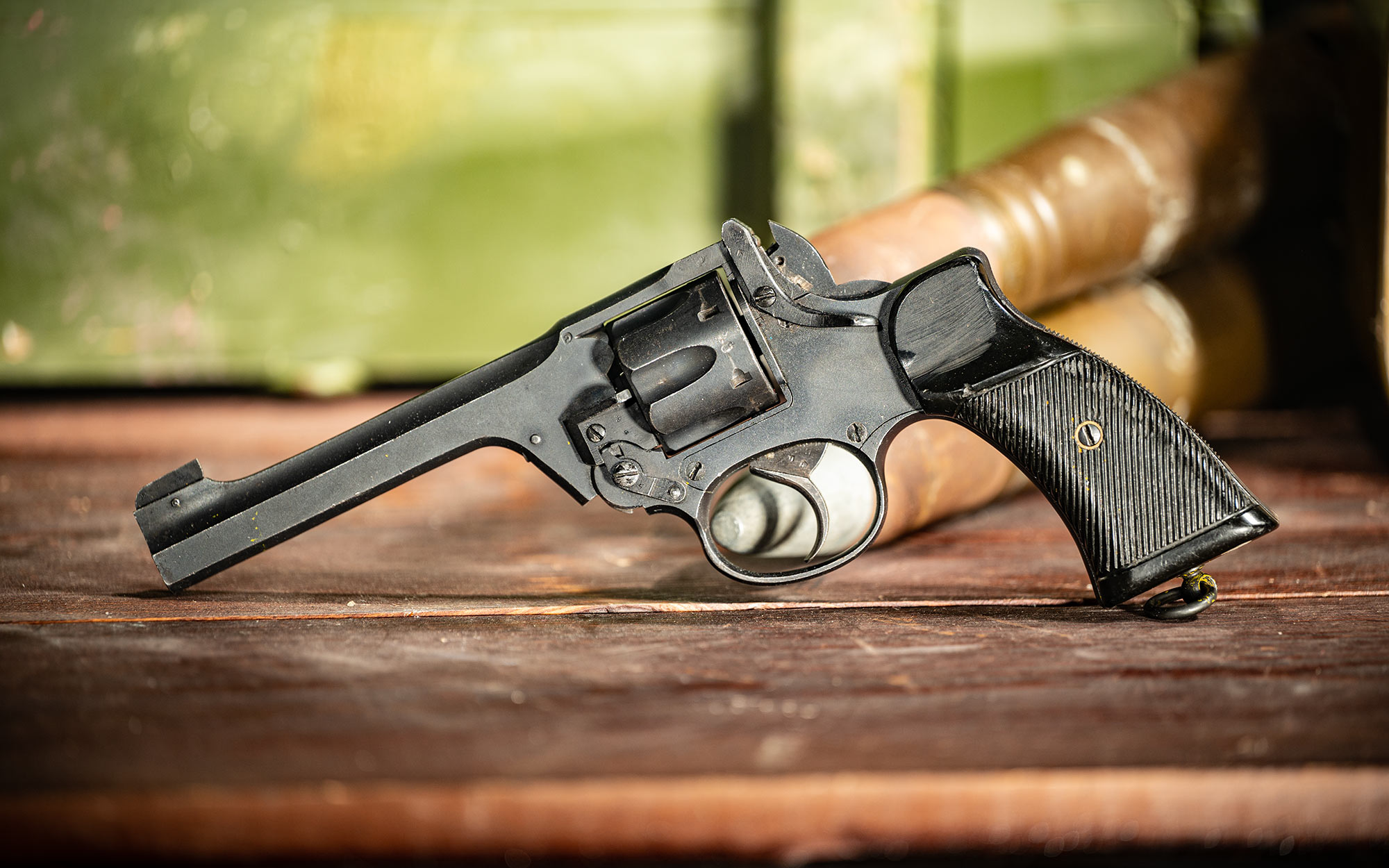
Why Were Revolvers Invented?
The first revolvers were an ingenious solution to the limited ammunition capacity of black powder firearms. Some of the earliest revolvers didn’t even use metallic cartridges - which is precisely why they were such an advantage over previous designs.
For the sake of brevity, we’ll start our history lesson on revolvers after the advent of percussion firearms. For the uninitiated, these guns use a percussion cap to ignite the gunpowder in the chamber or cylinder, which then launches the bullet down the barrel.
These guns suffer from lengthy reloading times because the powder has to be poured into the chamber before using a ramrod to seat the bullet against it. Once that’s complete, the shooter still needs to place a percussion cap on top of the gun’s nipple before cocking the hammer and pulling the trigger.
With practice, this can be done in around one minute. But if you’re a soldier facing hundreds of adversaries, that’s a very long minute. But what if multiple rounds could be prepared at the same time?
That’s precisely the idea behind revolvers. With percussion revolvers, a shooter still had to go through the lengthy reloading process, but now they could have six rounds loaded and primed. The shooter only needed to cock the hammer between shots to fire multiple rounds.
Because of the size of the bullet and the charge necessary to load a full-powered rifle round, this technology was mostly limited to handguns. There are a few examples of revolver carbines, but these were all chambered for pistol rounds.
Several years later, when metallic cartridges were introduced, revolvers were adapted to fire these new self-contained rounds. This made revolvers even faster to load and operate and saw their popularity with militaries explode worldwide. Multiple European militaries issued revolvers to officers and NCOs, as they gave these soldiers excellent firepower at close range in a package that was small enough not to impede them.
However, with the introduction of self-loading or semi-automatic firearms, many nations abandoned their revolvers in favor of these new weapons. So, does that mean that revolvers became obsolete?
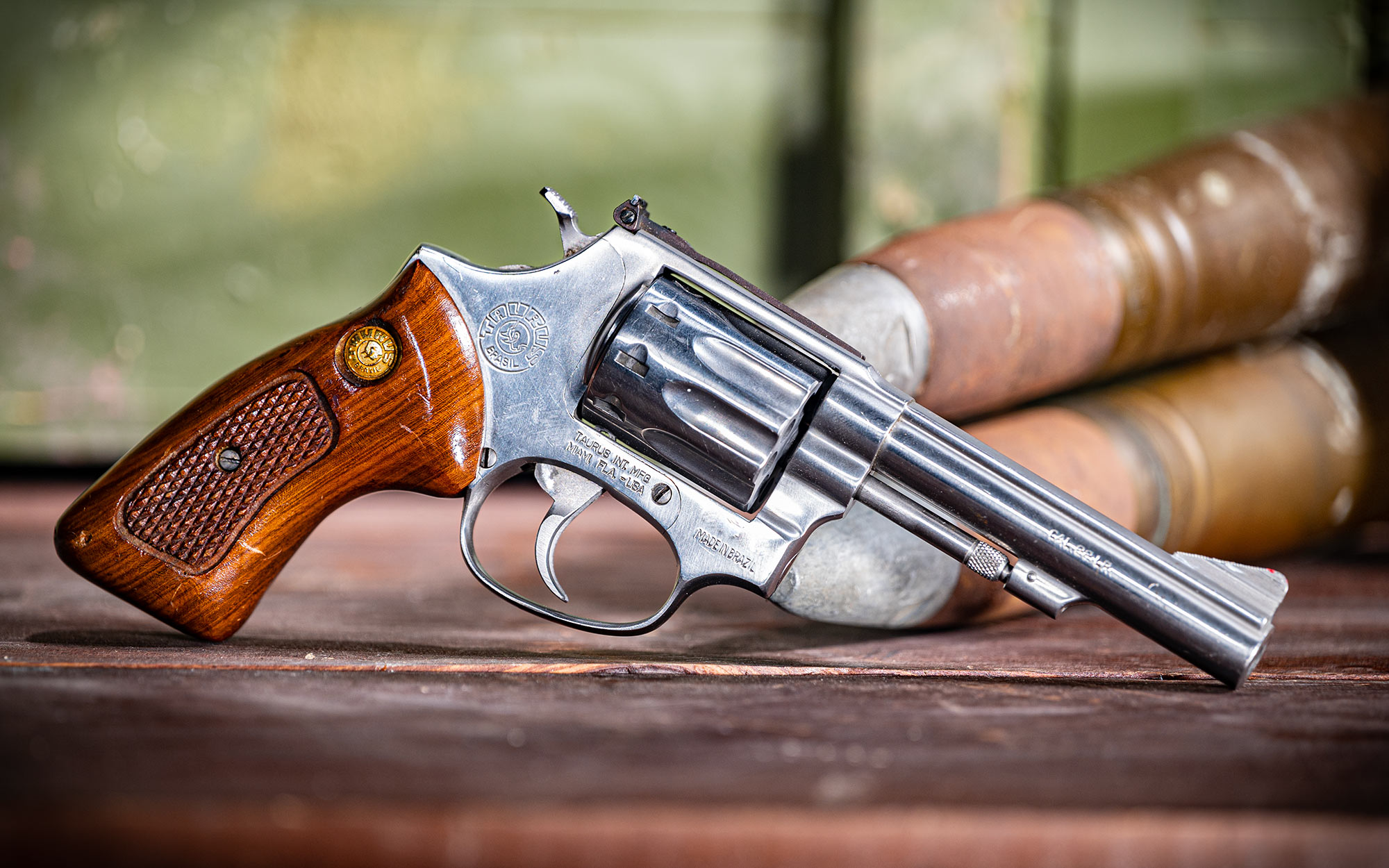
Advantages of Revolvers
The short answer is no, but let me explain. While it was and is true that revolvers have lower capacity and slower reloads than detachable magazine semi-automatic firearms, they still have some distinct advantages over them.
For starters, revolvers are capable of chambering much larger rounds than semi-automatics of similar size. Yes, some semi-automatic pistols like the Magnum Research Desert Eagle are chambered in massive magnum rounds, but the Desert Eagle is also enormous and excessively heavy. Not to mention not terribly reliable.
Why are revolvers capable of handling these big rounds while auto-loaders are not? Because nearly every traditional semi-automatic handgun combines the grip with the magazine well. If a company designed a pistol for a massive or extra long round like .45-70 Gov, the pistol’s grip would have to be huge to accommodate it. On a revolver, the cylinder holds the rounds, and thus, the design can be adapted to facilitate the use of longer rounds.
One area where modern revolvers shine is with handgun hunting. With the exception of the Desert Eagle, most autoloading handguns are chambered in rounds too anemic for ethical hunting of medium or large game. Yes, a skilled marksman can take a deer with a .45 ACP pistol, but bigger rounds like .44 Magnum are much more reliable hunting tools.
In fact, revolvers are capable of handling massive, ultra-powerful rounds like .454 Casull and .500 S&W. Both of these rounds make excellent hunting and self-defense choices in bear country. To give you some perspective, the average .454 Casull round boasts around 2,500 joules of energy at the muzzle, while the most prolific centerfire self-defense round, 9mm para, only generates around 600 joules.
All that extra energy translates into raw power that can punch through the thick skulls of dangerous animals like wild boars and grizzly bears. Though as a word of caution, if you’re close enough to shoot a bear with a handgun, you’re too close - use a high-powered hunting rifle.
Concealed Carry Revolvers
Another area where revolvers really shine is as a self-defense or concealed carry weapon. Although they may be limited in capacity compared to magazine-fed handguns, they make up for this with unparalleled reliability and terminal ballistic energy.
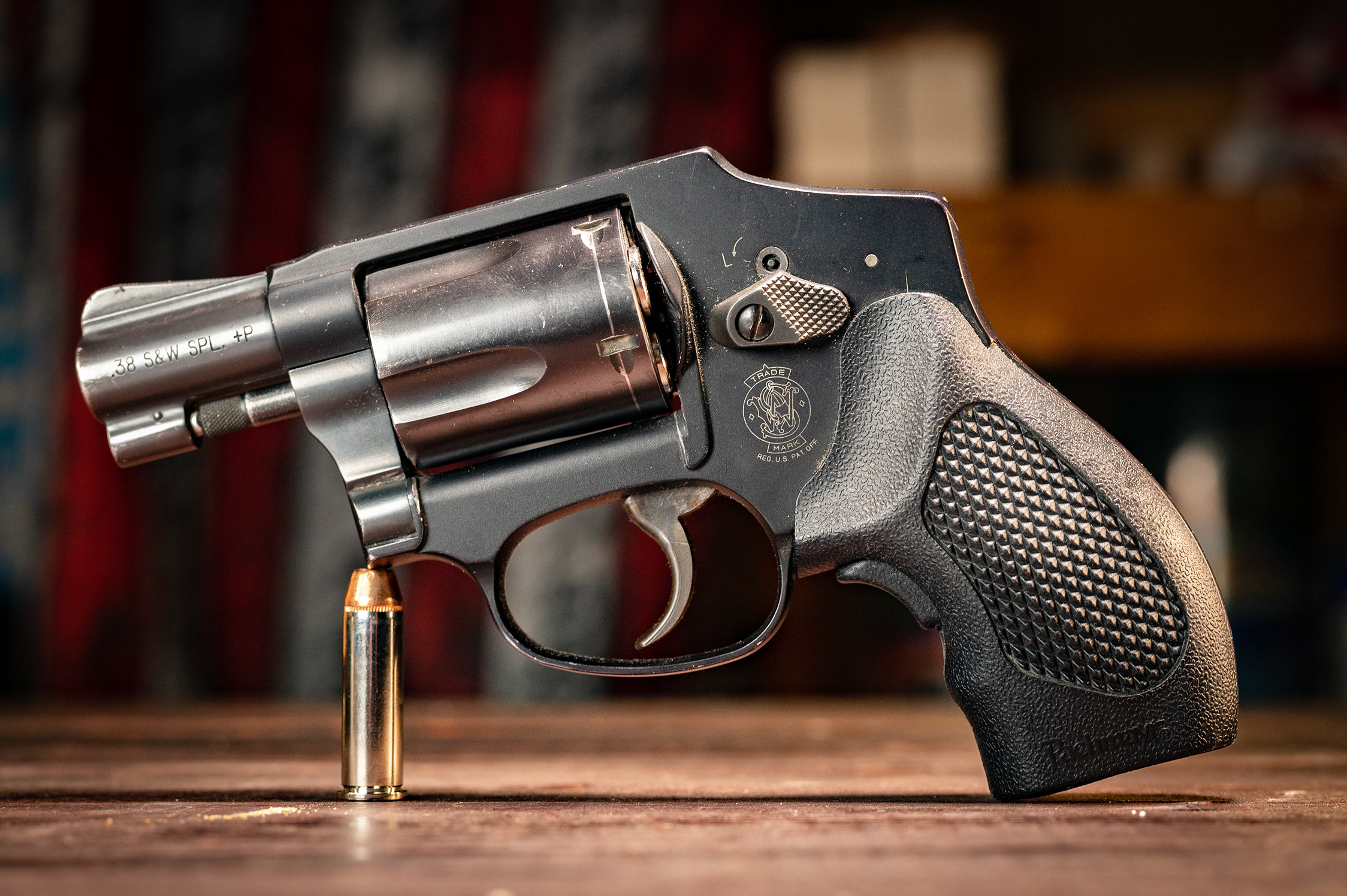
This is why snub-nosed .357 Magnum revolvers are so popular as a deep concealment weapon. Yes, they kick like a mule, but they do so because they’re delivering fight-stopping power from an ultra-compact package.
And although mechanically complex, revolvers aren’t dependent on ammunition consistency. This means a revolver will successfully fire a round, whether it’s a super mild plinking load or a veritable cannon load designed to stop a charging animal. This is because the energy that cycles the next round is a human one - the shooter’s hand.
Whether that’s a shooter using their thumb to cock the hammer on a single-action only revolver or their trigger finger on a double-action gun, as long as the shooter’s hand works, their revolver will fire until it’s out of ammo. With semi-automatic handguns, they’re designed to function with cartridges loaded within certain parameters. This is why it’s very important to test a chosen self-defense round before committing it to home or self-defense use.
With a revolver, the only thing a shooter has to check when switching ammunition types is the point of impact versus the gun’s point of aim. On larger revolvers, this isn’t a big issue since the sights are adjustable, but with compact guns like the old S&W 442 or even the 36-1, swapping between the standard 130gr FMJ round and a heavy 158gr lead round can mean a massive vertical shift in zero.
While nearly all modern revolvers take this into account and have a factory-set zero that splits the difference between them, older guns like pre-lock Smith & Wesson revolvers are often zeroed specifically for 158gr rounds and will fire eight inches low at 15 yards with lighter ammunition. This is especially noticeable on long-barrelled revolvers capable of firing in single-action mode because revolvers are capable of exceptional accuracy.
Are Revolvers Accurate?
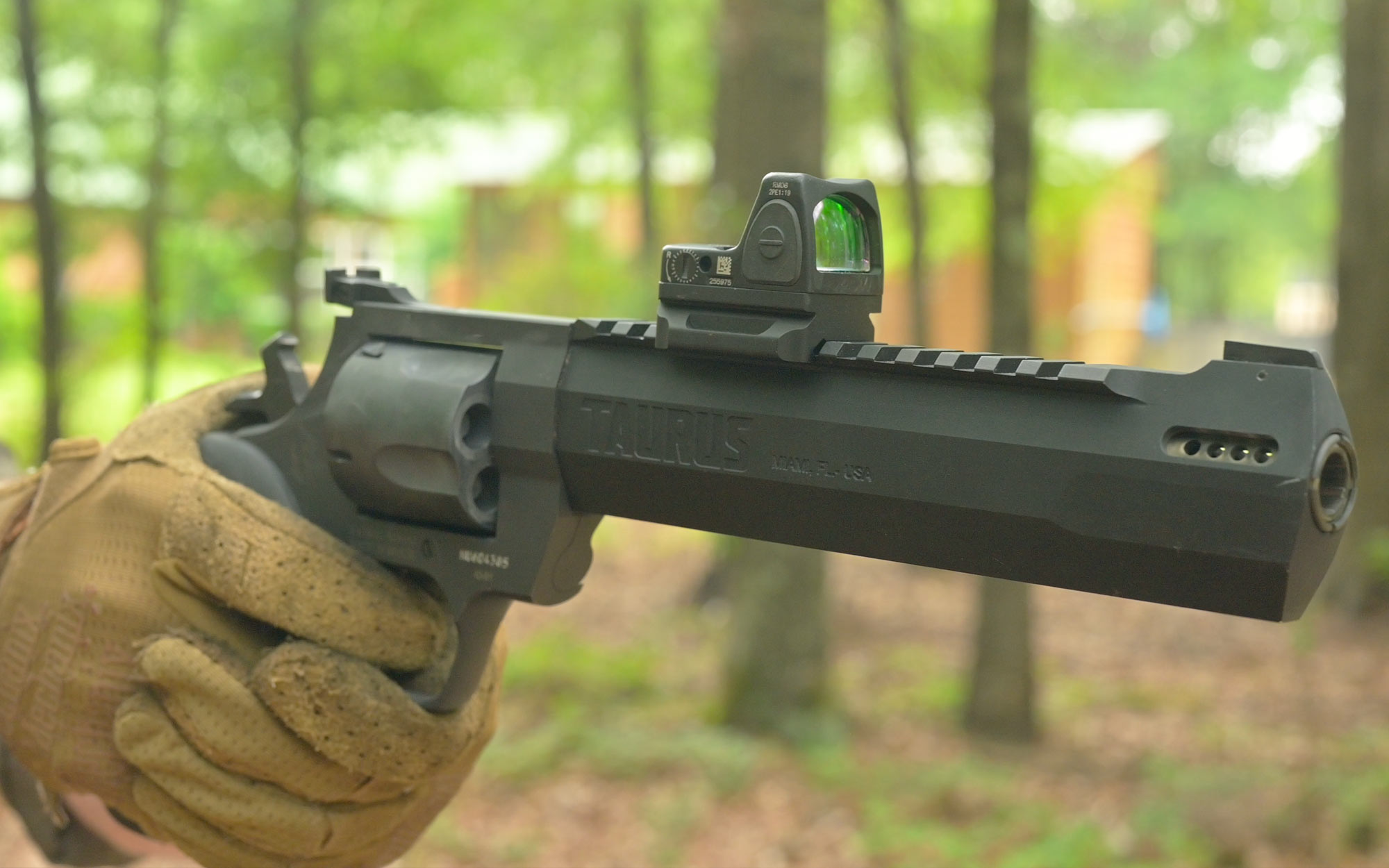
Yes, but Revolvers are only as accurate as their barrel and ammunition, but the same can be said of all guns. What makes revolvers more accurate than the average semi-automatic pistol is the fact that the barrel on a revolver is fixed.
On all semi-automatic pistols chambered in 9mm or greater calibers, the barrel functions as part of the locking mechanism for the gun. Look at the most prolific handgun in America, the Glock. At the beginning, when the slide is pulled back, the barrel drops down slightly to unlock itself from the slide.
This is because 90% of modern combat or defensive handguns today utilize the Browning cam-lock system first introduced with the Browning Hipower handgun. The other ten percent are either 1911s that use a swinging link or oddball rotating barrel designs like the Bond Arms Bullpup or the Beretta PX4.
With all of these designs, the barrel must move to unlock the action and allow the slide to travel rearward. After the slide compresses the recoil spring, it travels forward, and the barrel cams back upward and flush with the slide, locking the action.
Although the difference is minor, every time a gun does this, the barrel is in a slightly different position. And since the sights on these guns are mounted to the slide and not the barrel, the zero will shift ever-so-slightly between shots.
Is it enough to matter? Realistically, no. Unless you’re trying to hit an acorn off a tree branch at 50 yards, the difference will be imperceptible. But from a mechanical standpoint, a revolver is inarguably more accurate.
Is It Worth Owning a Revolver?
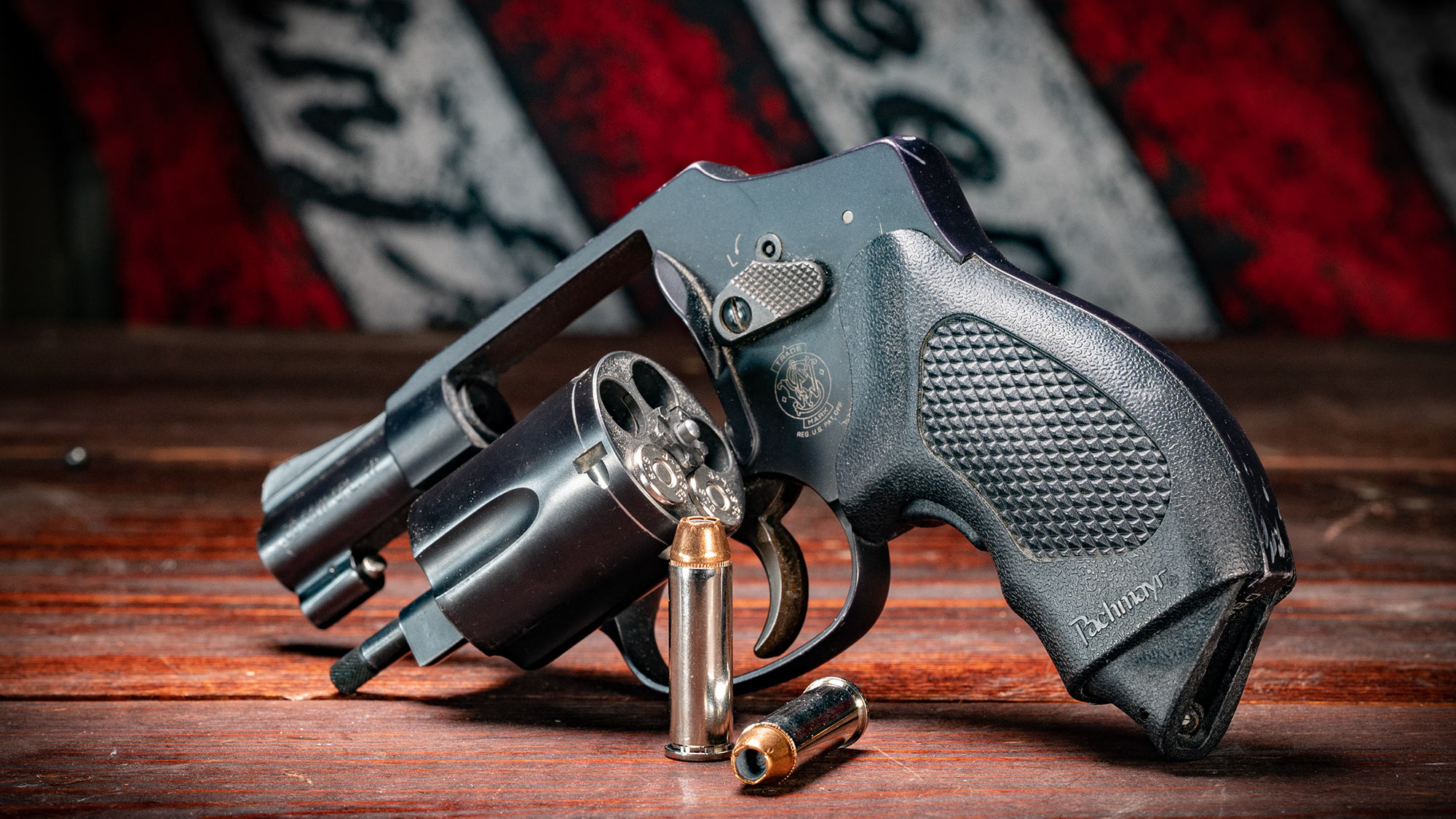
To me, 100% it is worth owning a revolver. I enjoy them for multiple reasons. I like hunting deer with my .454 Casull revolver at close range, and I also love the rock-solid reliability of my snub-nosed, hammerless Smith and Wesson 442 chambered in .38 special. For the latter, I find that snub-nosed revolvers make an ideal backup pistol since they require nearly zero maintenance and, since they lack a manual safety, are perfect for the role of “panic gun.” This means that something you grab as a last-ditch means you need to defend yourself when a threat is on top of you.
More than just that, I find that large-frame revolvers chambered in mild calibers like .38 special are fantastic guns for teaching new shooters. They have enough recoil to ‘feel serious’ but not enough to make new shooters develop bad habits. They’re also functionally simple enough that gun-shy shooters can very quickly understand every working component of the gun.
This might seem silly to experienced shooters, but I’ve taught countless people how to shoot, and many of them are terrified of guns “just going off.” Of course, guns don’t actually do this, but if you’ve never shot one before, this isn’t abundantly clear.
When I take these shooters out to the range, they can see the round in the cylinder and instantly know whether the gun is loaded or not. When they pull the hammer back and release it, they can see the firing pin's indent on the primer of the spent casing. There’s no mystery going on under the hood, and because of this, I find them excellent teaching tools. This, and they aren’t as dependent on good grip or hand strength as an auto-loader, which can be difficult to rack for smaller shooters or those with arthritis.
Ultimately, revolvers still have a place in the world of modern firearms. They aren’t as high-speed, low-drag as decked-out race guns, but they’re simple, reliable, and capable of launching ultra-potent rounds. Because of this, I still recommend every shooter eventually buy a revolver to get a better understanding of them and for the pure joy of shooting them. But a closing word of caution: if you’re a new shooter looking for your first pistol or first carry pistol, don’t buy an ultra-light, snub-nosed .38 special revolver. Contrary to popular belief, they are among the most difficult handguns to master.