
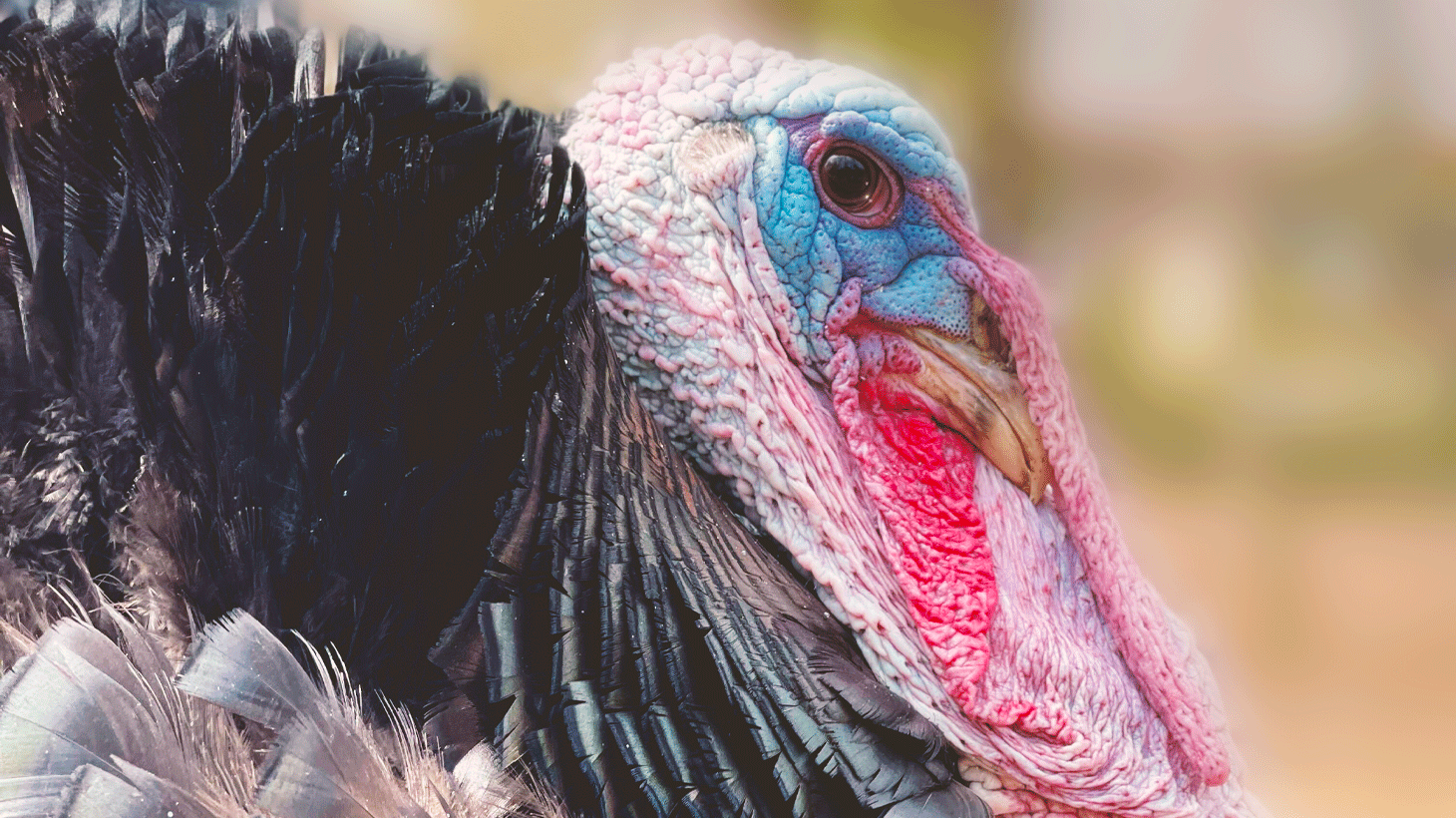
Meleagris gallopavo, known broadly as “wild turkey,” evolved in the Americas, and though they now inhabit other parts of the world as far away as New Zealand, their populations are concentrated between the two continents. Spanish explorers exported domesticated varieties to Europe during the 16th century, and by the 17th century, their reputation as exquisite table fare preceded them. And those turkeys not born and bred in captivity are the ground-nesting gamebirds pursued by hunters today.
Traits

The same traits that enabled wild turkeys to survive prehistoric predators make them one of the more challenging game species on the North and South American continents. Wild turkeys can see about three times better than a human with 20/20 vision, and they have a 270-degree field of vision compared to a human’s 90-degree field of vision. Though it does not have eyes in the back of its head, the wild turkey can rotate its neck further than a human, extending its field of vision to almost 360-degrees.
The mechanics of a turkey’s inner ear works like ours, but they process sound about ten times faster. This means a turkey can hear shorter notes more acutely and longer distances.
As soon as a turkey sees or hears something amiss, it can levitate from the ground and reach flight speeds of up 50 miles per hour—nearly the top speed of a mourning dove—within seconds. Considering adult males weigh between 18 and 25 pounds, this is an incredible feat of strength for an avian species! And a wild turkey doesn’t always need to take flight to escape since they can run on the ground at around 25 miles per hour.
The color and texture of their feathers provide a natural camouflage while they search for food, and their flexible structure allows them to tread light-footed around the forest floor. Fortunately for those of us who hunt wild turkeys, they do have a weakness—their sense of smell is not as keen as their vision or hearing—because otherwise, hunting them would almost certainly be a fool’s errand.
Turkey Regulations
According to scientific information gathered from the field, the South Carolina Department of Natural Resources (SCDNR) enforces state game laws and manages turkey and other game species. The laws they implement and the reports they publish are made available to the public on the SCDNR website. Turkey hunting in South Carolina takes place between April 1 and May 10, depending on which region of the state you live in.
State law prohibits hunters from taking a hen under any circumstances, so anyone wishing to hunt turkeys must be able to differentiate between males and females of the species before going into the turkey woods. Male turkeys are larger in size and have a long mane that sprouts from their chests called a “beard.” Their tail fans are broader and longer than that of a hen, and they often make a deep-throated “gobble” from the roost and on the ground as they approach your location. It takes two years for a male to reach peak maturity. Juvenile males are called “Jakes,” while fully mature males are called “Toms.” Though it is legal to harvest a Jake, most hunters prefer to take only Toms. They are distinguishable from Jakes by having a longer beard and tail feathers, and they also have a set of “spurs” growing from the back of their legs. As a Tom ages, his spurs will grow longer with each successive year.
The Habitat of Wild Turkey
After learning the rules and regulations governing turkey hunting, the next step in pursuing wild turkeys is identifying habitat. According to the National Wild Turkey Federation (NWTF) website, “Wild turkeys generally move a mile or two in one day depending on habitat and distance to food and water sources. The annual home range of wild turkeys varies from 370 to 1,360 acres and contains a mixture of trees and grass cover.” This means properties of this proportion—or perhaps smaller adjacent tracts— with trees and grassy cover would have a higher probability of supporting wild turkey flocks. Turkeys roost in hardwood forests near a water source such as a river or creek.
Wild turkeys sleep in the tree boughs and fly down when the woods wake up before sunrise. Once they’re on the ground, they search for food sources such as insects, wild berries, grass seeds, and spilled grain. Turkeys “clean” themselves by rolling their bodies in the dirt to dry the oil from their feathers, meaning open cutovers and dirt roads will help identify habitat with turkey hunting potential. Turkeys leave three-toed bipedal tracks in the ground that will look notably larger than other bird tracks, and seeing fresh turkey tracks is the fastest and easiest way to know whether you have an excellent place to hunt. Large patches of disturbed dust or sand might also indicate areas where turkeys have been dusting themselves. During the spring breeding season, male turkeys will “strut” to attract females and establish their dominance among the flock. Their primary feathers scrape the ground and leave drag marks in the dirt called “strut zones,” implying a healthy flock lives in the area.
Talking Turkey
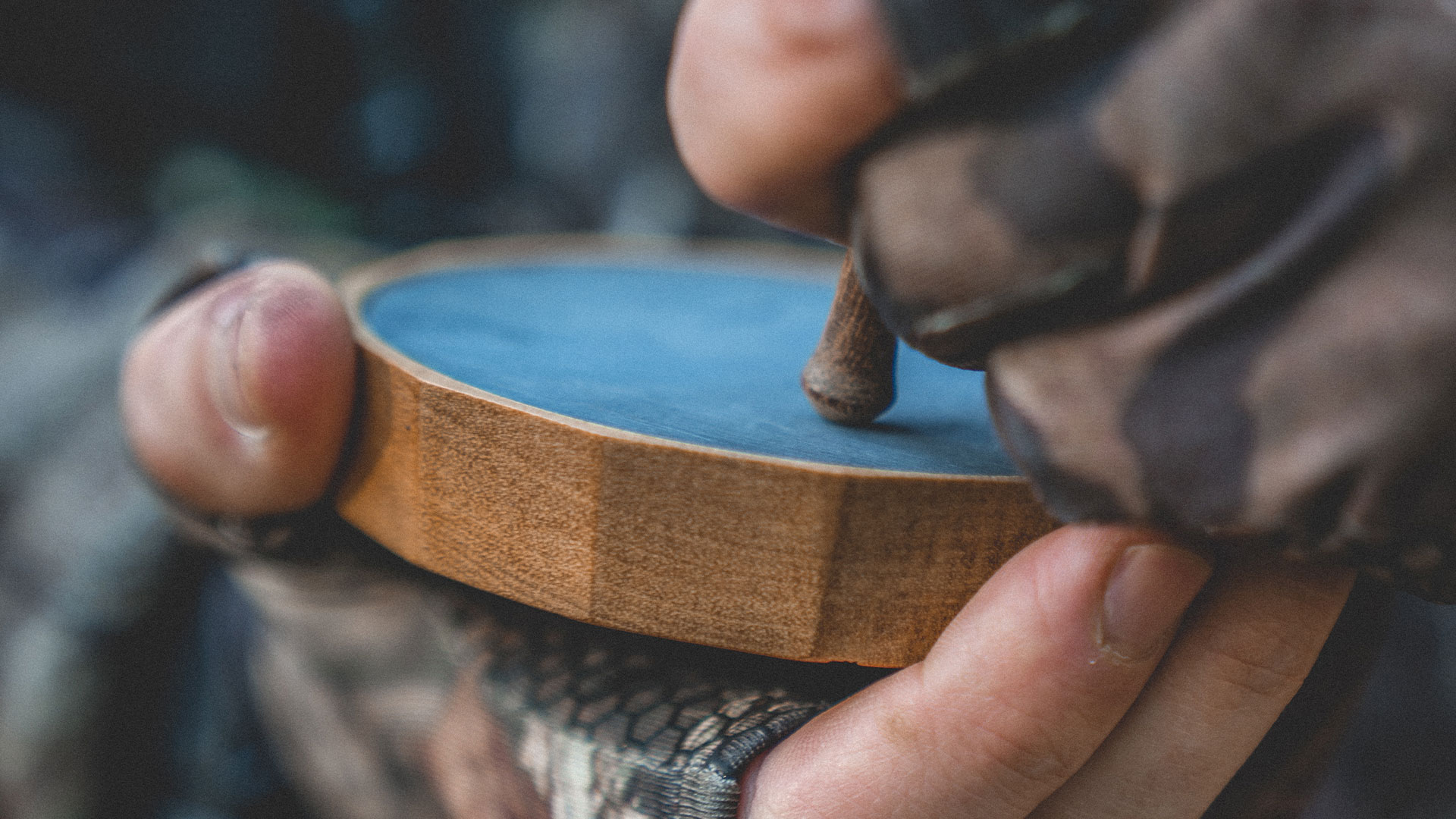
Learning to “talk turkey” is another essential part of the process, and some consider it one of the biggest draws to the sport. Wild turkeys flock together in the fall and winter, then in the spring, the males and females separate and begin their breeding cycle. Turkey hunters literally “speak the language” of a turkey with the aid of a turkey call to draw them into effective range. Turkey callers fall into two major categories—those operated by friction and those operated by wind.
- Friction callers use some degree of mechanical friction to create a turkey sound. Examples of these are box callers, slate callers, and push-pull callers.
- Callers relying on the wind are like wood-wind instruments and require the hunter to blow across a reed, as in the case of a diaphragm caller, or as in the case of a “wingbone yelper,” suck air through the caller as if sipping from a straw.
The most common turkey call made by hunters is intended to imitate a hen “yelp.” Since turkey hunting in South Carolina happens during the breeding season, adult males are generally more likely to investigate the sound of a hen than they would other turkey calls. It should be noted that calling to turkeys is entirely situational, and it requires careful study to know when to call, how much to call, where to call, and what call to use. Hitting the right notes means the difference between creating an irresistible siren song versus a lousy night at the karaoke bar.
Camo for Turkey Hunting
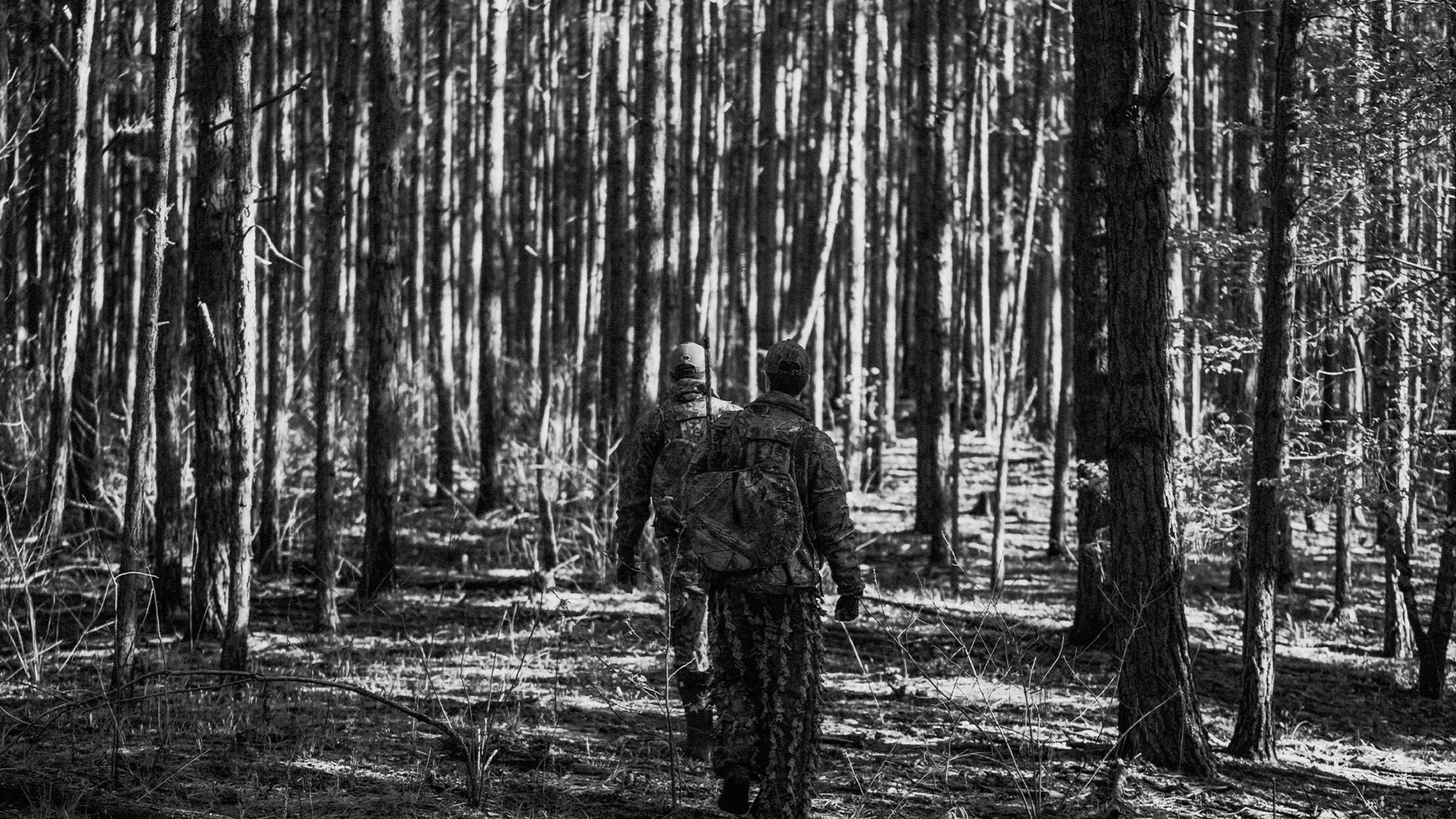
Turkey hunters also need to camouflage and conceal themselves. Concealment combined with camouflage allows hunters to have a better chance at keeping a turkey within effective killing range without alerting them to any danger. Turkeys can pick out the colors, patterns, and depth of your clothing, and if they see something amiss, they will vacate the area. Investing in camouflage clothing that matches the colors and patterns of the places you hunt most often would be a wise investment. Turkeys use their wide field of view to detect motion around them, and you should avoid any sudden movements such as turning your head too quickly or swatting at insects. Concealing yourself in a ground blind or using natural cover and terrain features will help keep your movements hidden.
What Do I Hunt Turkey with?
Turkeys can be hunted legally in South Carolina using a bow, crossbow, or shotgun. Most turkey hunters choose a shotgun, especially while learning how to turkey hunt. Advances in technology allow turkey hunters to take shots at longer distances with greater accuracy, and sub-gauges have become more common. Manufacturers have responded to this demand by providing a wide range of options for finding a dedicated turkey gun. The three main types of shotgun actions used by turkey hunters are pump-action, semi-automatic, and break-actions. Each of them has its advantages and disadvantages, and for finding the right firearm for turkey hunting, it is vital to consider the weight of the gun, its ergonomics, its choke constriction, and the felt recoil produced while shooting it.
Pump-Action Shotguns
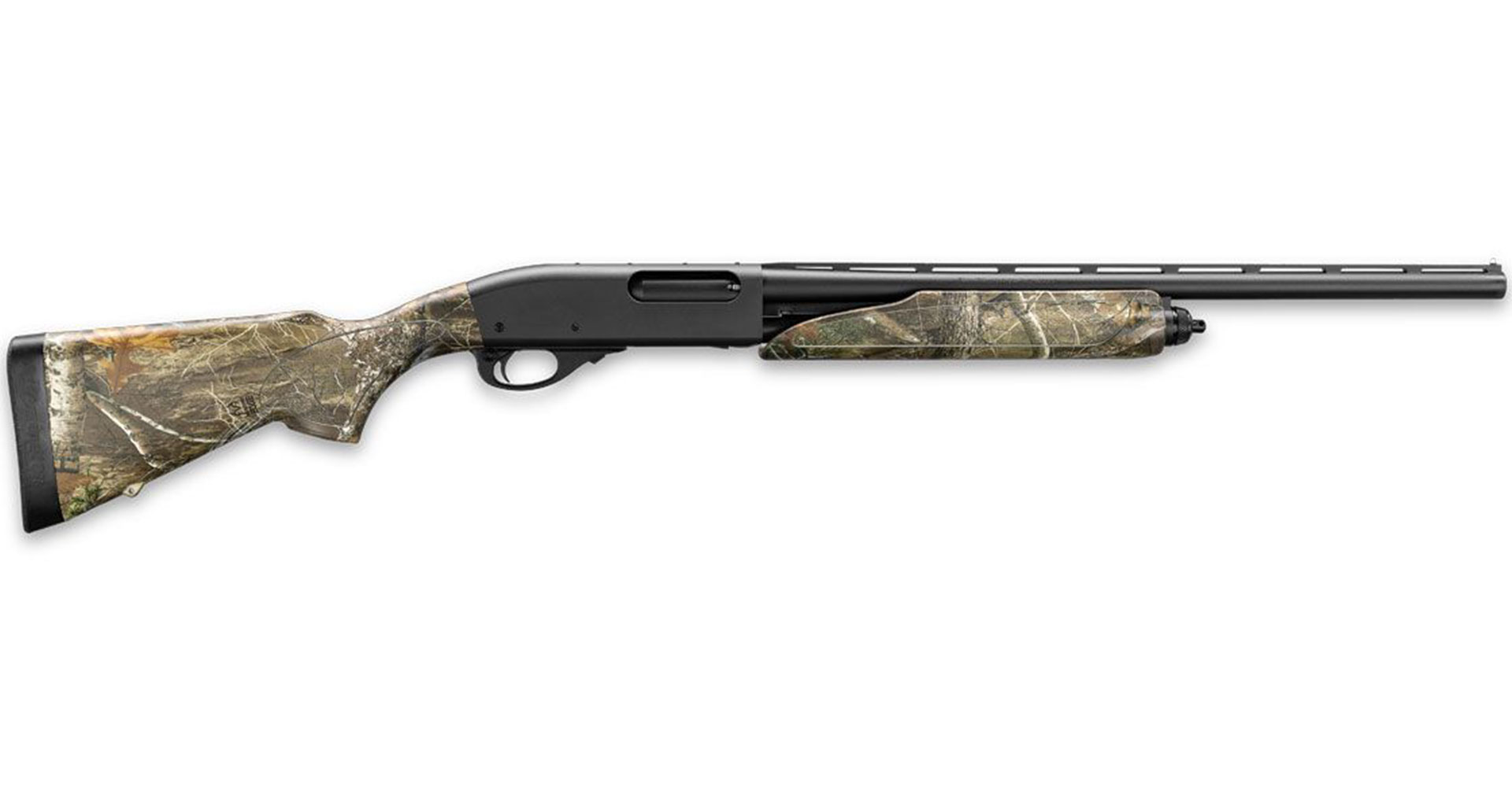
Despite increasing esteem for semi-automatics, pump-action shotguns remain a popular choice among turkey hunters. They are light to carry, reliable in inclement weather, and easy to operate. Most newer models come with screw-in multi-chokes, which can be choked tighter for longer shots, and they will handle the heaviest 3” and 3 1/2” cartridges on the market. Pump-action shotguns are also very affordable. The only drawback to having a pump-action shotgun would be the heavier felt recoil. But many do not consider this a disadvantage since felt recoil is the last thing on a shooter’s mind as a turkey comes into range. The Remington 870 Express has many turkeys to its credit and is probably the most prolific pump-action shotgun in use today among turkey hunters. Shorter-barreled models of the Remington 870 and others such as the Weatherby SA-459 and Mossburg 535 come with ergonomic pistol grips for making them wieldier in densely forested areas; many of them can be equipped with red dot sights for greater accuracy.
Semi-Auto Shotguns
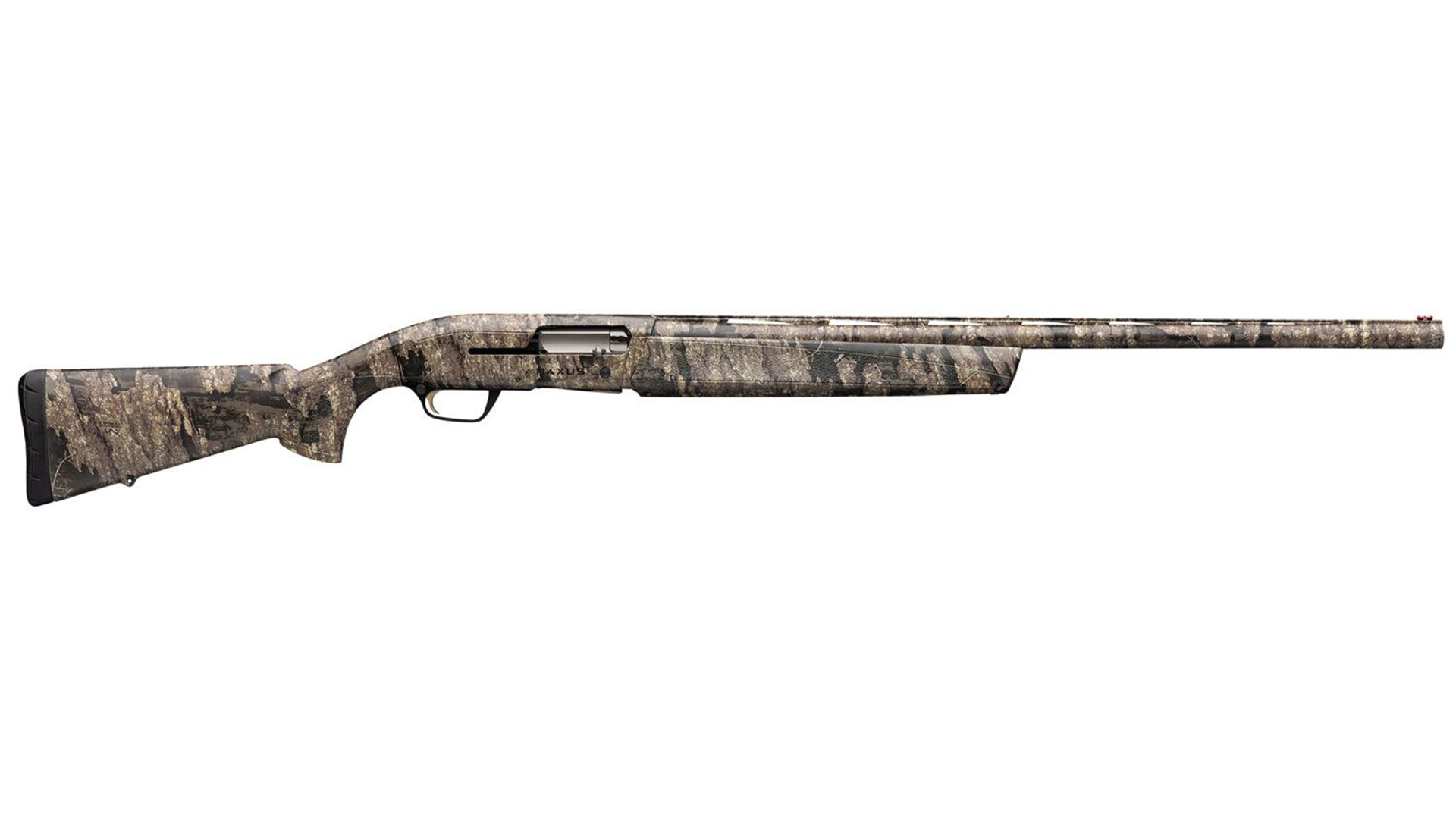
Semi-automatic shotguns retain the ergonomic and multi-choke advantages of a pump-action while also reducing felt recoil. Most 12-gauge turkey loads push 1 7/8 to 2 1/2 ounces of shot at 1300 to 1400 feet-per-second. Shooting a few of these powerful cartridges can become uncomfortable rather quickly! Semi-automatics use the gas pressure or inertia (depending on their design) from the last shot to feed the next cartridge into the chamber, reducing felt recoil for the shooter. Though modern technology and manufacturing have dramatically increased their reliability, semi-automatics are more prone to failures-to-feed (FTF) or failures-to-eject (FTE). However, buying a high-quality semi-automatic such as the Benelli SBE III, Beretta A400 Extreme Plus, or Browning Maxus—along with adhering to a regular cleaning and maintenance schedule—will reduce the likelihood of ever having an FTE or FTF while shooting or hunting.
Break-Action Shotguns
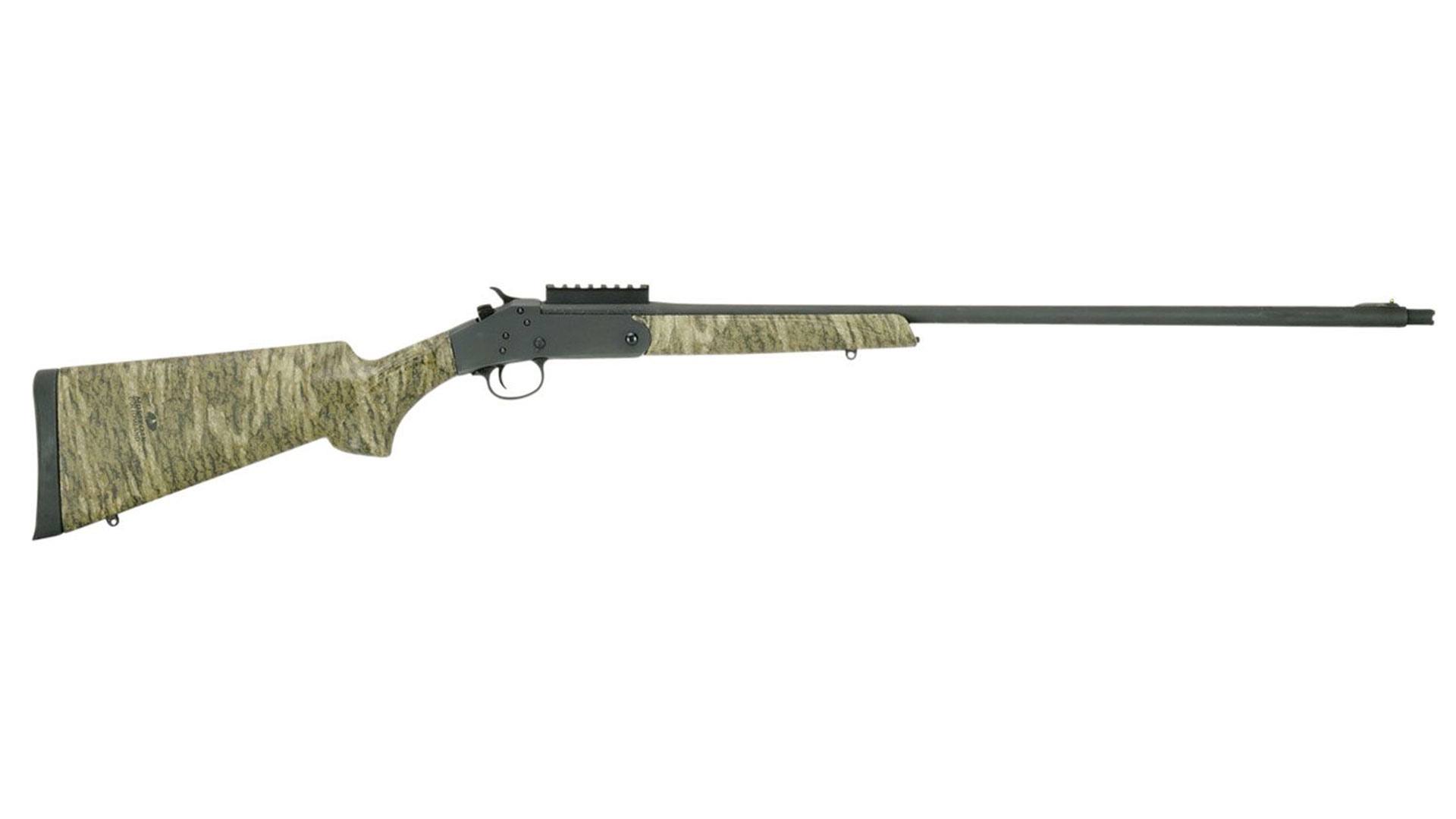
Break-action shotguns seem to be having a renaissance among turkey hunters, especially among those wanting to shoot sub-gauges. This has partly been due to the recent popularity of tungsten shot as an alternative to lead. Tungsten is both harder and denser than lead, allowing manufacturers to pack more shot into a cartridge and have the payload hit harder at greater distances. Shooting a lighter break-action sub-gauge shotgun and loading it with tungsten shot can be a fun way to experience turkey hunting, especially for young turkey hunters or those who are getting up in age. Though a break-action only allows for one or two shots before reloading, turkeys generally do not stick around once they’ve eluded the first shot. All these factors make sub-gauge single-shot break actions, such as the Savage Arms 301, an attractive option for turkey hunters of all experience levels.
One of the foremost writers on the sport of turkey hunting (Ret.) Colonel Tom Kelly said in his book Tenth Legion,
Most who enjoy the sport of turkey hunting draw great satisfaction from their harvests due to the difficulty of the pursuit. Some of the best advice for someone interested in turkey hunting would be to explore the sport as a process and not allow a single unsuccessful hunt or season to discourage you from trying again. Only a tiny percentage of turkey hunters take a turkey on their first outing or during their first season. Having a mentor will help exponentially, and most successful turkey hunters spend as much or more time studying their quarry as they do afield. Connecting with a turkey, first as it gobbles on the roost, then as it comes into visual range, then again as it’s hauled out of the woods over a shoulder, and yet again when it’s shared over a meal with friends and family, creates an addictive sense of accomplishment in the spirit of a turkey hunter. Every turkey taken feels like that first on and on the day it doesn’t; it’ll be time to quit.
Oliver Hartner is a South Carolina-based writer covering sporting-life interests. His work has appeared in Covey Rise, Shooting Sportsman, Quail Forever Journal, USA Today Hunt & Fish, and South Carolina Wildlife. He serves on the South Carolina State Committee of Ducks Unlimited as its secretary.