
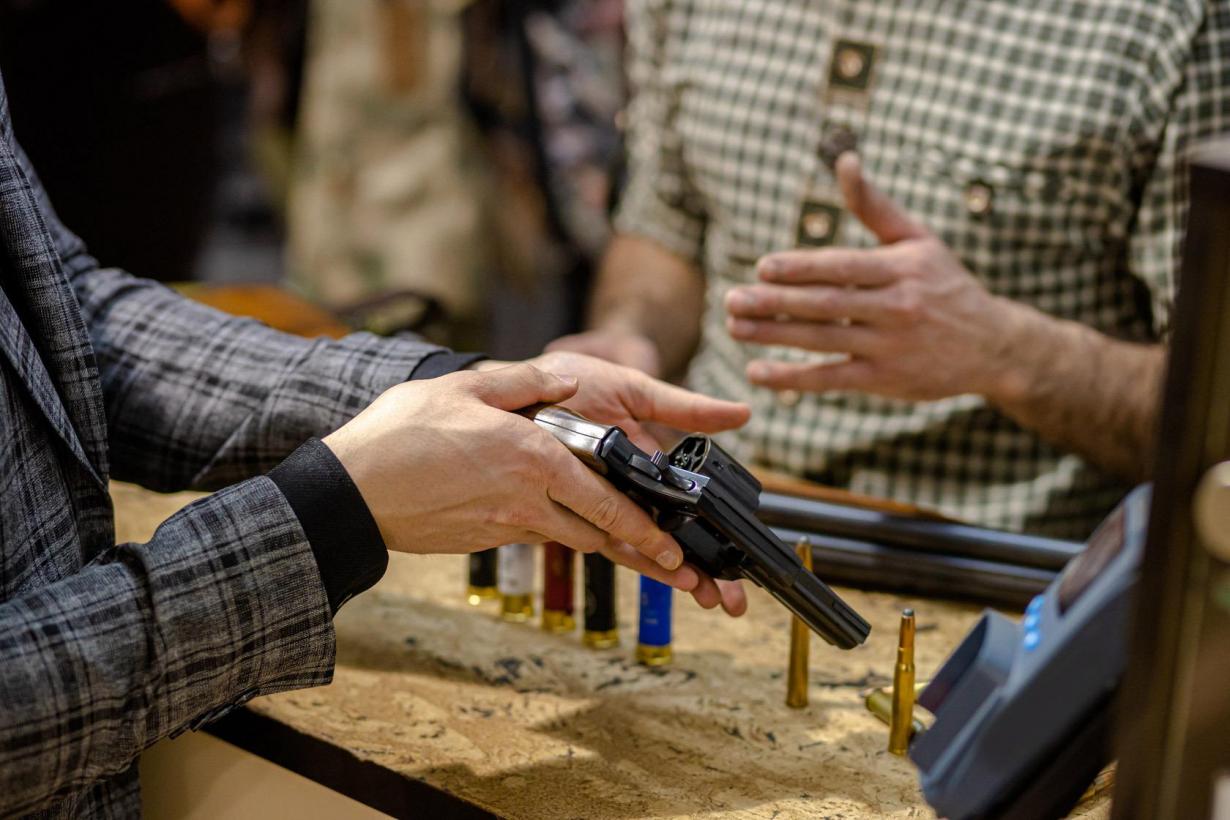
Basic Firearm Rules & Child Protection
While the universal firearm safety rules are rather trite to the experienced gun owner, we all must start somewhere. Fully understanding these rules and following them whenever handling a firearm, regardless if it is a pistol, rifle, or shotgun, can mean the difference between life and death. It is also good to review them regularly, especially before going to the range either with yourself or any friends joining you. Here are the rules…
- Treat ALL guns as if they are loaded.
- Never point the muzzle of the firearm at ANYTHING you are not prepared to destroy.
- Always keep your fingers off the trigger until the sights are aligned, and you are prepared to fire.
- Always be aware of your target and what is in front of or behind it.
If these rules were taught in every school, from an early age, kids would be less curious about firearms, understand the danger behind them, and respect the destructive power they possess. Also, this has been proven to reduce the number of accidental shootings amongst young people as well as new gun owners who follow these 4 simple rules.
Following these rules are as equally as important to young people as it is to adults. A quick search of YouTube or Google, and you will find plenty of examples of new or inexperienced gun owners making mistakes. Unfortunately, there are just as many videos or articles that illustrate tragic ends to these people not following the above rules. Education is the best way to mitigate negligence.
New gun owners have become increasingly more common over the past year. This is due to certain events that have caused a sense of insecurity which has lead citizens to seek a new way of protecting themselves. But, merely buying a firearm for personal defense is only the first step in becoming a new gun owner. Many may have several questions about where to go to shoot, what training to get, how to store the gun, and even how to clean it. We can dissect all these questions to help educate those who are new to this community and welcome them with open arms.
Safety First…Safety Always
Basic Firearm Rules & Child Protection
While the universal firearm safety rules are rather trite to the experienced gun owner, we all must start somewhere. Fully understanding these rules and following them whenever handling a firearm, regardless if it is a pistol, rifle, or shotgun, can mean the difference between life and death. It is also good to review them regularly, especially before going to the range either with yourself or any friends joining you. Here are the rules…
- Treat ALL guns as if they are loaded.
- Never point the muzzle of the firearm at ANYTHING you are not prepared to destroy.
- Always keep your fingers off the trigger until the sights are aligned, and you are prepared to fire.
- Always be aware of your target and what is in front of or behind it.
If these rules were taught in every school, from an early age, kids would be less curious about firearms, understand the danger behind them, and respect the destructive power they possess. Also, this has been proven to reduce the number of accidental shootings amongst young people as well as new gun owners who follow these 4 simple rules.
Following these rules are as equally as important to young people as it is to adults. A quick search of YouTube or Google, and you will find plenty of comical examples of new or inexperienced gun owners making mistakes. Unfortunately, there are just as many videos or articles that illustrate tragic ends to these people not following the above rules. Education is the best way to mitigate negligence.
Securing your firearm
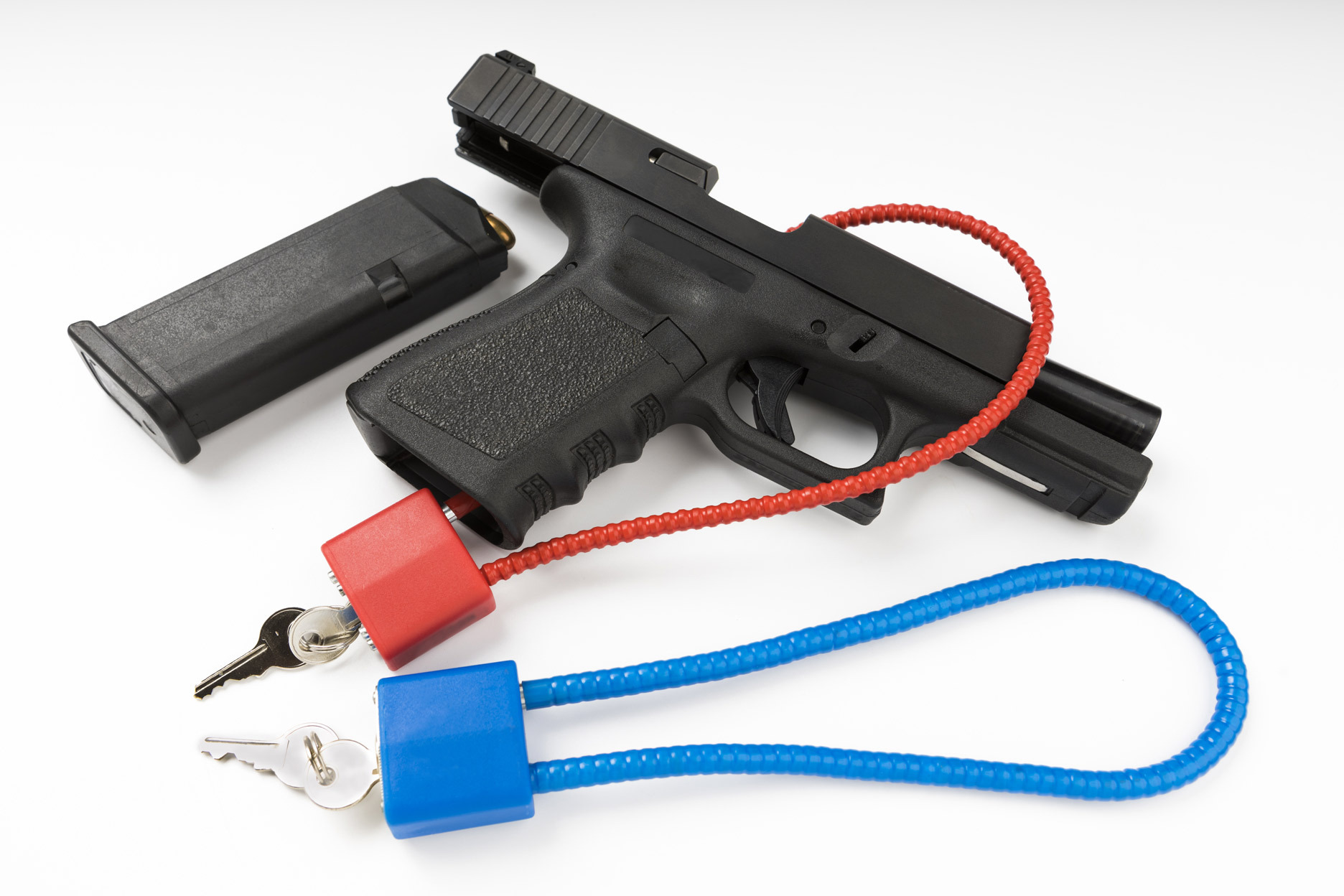
Securely storing your firearm is another way of protecting innocent children from unintentional tragedy. There are many ways that a gun can be secured. The simplest way to lock a pistol is by a trigger lock or cable lock, and in most cases, these types of locks will be included with a new firearm when purchased. They are easy to operate but will require you to keep track of a key that may inadvertently end up in a youngster’s hands.
Gun safes are another option for peace of mind. Like firearms, gun safes come in various sizes, feature sets, and manners to access your firearms. Small box safes or gun vaults are usually the best bet for the new gun owners due to their ability to be tucked under a bed, nightstand, or in a closet. Also, many of these gun safes include biometric scanners that will recognize your fingerprint for quick and easy access should you need to protect yourself in a hurry.
Cabinet safes, or what some may call stand-up safes, are by far the best means to secure guns. They are challenging to break into, come in various sizes, and, in some models, capable of protecting your firearms during a fire. However, these can be difficult to move and are the expensive options available to the market. Yet, you may be able to capitalize with a discount on your homeowner’s insurance by purchasing one of these larger safes that could minimize claims made should there be a break-in (check your policy for clarity).
Personal Protection Equipment (PPE)
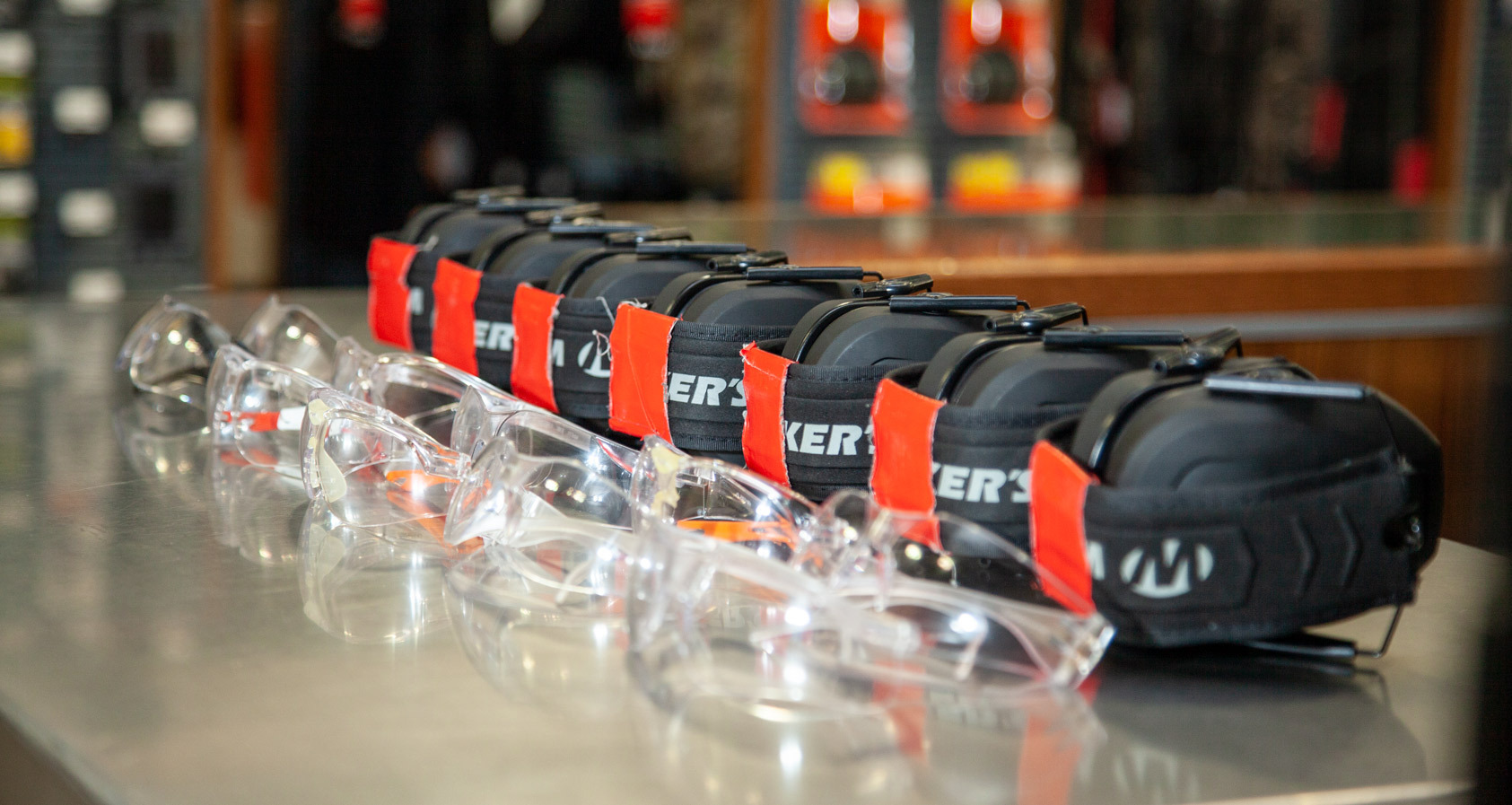
Undoubtedly, after purchasing your first firearm, you will want to shoot it and have a fun day at the range. But, what do you need to enjoy your time while you’re there? The essential two items needed are eye and ear protection. Eye protection comes in several styles that can be as basic as biology class type glasses to expensive, more stylish brands like Oakley.
PASSIVE VS ACTIVE
Hearing protection varies in its function as well as its price. Some have found that the foam earplugs work well and can be extremely cheap for quick, infrequent range trips. Foam ear plugs can also be used together with the next step up from ear plugs which would be earmuffs. Used together, earmuffs and foam plugs can provide a greater amount of protection to your hearing. Earmuffs to some shooters are more comfortable than putting plugs into your ears, so they use the earmuffs alone. These two type of hearing protection are known as "passive" and will muffle all noise that surrounds you..
Active hearing protection is becoming more and more popular as well as affordable. This type of ear protection will allow you to have a normal conversation with your range partner while it also cancels out loud noises from the range. These active earmuffs will usually cost between $50-70 on the low end and as high as several hundreds of dollars on the high end, depending on the brand and feature set you decide on.
ADDITIONAL PPE AND RANGE GEAR
While the following items are not required, like eye and ear protection is, they may make your range trip more appealing. The first item is de-lead soap or wet wipe that you can wash your hands with after you are done shooting. It is best to clean yourself as quickly as possible after shooting to not ingest lead, unspent gun powder, residue, or other harmful material. When you wash your hands, only use cold water to not allow your pores to open and allow anything in you don’t want. While this will not affect you immediately, continued exposure will increase the likelihood of toxins entering your body and causing long-lasting health concerns.
Next would be a good pair of gloves. You would be surprised how much a nice pair of shooting gloves can save your hands from getting beat up while shooting regardless of material or thickness. Loading magazines, running bolts or slides, or fixing malfunctions can tear up your knuckles and fingers quickly. Even a thin pair of snug-fitting nylon gloves like Mechanix gloves can be your hand’s lifesavers.
Magazine loaders like the Maglula Uplula can be a great comfort item for your range trips. These allow you to quickly and easily load your magazines to get you shooting and having fun with your new pistol as fast as possible. Other loaders like the ETS C.A.M. Speed Loader allow you to jam rounds straight into the magazine, decreasing the time you mess around with your mags. However, the most important aspect to these is how much they will save stress on your thumbs and your state of mind. A proper grip on your pistol will fatigue your hands enough without the help of pushing round after round into your magazines.
Additional gun smithing tools and lubrication are great items to bring along to the range. An extra drop of lube can be helpful to preventing said malfunctions from even happening. Finally, a good multitool that has pliers, screwdrivers, and a knife can come in handy for the weird malfunctions a pistol may end up with.
BUY A RANGE BAG
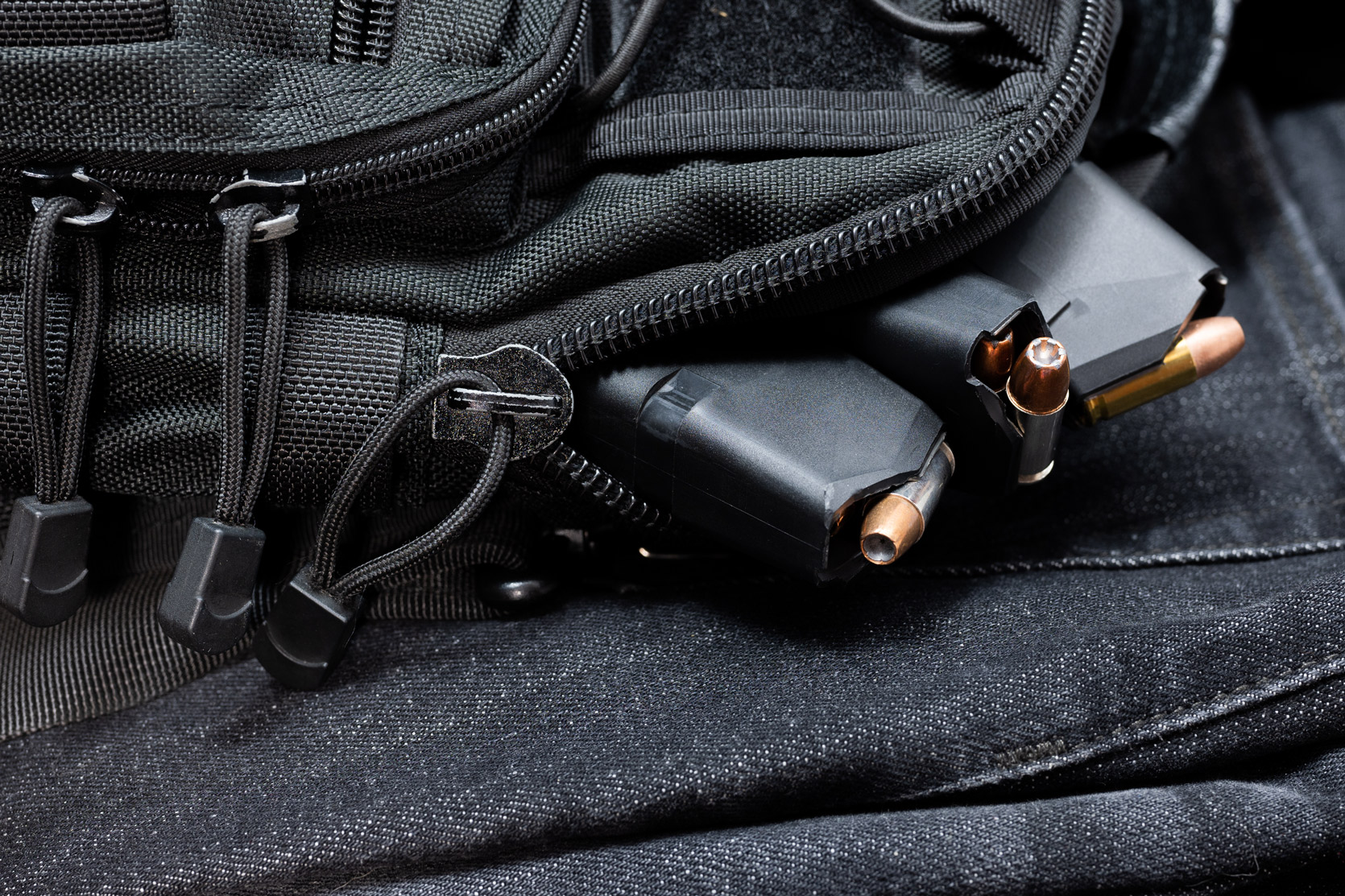
Range bags are a great accessory that will help you organize your gear and ensure it is in one convenient place to grab and go. Like many items on this list, range bags will come in all shapes, sizes, and prices. Backpacks can also be an excellent quick option in a pinch. Regardless of what you use, a range bag will help reduce the stress of remembering all the minor details you may need at the range. The one trick to a range bag is to ensure that you inventory and replenish items as necessary immediately after a trip the range.
AFTER THE RANGE
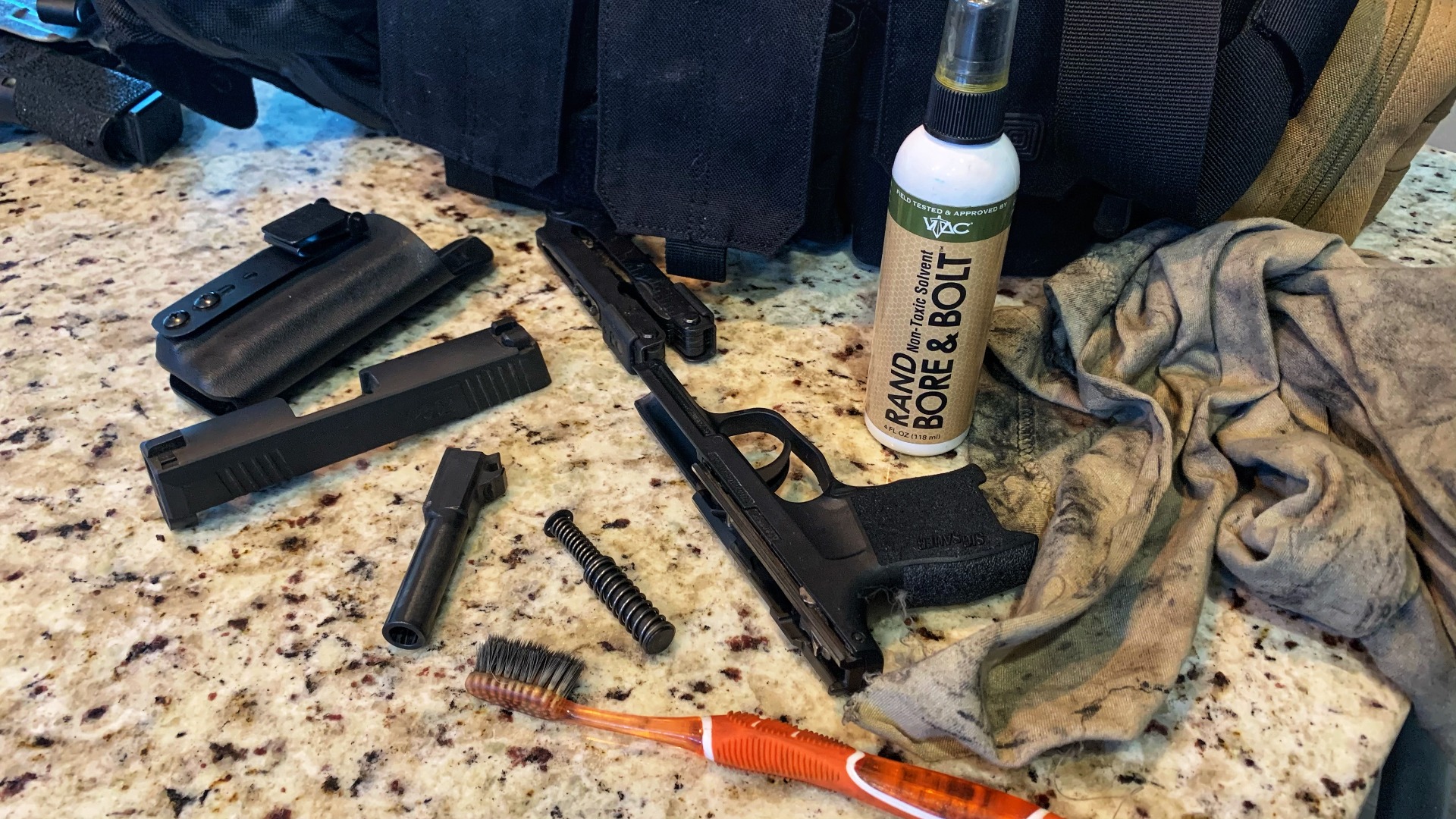
While not 100% necessary, it is recommended that you clean your firearm regularly. Doing this after a trip to the range will create a good routine of maintaining your gun to preserve its longevity, protect it from rust or deterioration and allow you to become more proficient with your gun. Understanding the disassembly and reassembly will educate you as to the inner workings of your firearm and build confidence in handling it.
A good cleaning, lubricant, and protectant (CLP) is the main item you will want to purchase. The better quality of the CLP will clean and protect your firearm easier and protect longer and will usually not have an offensive odor whereas cheaper brands may have an offensive odor and not clean as well. Cleaning utensils can be found around the house and include, but are not limited to, an old t-shirt, an old toothbrush, toothpicks, and q-tips. Gun cleaning kits are available at most places that sell firearms and ammo but are not necessary starting off. Learning to clean your gun with household items will lead you to the items that you feel are a must rather than buying tons of things you never use.
HOLSTERS – KYDEX VS LEATHER
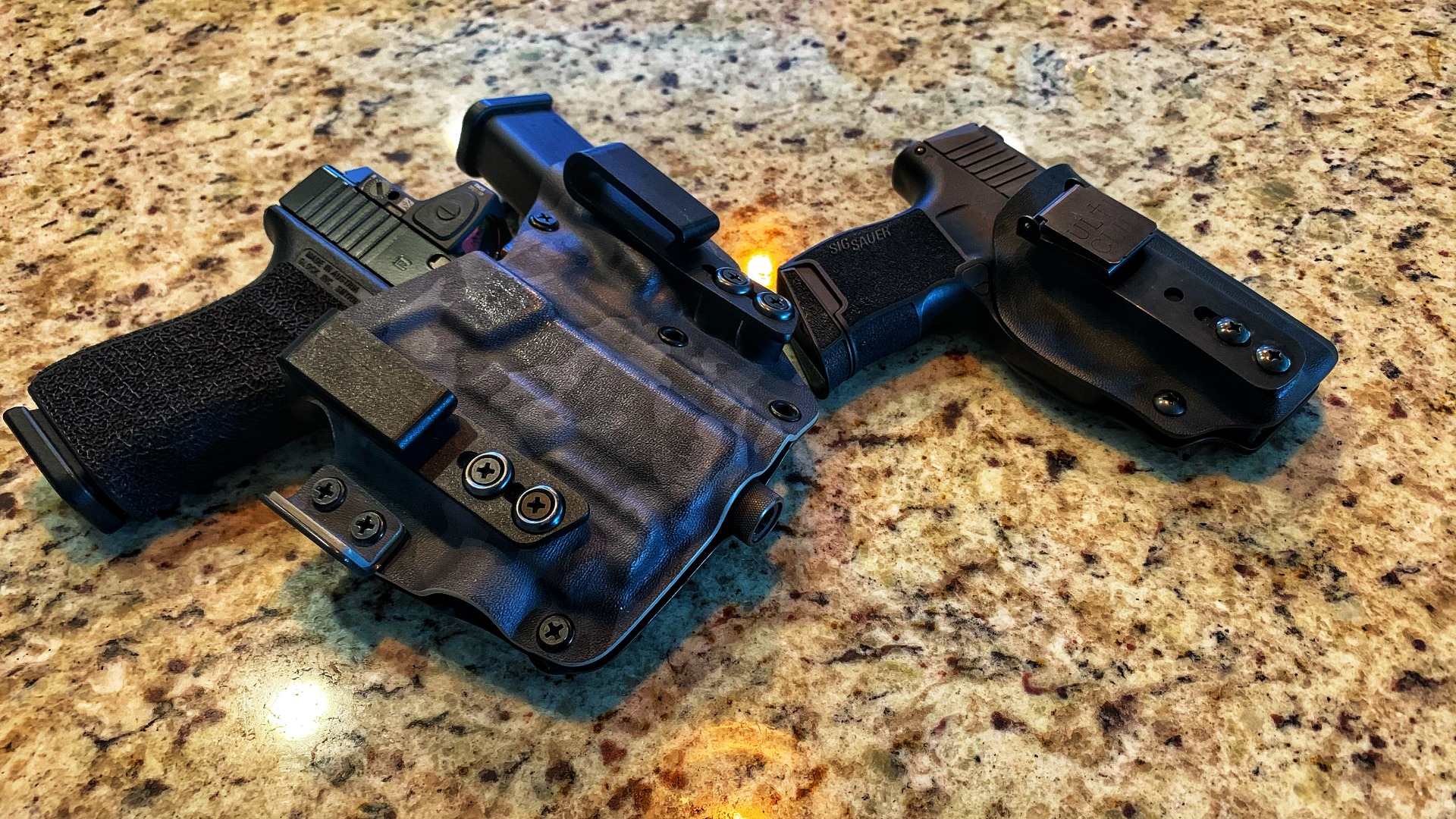
Legally carrying a firearm can be as controversial as the type of holster you use and the position you carry. While this will in no way tell you what you should buy, it may help steer you in one direction or another. A good gun holster does two things and two things only; keep the firearm in a safe condition to carry and secure it to your body. If a holster is mediocre at either of those functions, then you should replace it for something better. It must perform both with 100% reliability.
Keeping the firearm in a safe condition means that no matter what the wearer is doing, the pistol can never accidentally discharge. A good holster will start by completely covering the trigger in a manner that will not allow foreign objects to intrude into the trigger guard. For striker-fired pistols, such as a Glock 19 or a S&W M&P 9, a good portion of the gun community uses Kydex holsters since these types of pistols usually will not have a manual external safety. The hard Kydex material will tightly mold around the trigger to ensure that nothing can be introduced to cause the pistol to discharge. Regardless of whether you carry in the appendix position or at the 3/4 o’clock position, Kydex holsters will provide a high level of protection that will put your mind at ease.
Leather holsters are a good option because of the level of comfort most holsters will provide. However, they are not meant for modern striker-fired pistols. They are not recommended since leather can stretch and break down, allowing it to become more of a liability than an asset. As leather ages, it can start to curl which, in turn, can introduce a foreign object inside the trigger guard, causing a negligent discharge. However, leather holsters are a great fit for pistols with manual safeties, grip safeties, or revolvers that have long/heavy double-action triggers. These types of handguns are harder to ‘accidentally’ discharge due to the features built into them to prevent the unintentional pulling of the trigger.
Polymer retention holsters, such as Safariland, are often used by law enforcement due to their Kydex-like protection and their ability to have a built-in "safety" on the holster. This "safety" is often a button that is pressed, a lever that is pulled back, or a twisting of the firearm while in the holster in order to remove the firearm. Besides offering a "safety", companies like Safariland also build models that incorporate room so that certain lights and/or lasers can be used in conjunction with the firearm. These holsters are often available to the public at many gun stores. They are effective but are mostly designed to be used outside the waistband.
AMMO – PERSONAL PROTECTION ROUNDS VS. TARGET AMMO
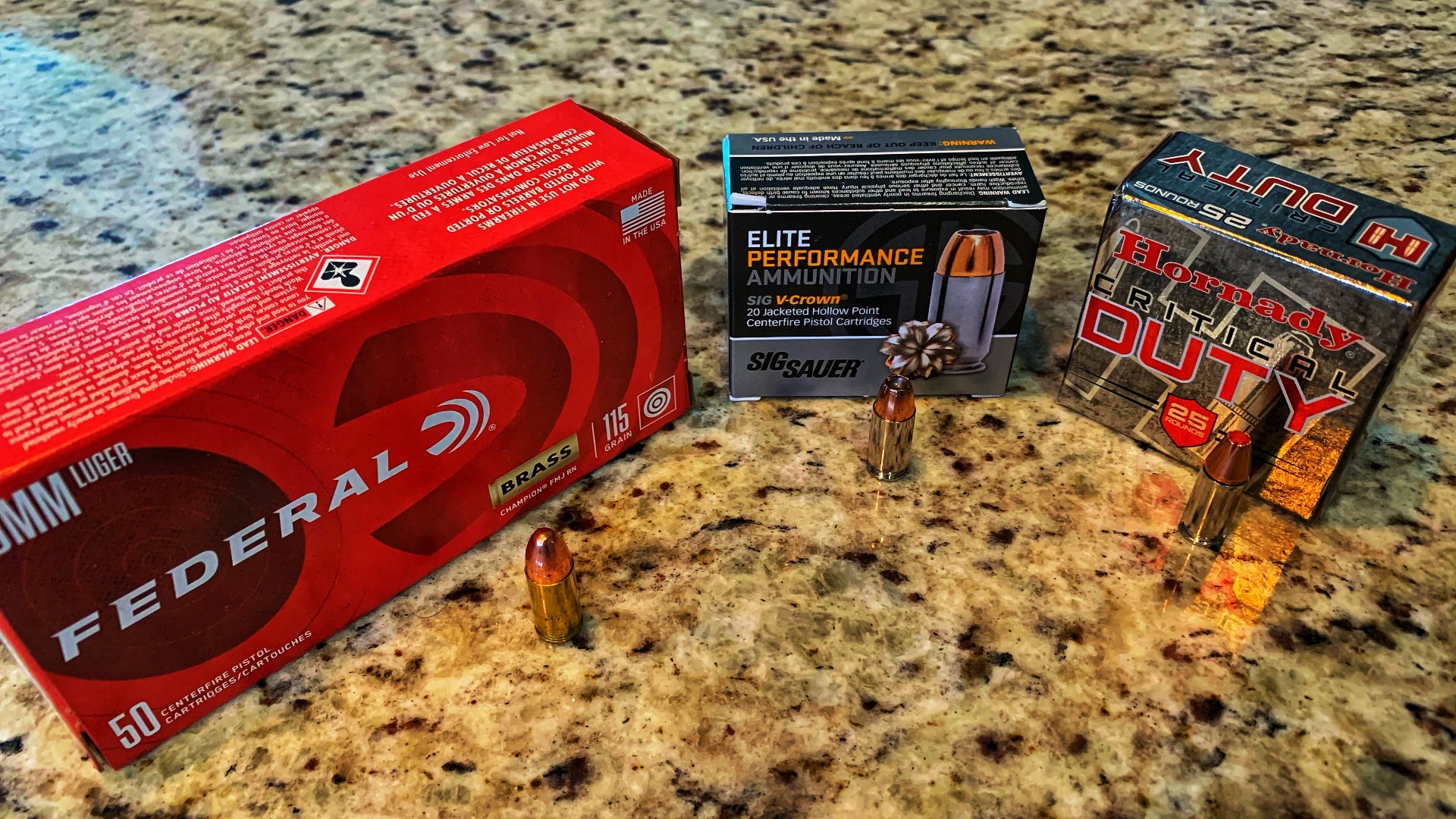
All Ammunition is not created equal and different types will serve different functions. The two main types of ammunition that most are familiar with will be personal protection rounds, sometimes referred to as hollow points, and ball ammo, or target ammunition. The specific differences are not just in the cost differences between the two but also in how they function on the intended target.
Ball ammunition is what most people will find on the shelves at the local sporting goods store and is used for practice or target shooting. The term ball is derived from the mid-1800s to distinguish standard round lead shot, called ball due to its shape, with the newly developed minie ball that resembles what we imagine modern bullets look like. The minie ball improved the accuracy and stability of a bullet once shot. Later, the military had to further distinguish between the five different types of ammo; ball, tracer, dummy, blank, and simulated munitions. So, ball remained the term used to designate standard rounds. The design of ball ammo is easy to produce which makes it far cheaper than personal protection rounds. However, the simple design of ball ammo will be more prone to over penetrating the intended target and is therefore not recommended for personal protection or home defense.
Personal protection rounds were explicitly designed to function in situations where you may be concerned with the over-penetration of your intended target. Due to the tip of many popular brands being hollowed out, the term hollow point was adopted to describe the difference between it and standard ball ammunition. This type of ammo was engineered to expand upon impact, causing it to dump most of the energy in the target. This feature will cause most of these rounds to not pass entirely through a target; instead, it is usually caught by the skin or outer garment of the target. Not all personal protection rounds will have a hollow point. Some will have a polymer or rubberized filling that gives the round the appearance of ball ammunition but is easily distinguished by the color of the polymer or rubberized filling at the tip of the bullet. This type of ammunition is also referred to as ballistic tip. Ballistic tip ammo has the same effect as hollow point ammunition.
WHERE TO SHOOT? RANGES VS SHOOTING CLUBS
Finding a place to shoot can be challenging, depending on where you live. Some cities or states may not be very friendly to people’s rights to keep and bear arms. Because of this, some jurisdictions may require residents to only shoot at designated ranges or clubs. However, in many of the flyover states, you may be able to shoot on private property or in Bureau of Land Management (BLM) land. BLM land can be some of the best places to shoot because of the freedom to shoot or do whatever you want; safely. Yet, not everyone can use BLM land. So, a public range or private club may be your only option.
A public range can be either an outdoor or indoor range. Both usually allow you to shoot pistols, rifles, and shotguns. Some of these ranges will have separate bays or lanes for pistols and rifles, while some of the newer outdoor ranges will have a separate area for trap or skeet shooting for those interested in improving their shotgun skills. These are usually inexpensive to shoot at by only requiring a range fee of around $10-25 per hour. One of the major downsides to a public range could be the crowd that may cause you to wait for a lane to open.
Shooting clubs are usually private ranges and require you to be nominated by a current member to gain access as a visitor or to earn membership. These clubs will typically have a monthly or annual membership fee that could be up to several hundred dollars. Because of the higher fees collected from its members, shooting clubs will almost always have nicer or more modern facilities. Also, most clubs will require their members to have safety and firearms training that would allow them to shoot on their own without a range safety officer in the immediate area.
This gives members the freedom to shoot at their leisure and check targets. While shooting clubs give their members the autonomy to shoot more freely than a public range, the membership fees could make these clubs financially impractical to some who may only shoot once or twice a year.
One of the best ways to determine if a shooting club or a public range is best for you is to do research. The internet will have tons of information and reviews from customers to help you decide what would best fit your needs. If you only plan to shoot once every few months, then a public range may be the more financially responsible choice. However, if you decide that you want to be a part of something, be included in a community of shooters, and believe you will shoot regularly, then a club might be worth the monthly or annual fee.
TRAINING AND CLASSES
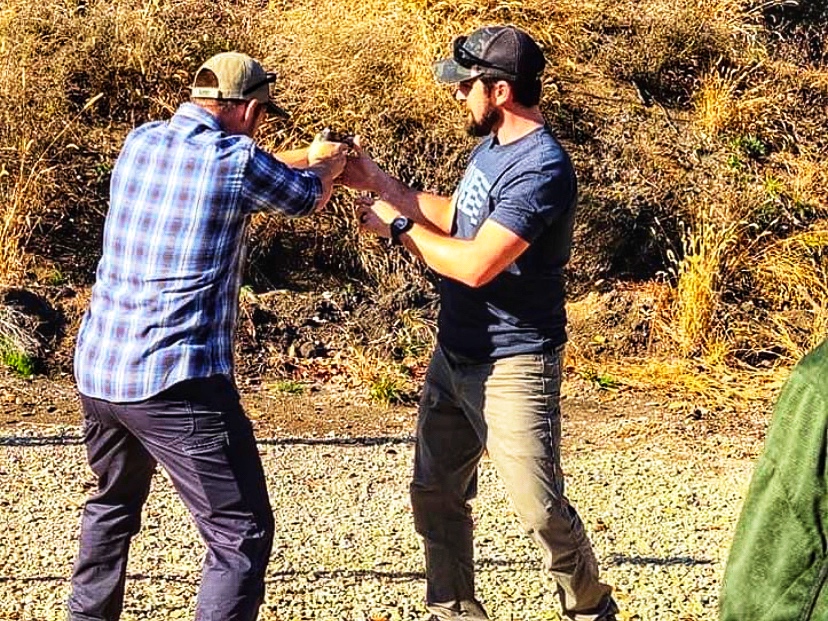
The best way to become more confident in handling and shooting your new firearm is to seek out firearms training. This does not mean that you need to spend hundreds of dollars on tactical pistol or rifle courses. Instead, find classes that help you with what you need help with the most. You may only want or need a class to teach you the basics such as what are the different parts of the gun, how it operates, how to disassemble/assemble your firearm, etc.
Some may only be concerned about home defense and do not have an interest in concealed carry. In that case, a fundamentals course may be what you’re looking for. A course that will focus on fundamentals of shooting pistols may be called “Defensive Pistol 1” or something similar. In these classes, you will be taught the fundamentals of gripping your pistol, sight picture and alignment, and trigger manipulation. With the knowledge you have gained on the fundamentals, you will now feel more confident to shoot on your own at a range to practice your new skills.
If you can absorb and retain information quickly, a multi-day course may be something that could interest you. These courses will begin with fundamentals and move into drawing a firearm from a holster, malfunction correction, and shooting while moving. These courses can be intimidating, but most instructors will pace the material to the slowest learner.
Many of these classes can be found through a simple internet search for what is available in your area. However, that may not tell you enough information as to the type of training or the overall satisfaction from previous customers. This is where social media can be a great help. Joining social media groups or following trainers on different platforms will give insight into what to expect when spending your hard-earned money on something that could save your life.
WRAPPING IT UP
Now is always the best time to consider your personal security. Don’t wait because waiting until the weather warms up or when that tax return comes will only prolong something as important as this. No doubt, it can be extremely overwhelming to someone who is looking into this for the first time. However, the vast majority of people in the firearms community are more than happy to share their experiences and willing to bend over backwards for anyone wanting to start their firearms journey. In the following article, we will discuss topics for the more intermediate firearm owner. The topics will be focused on pistol upgrades, accessories, and other items that most may not consider even though they have been concealed carrying a weapon for a while. Until then, stay safe, train, and be vigilant.
Mark Grimsley is a former U.S. Army Officer that started his career as an enlisted Abrams tank crewman. He has served in 3 overseas tours that include Korea in 2002, Iraq in 2003 as a tank gunner, and Afghanistan in 2010-11 as a logistics officer. Mark has completed numerous military schools to include Air Assault and Airborne as well as civilian firearms training. Mark enjoys spending time with his children, running a YouTube channel, and working out.