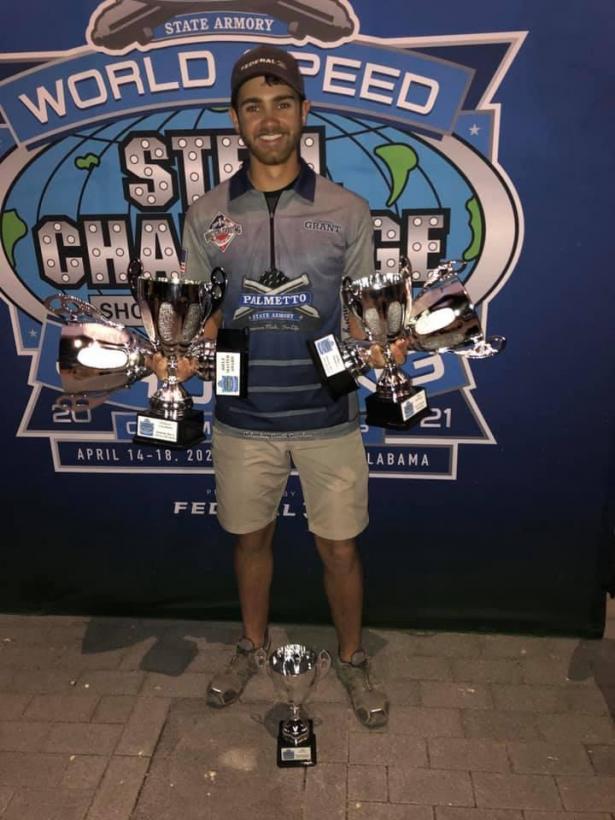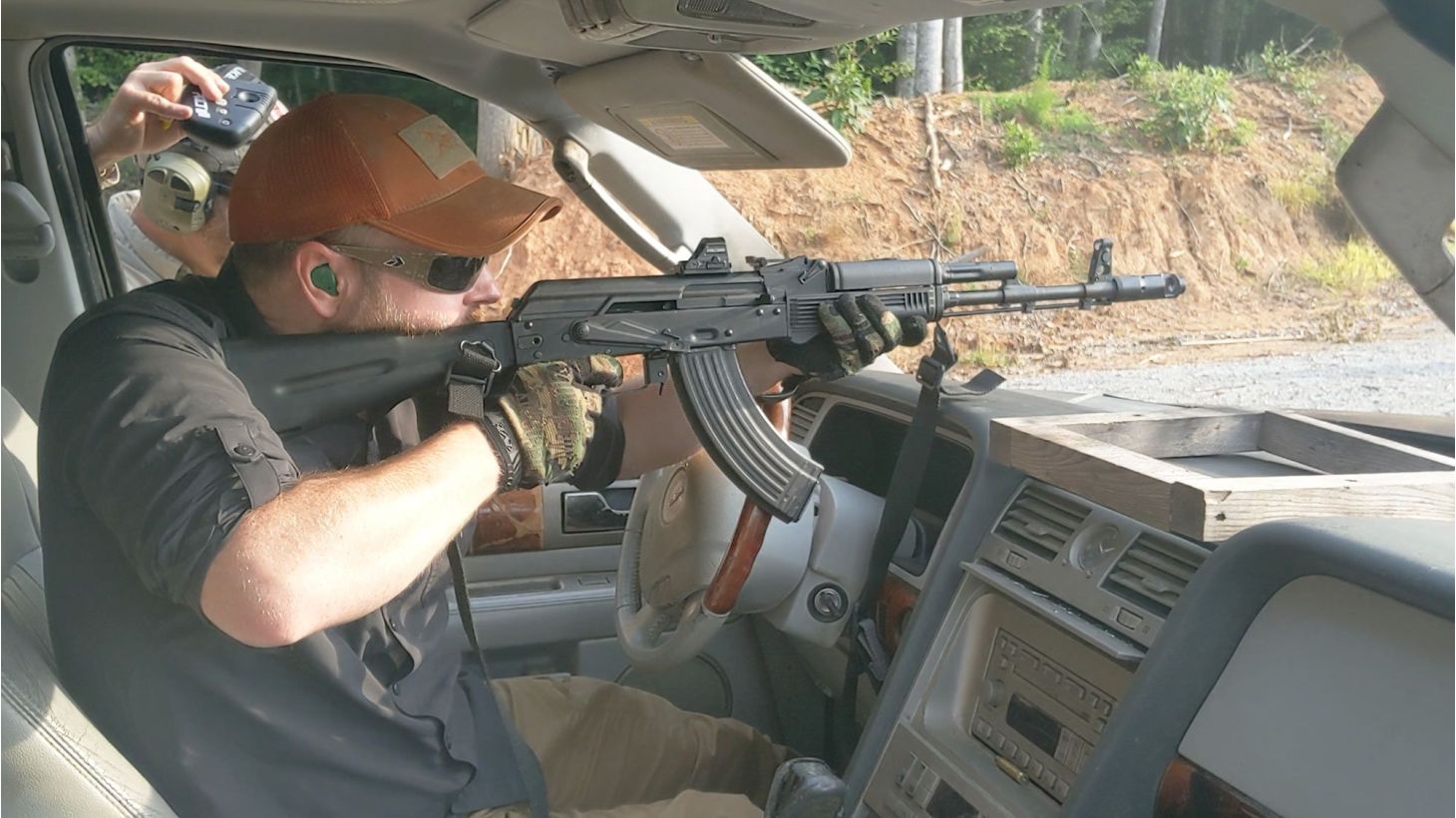
Have you ever watched three-gunners on YouTube and thought, “Damn, that looks awesome. I want to do that!” But then immediately realized that you either suck or have no idea where to start?
Don’t worry, you’re not alone. Getting into competition shooting can be very intimidating for many shooters, especially when they try to compare themselves to masters and grand masters of the sport. The good news is that I have gone down this path before and can help you on your journey. Where to start, how to start, and much more will be revealed to you in this article. So read on, and allow me to enlighten you on the subject.
Competitive Shooting - Speed vs Precision
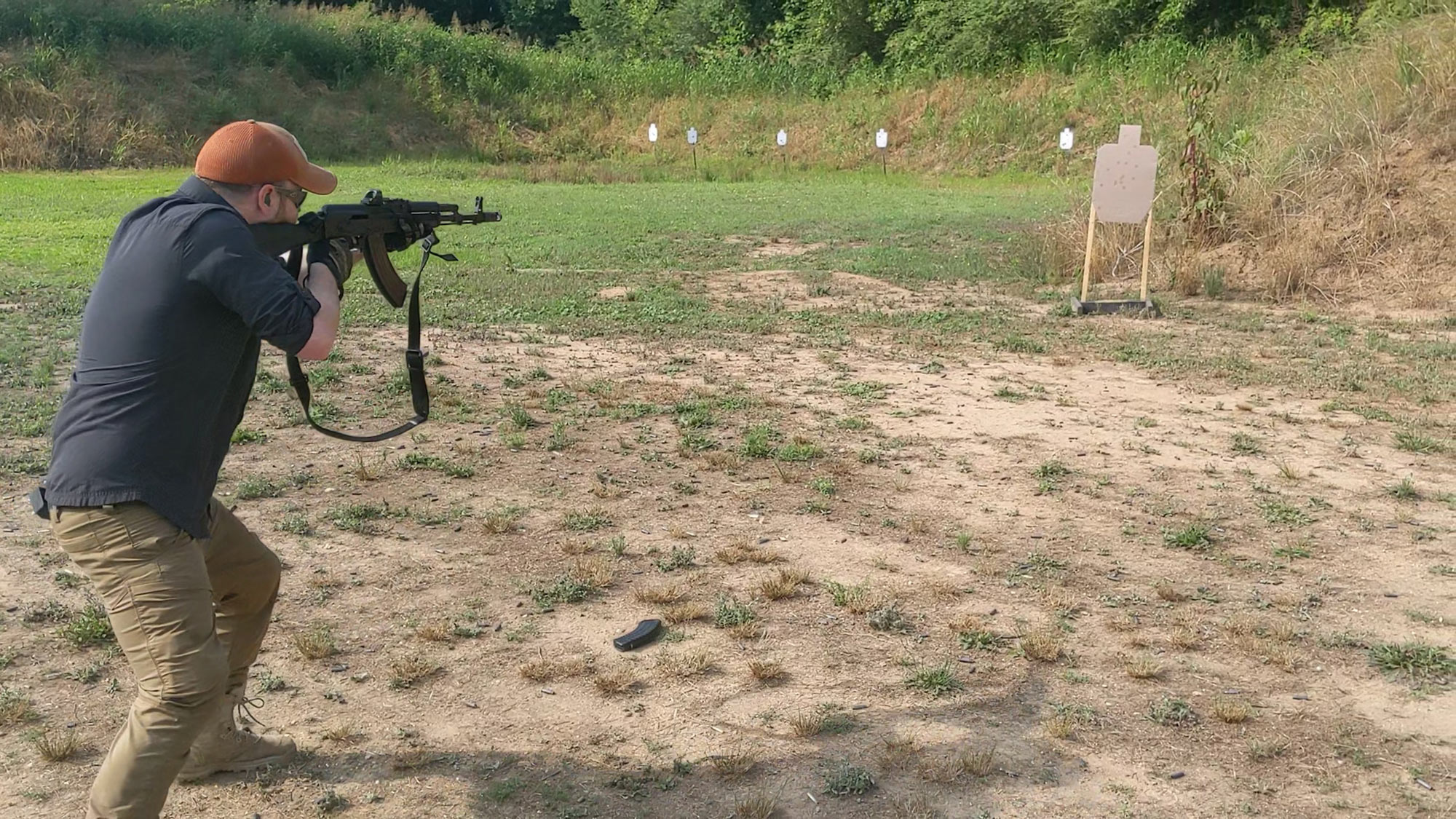
In the world of competitive shooting, there are essentially two major types of competitions:
- Accuracy Centered
- Speed Centered
As its name implies, the first type is all about precision. Matches like NRA Bullseye, CMP National Games, and old-school NRA High-Power are all about placing a few carefully aimed rounds at distant, small targets.
These are incredibly humbling matches for most shooters - especially those accustomed to informally plinking relatively large steel targets on a gun range. They often require specific attire and firearms while restricting certain accessories and shooting techniques.
For example, bullseye pistol matches require the shooter to fire off-hand, meaning with just one hand. They consist of a slow and rapid-fire segment, though the second isn’t what most people would call rapid nowadays.
But arguably, the single most important part of participating in these matches, and all shooting matches, is to be safe and follow all instructions and commands given. And I can’t stress this enough but don’t feel like you can’t ask questions. All range safety officers (RSOs) that I’ve encountered were more than happy to help new shooters.
That said, showing up for a big match without any experience is a bad idea. A better one is to search for local ranges near you and go to a practice match. Ideally, show up early and ask a ton of questions. If you’re unsure what equipment you’re missing or what will give you the best bang for your buck as a brand-new competitor, these people will eagerly point you in the right direction.
For new shooters, I heavily recommend they attend and compete in these matches prior to faster-paced matches like Three-Gun or IPSC. Speed follows accuracy; once you can confidently hit your target with whatever firearm you’re using, then you can work on doing so more quickly.
Most shooters that I’ve advised to do this end up becoming much more proficient marksmen in a relatively short time. Because if we’re being totally honest, most people who blast steel or paper at a gun range aren’t measuring their groups afterward - especially if they’re shooting a handgun.
If you jump into a three-gun match and try to run-and-gun, you can’t miss fast enough to win. Plus, if you’re unfamiliar with your equipment, it’s very easy to create an unsafe environment for the shooters around you. This is a surefire way to get disqualified (DQ’d) and thrown out of a match. After all, while this might be a game, you’re still using a deadly weapon to compete. Act accordingly.
Shooting Fast - 3-Gun, USPSA, IDPA, and IPSC
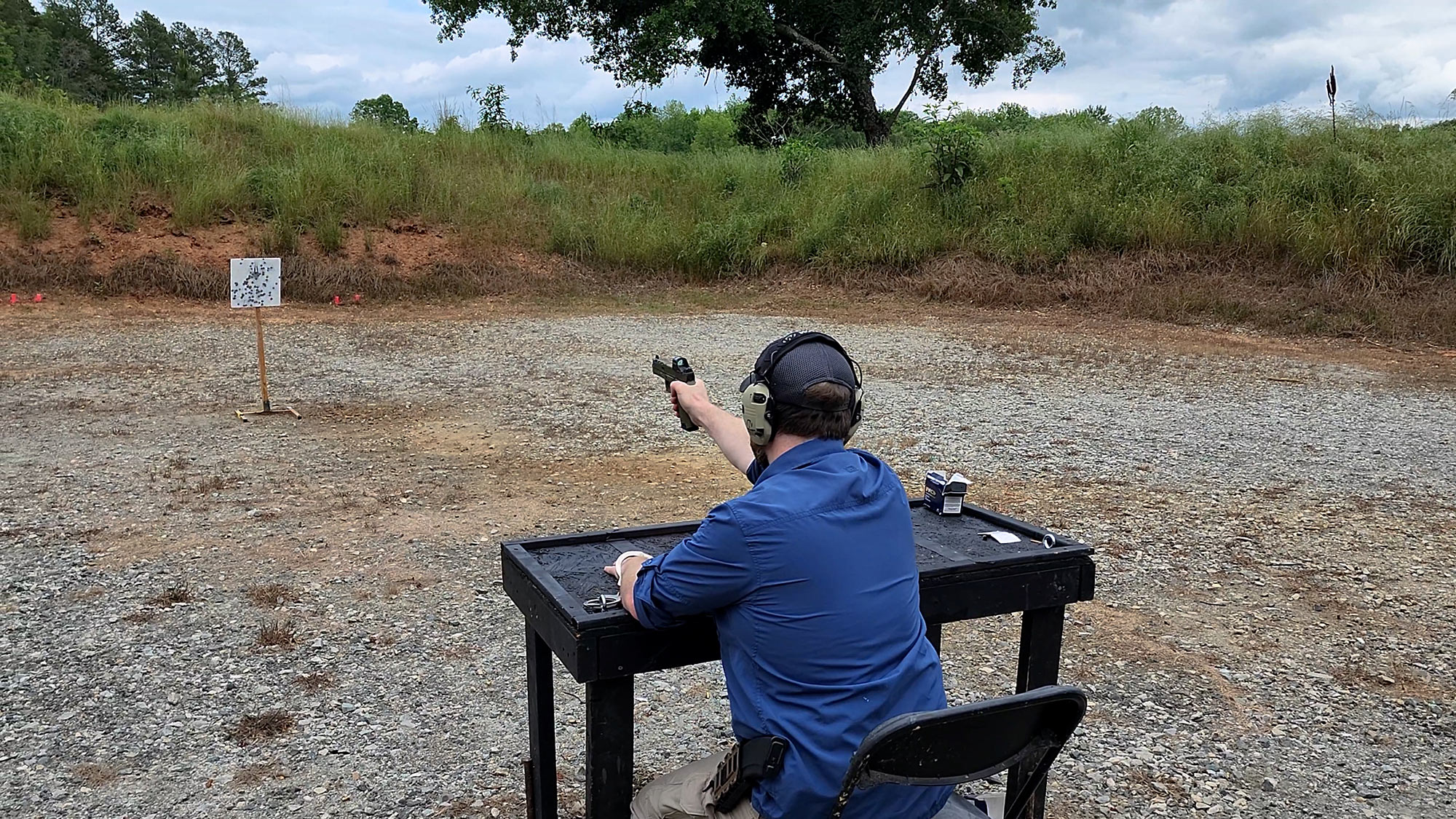
Regarding speed-based competitions, these are your IPSC, IDPA, Three-Gun, Steel Challenge and USPSA matches. These are tough matches that push shooters to not only hit targets in a hurry but also manipulate and reload guns while moving. That sounds easy, but try to double-load a shotgun while running and out of breath. It will feel like you’re playing the board game Operation while cross-eyed and drunk. Yeah, it’s that tough.
That’s because these competitions are more about shaving time off of the most time-consuming aspects of operating a firearm than slow, precise shots. Yes, shooting fast is a must to be competitive at higher levels, but being able to reload a shotgun, in particular, is what separates the rock stars from the groupies.
Some associations like IDPA are more martial than gamey, meaning you need to run “realistic” gear for competition. This is because IDPA, in particular, was formed around the concept of training for concealed carry applications. The reason I have realistic quotes is that most competitors in IDPA still game the system in some regard. If you don’t believe me, check out how many shooters in IDPA matches (especially local ones) wear a fishing or photographer's vest to conceal their handguns rather than what they would normally wear on the street.
Still, it’s good practice to draw from concealment, even if it’s not exactly what a shooter would wear on a daily basis.
Despite being more advanced competitions—at least in terms of mechanics involved—competitions like three-gun matches are still all about fundamentals: breath, sights, and trigger. That’s why I personally stress getting involved in bullseye and high-power matches before moving to faster-paced disciplines.
IDPA Matches
But once a shooter has their fundamentals down pat, I recommend starting with IDPA over the other competitions I listed above. This is because it is far less dependent on gear than the others. Shooters won’t have to buy a Gucci race pistol and skeletonized holster to shoot in matches.
In fact, most IDPA classifications forbid it. All a shooter needs for most divisions is a pistol capable of holding 10 rounds of ammo chambered in 9mm, a concealment vest, and a holster that can conceal the handgun and remain open after drawing so it can be re-holstered with one hand. The cheapest solution for this is a used LE trade-in Glock 17, a fishing vest, and a Kydex holster. Assuming you already have a gun, you’ll only need to spend around 50 bucks to be ready to compete.
IPSC Matches
IPSC is very similar in execution to IDPA, except more race and game-centric. Moving targets, steel targets, and more capacious magazines are the norm here. It is 100% possible to compete in an IPSC competition with the same gear a shooter uses for IDPA, but since there aren’t as many restrictions, faster, more efficient equipment is a better choice.
These matches also tend to be a little more difficult than IDPA because they facilitate reloading on the move. They’re also a little more expensive for the reasons I listed in the previous paragraph.
USPSA Matches
Here’s where we start getting into super fast shooters and bad-ass race guns. USPSA matches are physically much more challenging than IPSC or IDPA matches. Marksmanship and mastering the manual of arms for your given firearm are still critical, but now you also have to be athletic to be competitive.
Running between shooting positions, shooting while moving, and hustling while reloading is a must to be competitive. That said, you’ll have a ton of fun running these matches if you commit to them and likely make several good friends along the way. Expect to finish towards the bottom of the pack for the first year you compete. Many folks who compete in USPSA matches are very good - like John Wick good.
You don’t have to be in great physical shape to compete at these events, but taking up running or jogging will make your life much easier. Take it from someone who used to run quarter marathons for fun. After I gained weight, my time (and knees) suffered considerably from it.
Three-Gun Matches
These are my personal favorite matches. They are brutally difficult for new shooters and really push a shooter to their limits if they go wide open. Running and reloading between targets is a given, and switching weapons during a stage isn’t uncommon either. As I mentioned earlier, the most difficult part of getting good at three-gun is learning to reload your shotgun rapidly.
These matches have all the athleticism and skill requirements of USPSA but mix in multiple firearm types to make the matches more interesting. The only downside to these matches is cost. A shooter will have to invest in a quality semi-automatic shotgun, an AR-15 with optics, and a handgun at a bare minimum to compete. These matches also have fairly high round counts, so expect to burn through a ton of money even if you run guns you already have. That said, you’ll have a fantastic time at these matches if you don’t go in expecting to win your first match. Instead, I recommend concentrating on being safe first, and not coming in DFL second. DFL, for the uninitiated, is a succinct acronym for Dead Freaking Last.
I also recommend analyzing your performance at these matches. Ideally have someone with you film you with a phone so you can rewatch the match and see where you were struggling and try to determine how to improve.
Lastly, have fun. Nobody wins these things on their first try. If the courses are a little too physically demanding for you, embrace the suck. Yes, you’ll be sore tomorrow, but for today, your old knees should hold up.