

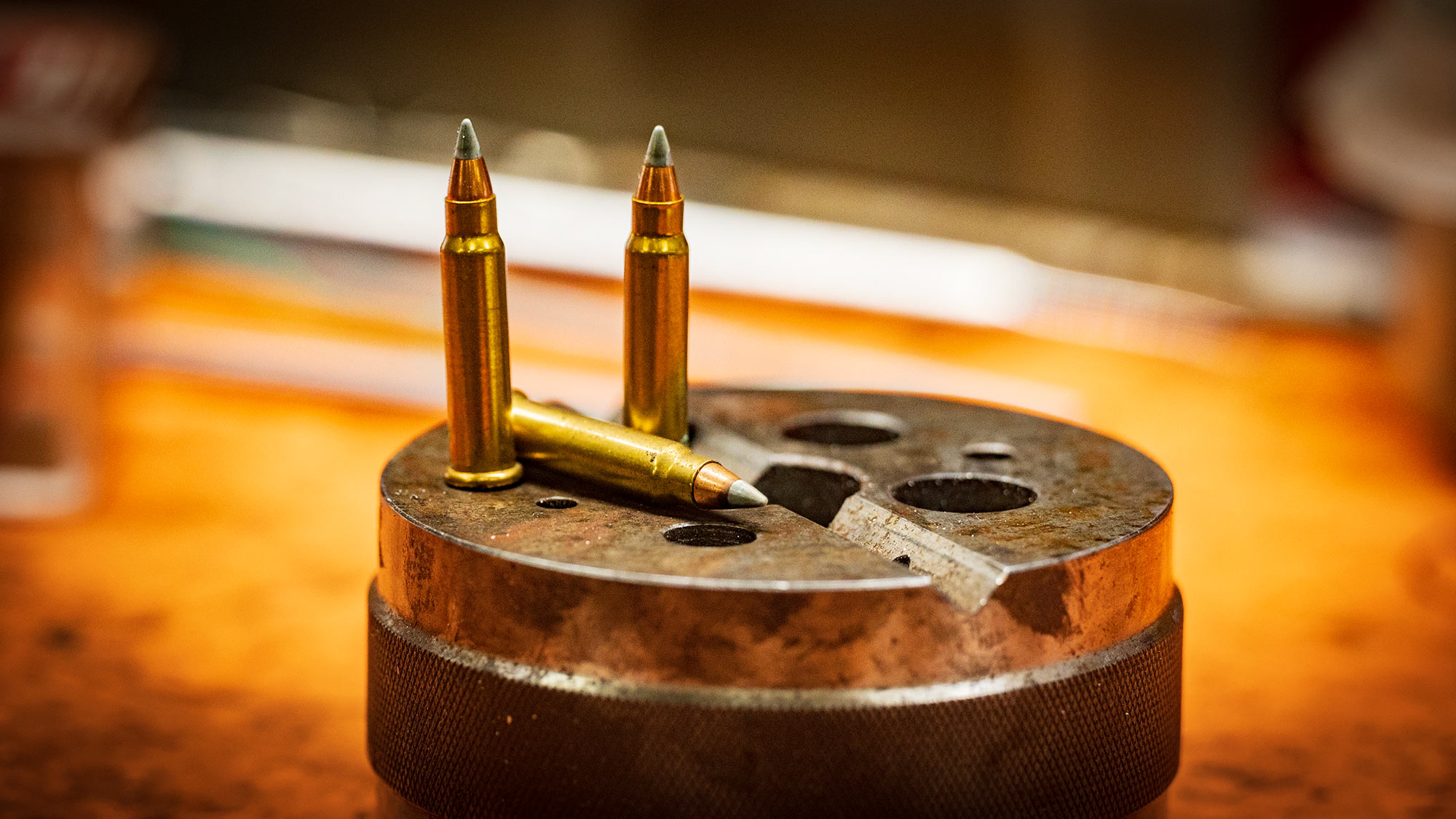
Most people assume rimfire calibers are only good for training, plinking, and hunting small game under 100 yards. But the world of rimfire cartridges isn’t limited to just the most prolific round, .22lr. Indeed, one of the most performance-driven options is .17 HMR, an ultra-high-velocity round that shows just how far a rimfire round can be pushed.
But depending on the application or use, this extra performance may be unnecessary and even detrimental. So, which caliber should a shooter invest in? Let’s take a deeper look and find out
What is the Advantage of the 17 HMR?
Compared to .22lr, 17 HMR offers increased velocity, increased range, and superior terminal ballistics. In more practical terms, this means that 17 HMR is a better caliber for engaging targets at longer ranges. Whether those targets are prairie dogs, paper bullseyes, or tin cans.
This is partly due to the increased velocity. With that increase in projectile speed, a shooter doesn’t have to compensate as much for bullet drop when shooting at distant targets. Another advantage of this velocity is that the round doesn’t go trans-sonic or drop below the speed of sound until much longer ranges than .22lr. The reason this matters is when a projectile goes trans-sonic, it destabilizes and starts to tumble and become extremely inaccurate.
As for terminal ballistics, since both .22lr and .17HMR utilize a small, light projectile, there are only two ways to increase ballistic efficacy: change the projectile type or increase velocity. Varminting .17HMR rounds use both these methods to maximize both how hard the round hits a target and how much of the energy of that projectile applies to it.
How? By utilizing a smaller diameter, and thus lighter round than .22lr and a larger case. The increased case capacity allows ammunition manufacturers to increase the powder charge behind the round, while the narrower, lighter round permits incredible speed. When this is coupled with an expanding projectile like a hollow point, the round is capable to inflicting unbelievable hydrostatic shock to the target.
On organic targets, this translates to massive internal expansion that stretches the tissue beyond its elasticity limit. Not unlike blowing a balloon up until it pops. In this case, the balloon is a squirrel or prairie dog. This might seem inhumane to some, but it’s actually the furthest thing from it. Think of it this way: the animal being culled goes from alive to disintegrated in an instant - its neurons can’t even send a pain sensation to the brain before the entire creature is obliterated.
What’s really fascinating about this round is that despite the vast increase in power over .22lr, it doesn’t have substantially more felt recoil. 17 HMR really shows just what a rimfire cartridge can do, but it might leave some of you wondering - what is a rimfire round? To answer that question, we need to know the answer to another question first.
What are Bullet Primers?
It’s a simple question but one that is fundamental to understanding what a cartridge is and how it functions. Let’s look at the four main components of a cartridge to better understand what they are and how they work.
A metallic cartridge consists of four parts:
- Bullet
- Casing
- Propellant
- Primer
The bullet is self-explanatory—it’s the projectile that is launched from the firearm when it’s fired.
The casing is a metallic container that is open on one end, holds the propellent, and is capped with the bullet.
The propellent is whatever deflagrant, which, when ignited, provides the means to launch our bullet down the barrel and at a target.
A primer is a component that, when detonated, ignites our propellent and turns it from a solid into a gas. For modern rounds, primers are shock-sensitive chemicals that, when hit with some form of kinetic force, explode. In centerfire ammunition, primers are a separate metallic cup that holds the priming compound, and when the gun’s hammer strikes it, drives that primer cup into an anvil, which detonates it.
There are two main types of centerfire primers: Berdan and Boxer.
Older surplus rounds (as well as Russian ammunition) use Berdan primers, which utilize a pair of flash holes or holes through which the ignited priming compound reaches the propellant. They also feature the anvil built into the casing itself. You exclusively see these primers on steel casings because the steel is hard enough for the primer to detonate when struck hard enough.
All modern ammunition uses Boxer primers. These primers utilize a single flash hole built into the shell casing and have a separate anvil built into the primer itself. The brass casing is a little too soft to reliably detonate a shock-sensitive priming compound when struck.
“But wait.” You might be asking, “Aren’t we talking about rimfire rounds and not centerfire ones?”
Correct. In our case, rimfire rounds don’t use a separate primer cup but instead have a small portion of the base of a shell casing forming a rim. Inside that rim, the casing has a small amount of priming compound.
When a firearm’s hammer strikes the rim, it crushes a small amount of primer compound upon itself and causes it to detonate. This simple construction makes rimfire rounds very affordable since they’re cheap to manufacture.
This is also the source of the round’s limitation. Since the casing has to be very thin for it to be easily crushable by the gun’s hammer, it limits case wall thickness and, thus, power.
The other limiting factor is reliability. Since the primer compound starts as a liquid and then dries, there’s no way to reliably cover the entire rim with the shock-sensitive chemical. This affects reliability because the hammer has a small chance of striking an area of the rim that lacks enough primer to detonate the propellant. This leads to a click instead of a bang. This is fine when practicing at a range or shooting old soda cans on the farm, but in a life-or-death scenario, this could be fatally problematic.
Why Choose .22lr Over .17 HMR?
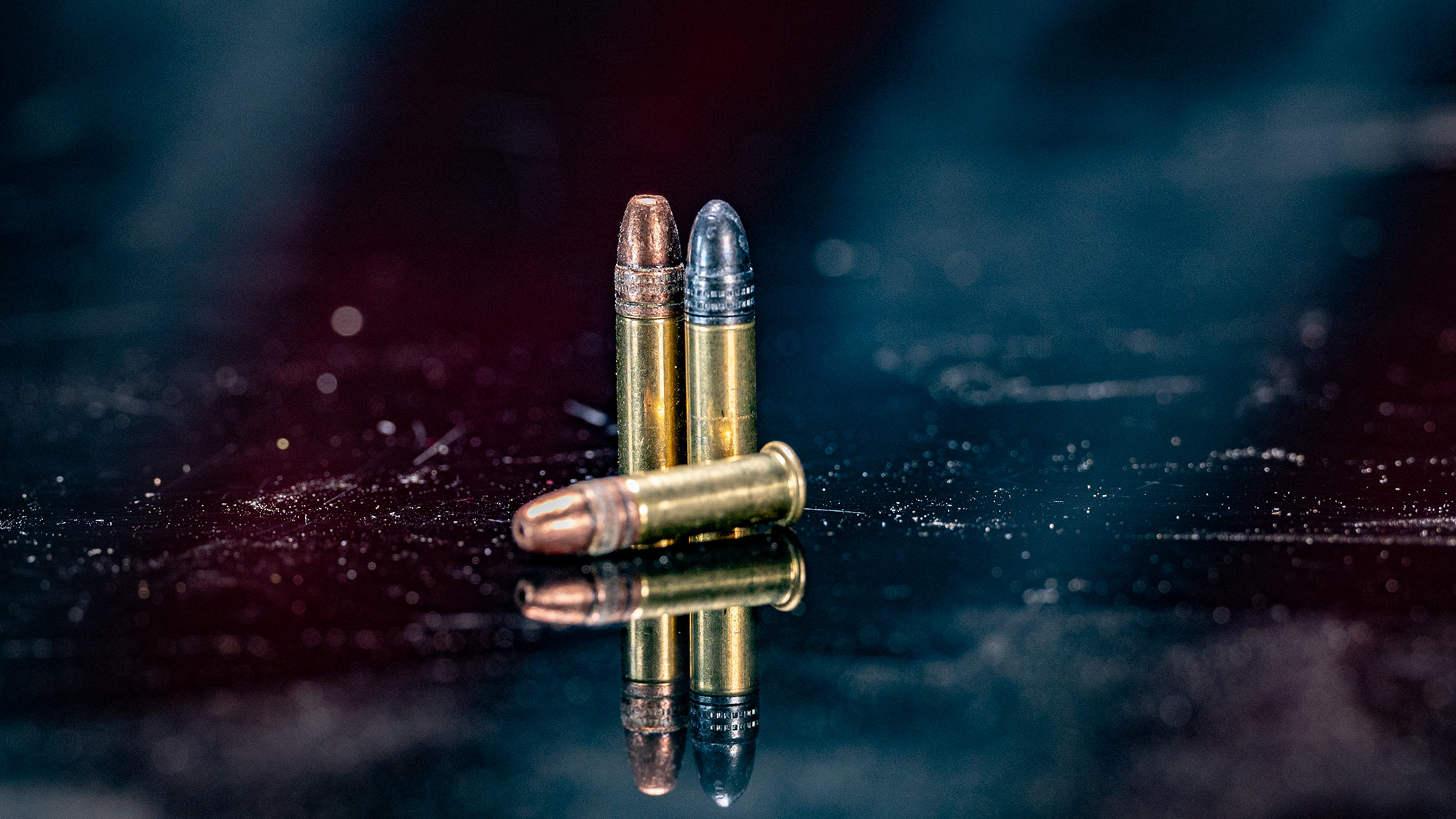
From a pure performance standpoint, it seems like .17 HMR is objectively superior to .22lr. And from that perspective, it is. The problem with .17 HMR is cost. The average.17 HMR round costs around ten times the price of .22lr. So, while yes, the .17 HMR will do laps around the .22lr in terms of performance and range, it will also drain your shooting funds exponentially faster. And keep in mind, we’re talking primarily about standard plinking ammo.
Varmint rounds like those topped with Hornady’s V-Max round are even pricier. Though if you’ve ever shot prairie dogs with one, you know exactly the kind of incredible terminal ballistic performance they offer - and it’s worth every penny. But if you’re shooting tin cans or paper targets within 75 yards, I would personally choose .22lr every single time.
Another advantage of .22lr over .17 HMR is the number of different guns available chambered in the cartridge. I would guess there are no fewer than 500 different .22lr designs in existence at the moment. Plus, the rounds are vastly more common at sporting goods stores.
From a survivalist standpoint, .22lr also has the advantage of being much smaller and lighter than .17 HMR. A 500-round brick of .22lr is small enough to easily fit in the center console of a car or truck. Several companies make waterproof containers filled to the brim with this ammo specifically for the purpose of giving preppers or campers a steady supply of ammo that won’t be susceptible to the elements.
Final Verdict: .22lr vs .17 HMR
If you’re looking to hunt small game out to 200 yards, .17 HMR is hands down the winner. It can ethically cull rabbits, raccoons, beaver, and squirrels all day long with proper shot placement. The rounds are very high-velocity (2,350-2,650fps), so a shooter doesn’t need to compensate for elevation/drop nearly as much as with a .22lr round. The only downsides are cost, and somewhat limited magazine capacity. (Most guns chambered in .17 HMR are limited to 10-round magazines, though some aftermarket companies do make extended 20 and 30-round magazines!)
A shooter should choose .22lr when they are in search of a perfect training round that can be used to maximize their range time without spending a ton of cash. Another advantage of .22lr that I neglected to touch on is its suppressability. Since .22lr rounds aren’t pushing 2,000fps, they are much quieter when suppressed. Plus, there are dozens of subsonic loads that can turn a suppressed .22lr into a Hollywood-quiet plinker.
One that sounds like a pellet-gun on steroids. Despite this, make no mistake, .22lr is still a rifle round and can be used for a multitude of purposes. While it wouldn’t be my first choice for self-defense (neither would a .17 HMR) it still can function as such in a pinch. As with anything, shot placement is more important than stopping power.