Unless your experience with sound suppressors is limited to long guns and rimfire pistols, you’ve likely heard of the Nielson Device. Often referred to as a muzzle booster, a piston, or just a booster, the Nielson Device is a critical aspect of a suppressor that ensures it functions properly with weapons sensitive to barrel weight changes.
But that begs the question: “What precisely is a Nielsen Device?” Furthermore, why and when do you need one, and how exactly does it work? Buckle up, we’re about to go on the literary ride of your life as we explore the world of muzzle boosters.
History of Sound Suppressors
Before we get to what the Nielsen Device is and how it works, let’s take a step back and look at the broader context of suppressors. The story starts in the late 19th century, when the idea of quieting a firearm first took hold. In 1892, Swiss inventor Jakob Stahel patented a suppressor explicitly designed for discreetly slaughtering cattle. But Jakob wasn’t just a low-key livestock eliminator enthusiast, and he noted his new invention could be adapted for other firearms. A couple of years later, in 1894, another Swiss inventor, C.A. Aeppli, patented a similar device for firearms. But it was Hiram Percy Maxim, son of the famous Maxim gun inventor, who really put suppressors on the map. Around 1902, Maxim developed the first commercially successful silencer, kicking off the modern suppressor era. His designs focused on slowing and cooling the escaping propellant gases to reduce the noise of a gunshot, using a series of internal baffles to trap and redirect those gases.
Suppressors didn’t just catch on for their stealthy appeal. Hunters and shooters quickly saw the practical benefits: hearing protection, reduced recoil, and less muzzle flash. By the early 20th century, suppressors were being used to make shooting safer and more comfortable, especially for high-caliber rifles. However, as suppressors grew in popularity, so did the challenges of using them on semi-automatic firearms, particularly pistols with tilting barrels. The added weight of a suppressor could mess with the cycling of these guns, turning a reliable semi-auto into a single-shot paperweight. This is where the Nielsen Device comes into play, but we’ll get to that in a moment.
The history of suppressors isn’t just about tech—it’s also about regulation. In the United States, the National Firearms Act (NFA) of 1934 slapped strict rules on suppressors, requiring registration and a tax stamp. This made them less accessible to the average shooter, but the technology kept evolving. Fast forward to today, and suppressors are more popular than ever, with companies like SilencerCo, Yankee Hill Machine, and Liberty Suppressors pushing the envelope on design and performance.
What Does a Nielsen Device Do?
Now, let’s get to the meat of it: what the hell is a Nielsen Device, and why should you care? In simple terms, a Nielsen Device—also called a muzzle booster or piston—is a mechanical component that helps a semi-automatic pistol cycle properly when a suppressor is attached. Think of it as the middleman that keeps your gun running smoothly despite the extra weight hanging off the end of your barrel.
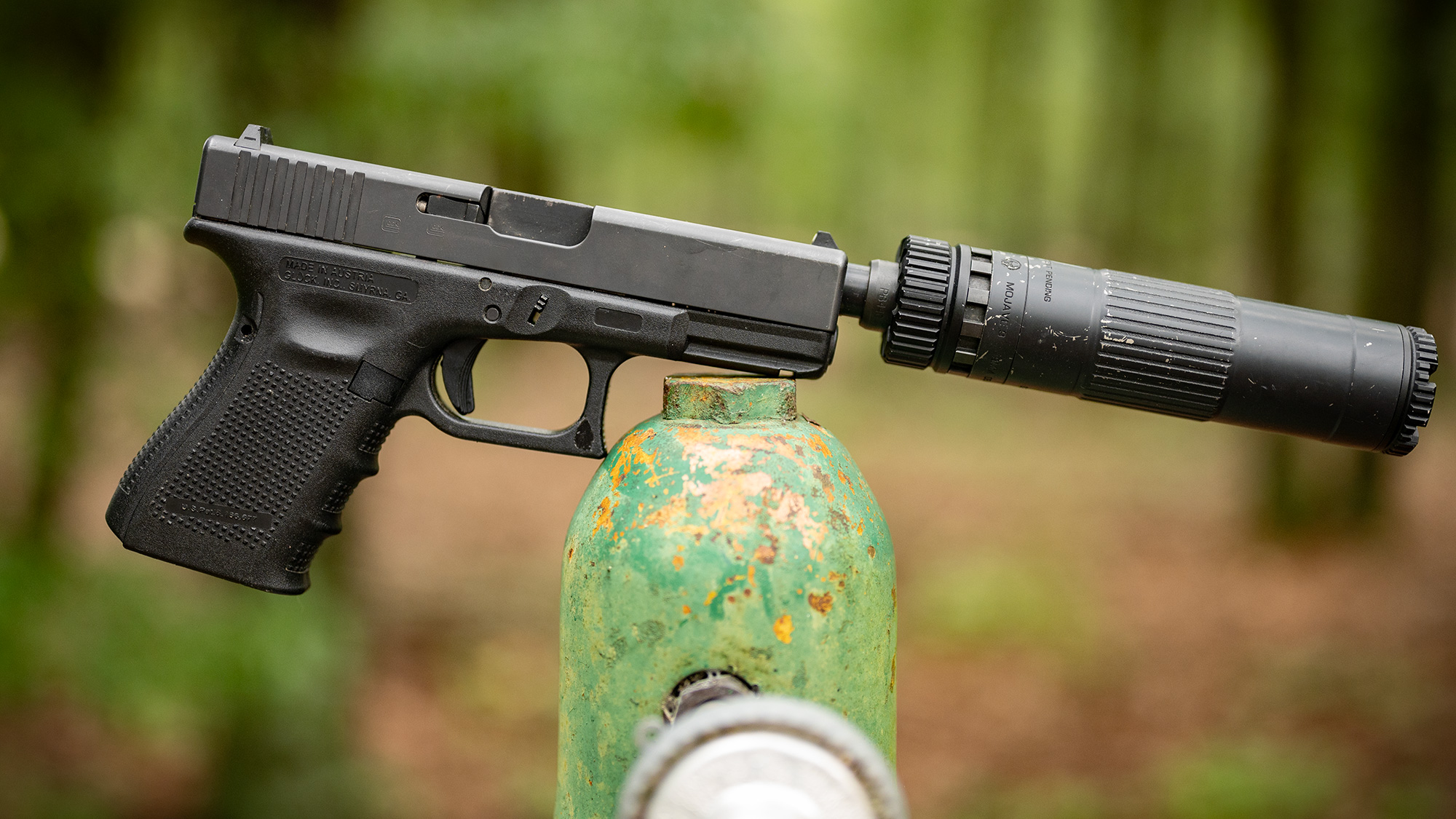
Here’s how it works, without getting too deep into the physics weeds. Most modern semi-auto pistols, like Glocks, Sigs, or 1911s, use a short-recoil system, often based on John Browning’s tilt-barrel design. When you fire the gun, the barrel and slide move rearward together for a short distance before the barrel tilts to unlock from the slide, allowing the slide to continue back, eject the spent case, and load a new round. The problem? Slapping a suppressor on the end of the barrel adds significant weight, which screws with the recoil energy needed to cycle the action. The gun might not unlock properly or cycle fully, leading to jams or a sluggish action.
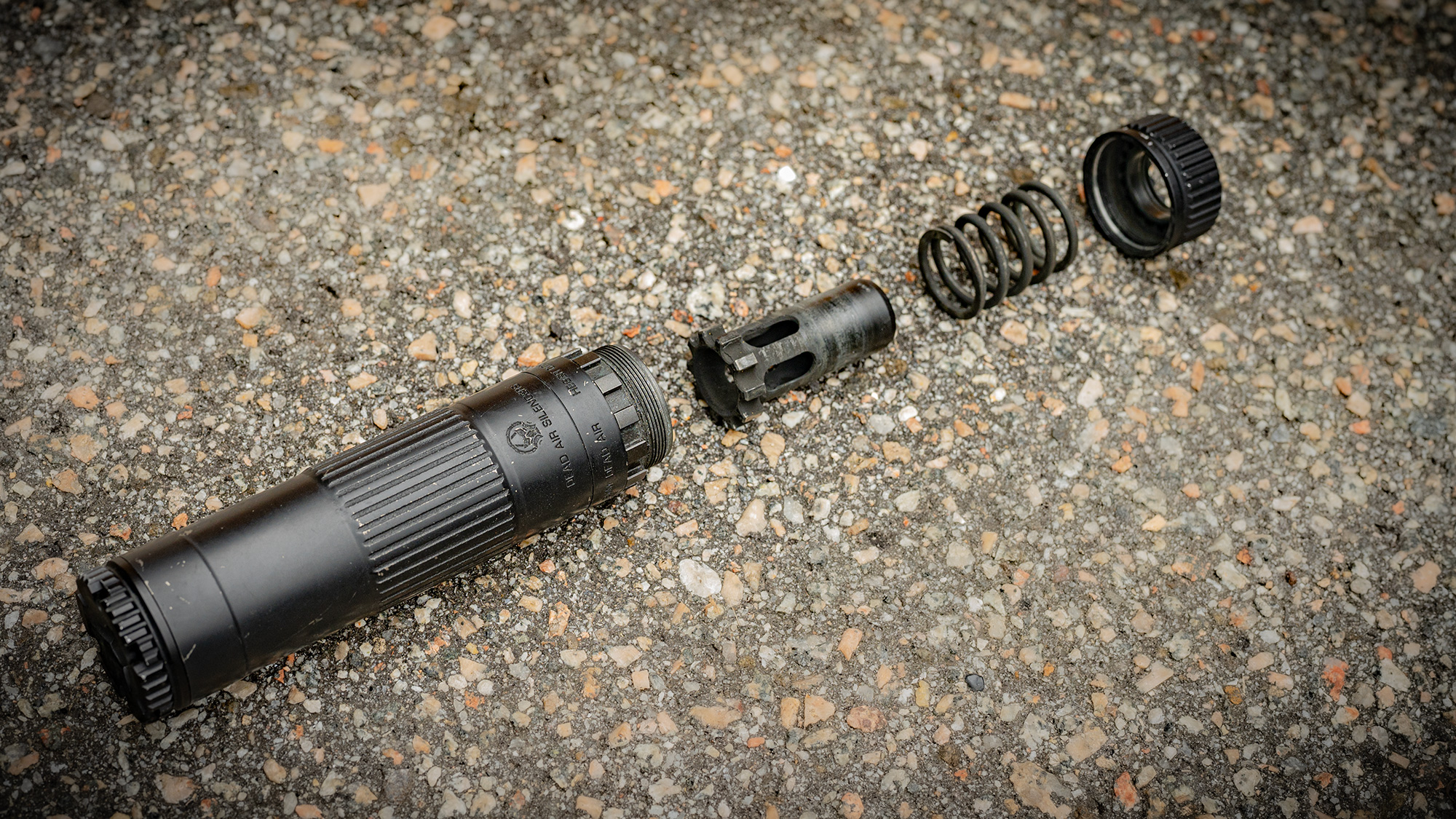
The Nielsen Device solves this by temporarily decoupling the suppressor’s mass from the barrel during the firing cycle. It’s made up of a few key parts: a piston that threads onto the barrel, a spring, a piston housing, and an endcap that holds it all together. When you fire, the expanding gases from the cartridge fill the space between the piston and housing, pushing them in opposite directions. This action lets the barrel move rearward without dragging the suppressor’s full weight along, giving the slide enough momentum to cycle as designed. Once the gases dissipate, the spring pulls everything back into alignment for the next shot. It’s like a magician yanking a tablecloth out from under a set of dishes—everything stays in place, and the gun keeps running.
The concept isn’t new. The idea of a recoil booster dates back to Hiram Maxim’s work in 1894, when he used a similar principle to boost the cyclic rate of his machine guns. The modern Nielsen Device, often credited to engineer Doug Olsen in the mid-1980s, refined this idea for pistol suppressors. It’s a clever solution that relies on Newton’s laws of motion—specifically, the third law (every action has an equal and opposite reaction) and the first (an object at rest stays at rest unless acted upon). The result? Your suppressed pistol shoots reliably without turning into a stovepipe machine.
Do All Suppressors Have a Nielsen Device?
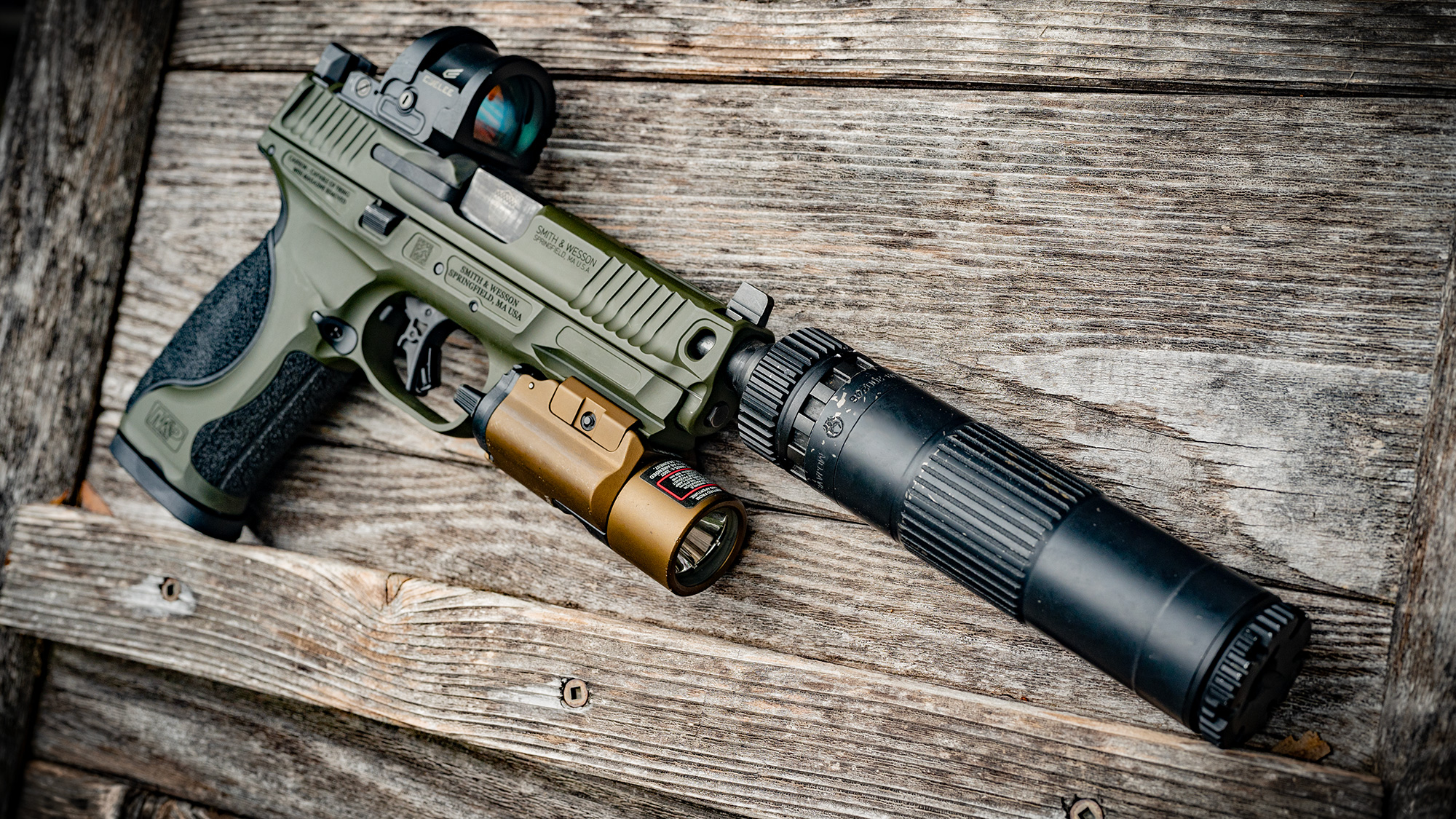
Not every suppressor needs a Nielsen Device, and not every suppressor has one. Whether a suppressor includes a Nielsen Device depends on its design and intended use. Most pistol suppressors, especially those built for semi-auto handguns with tilting barrels, come with a Nielsen Device either integrated into the design or as a removable component. Brands like SilencerCo, Rugged Suppressors, and Liberty Suppressors often include them as standard for models like the SilencerCo Osprey or Rugged Obsidian. The device is typically housed in a booster assembly, which includes the piston, spring, and housing, and can be swapped out or modified based on the firearm’s thread pitch.
However, some suppressors are designed without a Nielsen Device, particularly those meant for fixed-barrel firearms or lightweight applications. For example, rimfire suppressors like the SilencerCo Sparrow, often used on .22 LR pistols like the Browning Buckmark, don’t always need a Nielsen Device. Why? Because these guns often use a blowback action, which doesn’t rely on a tilting barrel, or the suppressor is light enough that it doesn’t significantly affect cycling. Similarly, rifle suppressors and some pistol-caliber carbine suppressors skip the Nielsen Device, as their fixed barrels or different operating systems don’t require it.
You’ll also find suppressors with modular mounting systems. For instance, the Rugged Obsidian series comes with a booster system for tilting-barrel pistols but includes a fixed-barrel spacer to disable the booster for use on fixed-barrel guns like .22 LR pistols or pistol-caliber carbines. Using a Nielsen Device on a fixed-barrel gun without a spacer can cause a “jackhammer effect,” potentially damaging the suppressor or barrel threads, so versatility is key.
Does My Firearm Need a Nielsen Device?
So, how do you know if your firearm needs a Nielsen Device? It comes down to the type of gun and its operating system. Here’s a quick rundown to help you figure it out:
- Tilting-Barrel Pistols: If your pistol has a tilting barrel—think Glocks, Sig P226s, 1911s, or most modern semi-autos—you’ll almost certainly need a Nielsen Device to run a suppressor reliably. The added weight of the suppressor can prevent the barrel from unlocking properly, leading to cycling issues. A Nielsen Device ensures the gun functions as intended by compensating for that extra mass. For example, if you’re suppressing a Glock 19 or a Sig P226, a booster is a must.
- Fixed-Barrel Pistols: Firearms with fixed barrels, like many .22 LR pistols (e.g., Ruger Mark IV) or blowback-operated guns (e.g., Walther PP/PPK, H&K P7), generally don’t need a Nielsen Device. The blowback system relies on the recoil of the cartridge case to cycle the action, not the barrel’s movement, so the suppressor’s weight is less of an issue. However, if you’re using a suppressor with a Nielsen Device on a fixed-barrel gun, you’ll need a fixed-barrel spacer to lock out the booster’s movement and prevent damage.
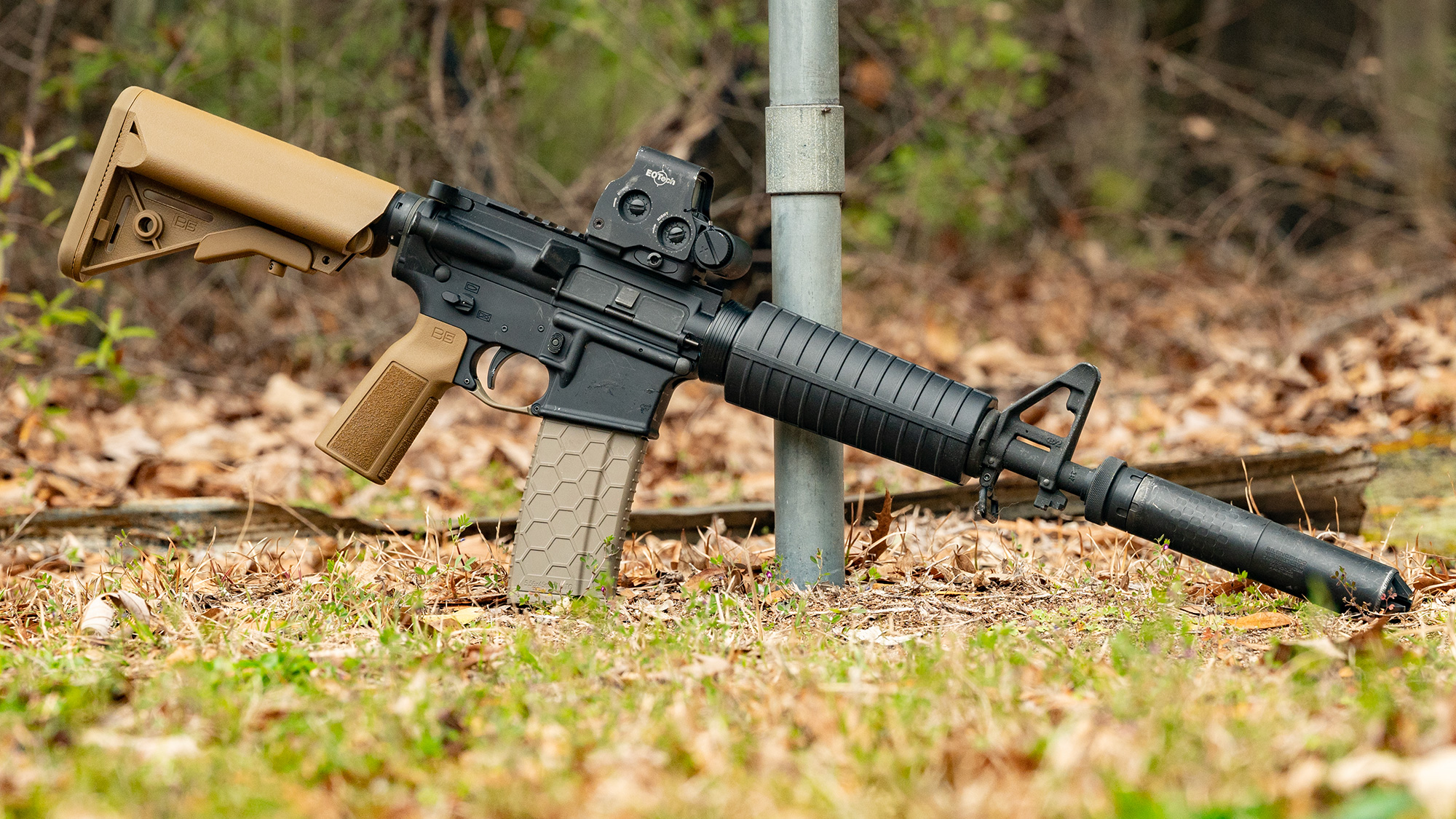
- Rifles and Pistol-Caliber Carbines: Most rifles and pistol-caliber carbines (PCCs) have fixed barrels, so they don’t require a Nielsen Device. In fact, using a booster on a rifle or PCC can batter the suppressor’s threads, especially with high-pressure rounds. If you’re running a suppressor on a 9mm AR or a .300 Blackout rifle, you’ll likely use a direct-thread mount or a quick-detach system like a 3-lug mount instead.
- Special Cases: Some pistols, like the Glock 44 (.22 LR), might look like they have a tilting barrel but actually operate differently. In the case of the Glock 44, the barrel doesn’t tilt, so a Nielsen Device isn’t necessary. Always check your firearm’s manual or consult with the suppressor manufacturer to confirm compatibility.
To figure out if your setup needs a Nielsen Device, check if your barrel tilts when you lock back the slide. If it does, you’ll likely need a booster. You’ll also want to match the piston’s thread pitch to your barrel’s threading (e.g., 1/2x28 for most 9mm pistols or .578x28 for .45 ACP). If you’re running multiple firearms with different thread pitches, consider a suppressor with interchangeable pistons, like the SilencerCo Piston Kit, for maximum versatility.
Maintenance Tips
- Lightly oil the booster spring every 50 rounds.
- Match piston thread pitch to your barrel (e.g., 1/2x28 for most 9mm).
- Use manufacturer-recommended spacers for fixed-barrel setups to avoid damage.
- And if you’re shooting subsonic ammo or low-pressure rounds, double-check that your suppressor and booster are rated for it, as some setups may need specific tuning.