
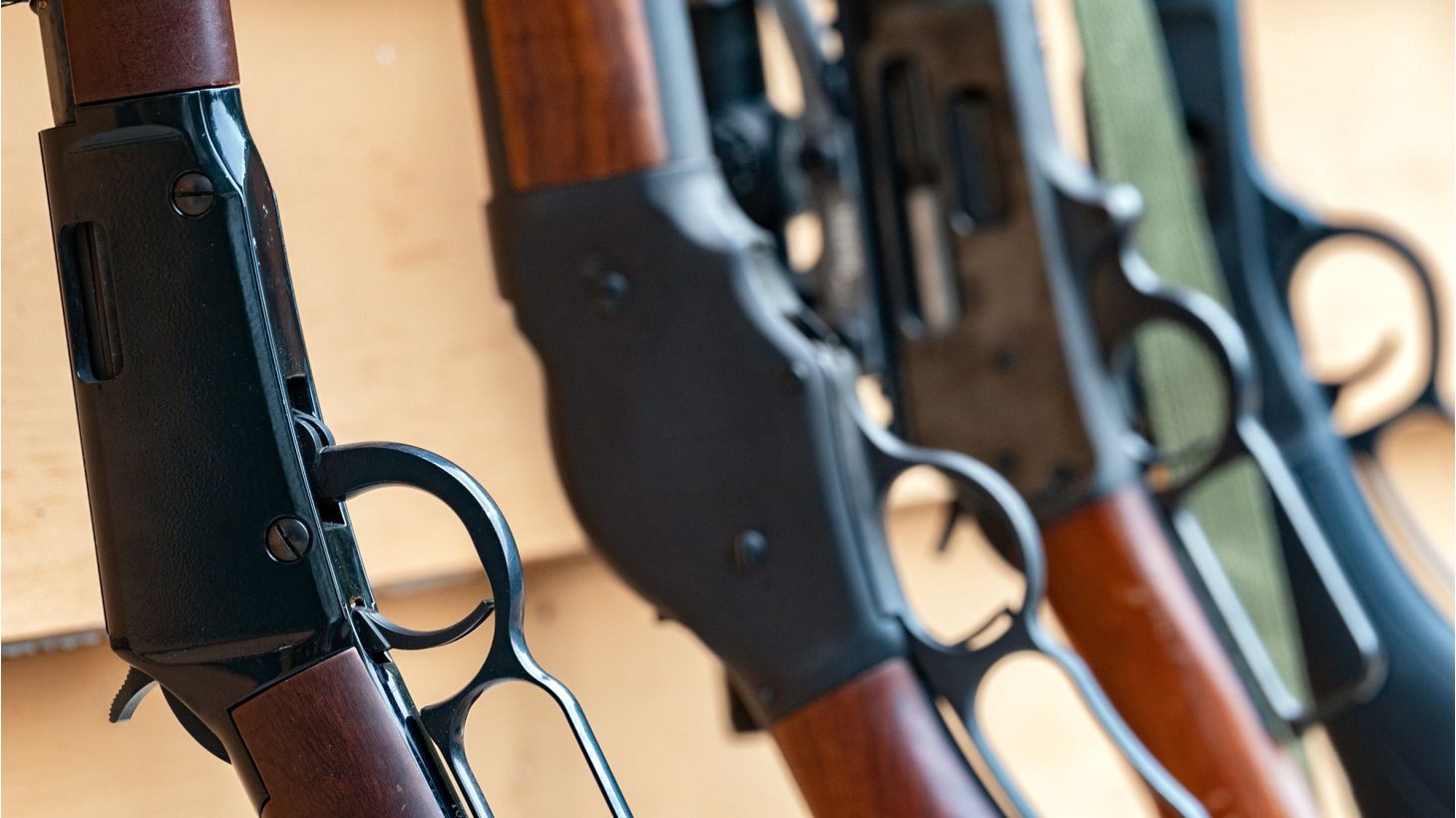
Lever-Action Rifles: Outdated Relic or Timeless Classic?
According to many shooters, lever-action rifles are outdated, antiquated, and outclassed by modern firearms. The irony is that when they were first introduced, they were one of the greatest technological leaps in firearm history. So which is it? Let’s take a closer look at lever-action firearms, how they work, where they came from, and whether they still hold their own today. In the end, we hope to educate you on this timeless classic and help you find the right lever-action rifle.
What is a Lever-Action Rifle?
Originally referred to as "repeaters" or "repeating firearms", a lever-action rifle can extract a spent round, eject it, and chamber another by working a lever. Before the introduction of lever-action firearms, shooters had to chamber each round manually. The difference in time made the lever-action rifle one of the most lethal weapons on the battlefield in the 1800s.
The first commercially successful lever-action rifle was the Henry Rifle. Developed in 1860, this brass-receivered repeater held 16 rounds in its integral magazine tube and could cycle through them as quickly as the shooter could operate the lever. Although its rounds were anemic compared to some single-shot, breech-loading weapons of the time, the gun's capacity and speed made it incredibly effective.
A Historical Example: The Siege of Plevna
One of the best examples of the lever gun’s battlefield impact comes from the Russo-Turkish War of 1877. Russian troops armed with single-shot Berdan rifles faced Ottoman forces using Winchester 1866 rifles chambered in .44 Henry.
Despite having more than double the manpower, Russian forces suffered two casualties for every one inflicted. The effectiveness of lever-action rifles was so pronounced that it directly influenced Russia’s decision to develop the Mosin-Nagant bolt-action rifle.
Not All Lever-Actions are Rifles
This is a very common misnomer and one that, if not for the movie, Terminator 2, I would have been guilty of for a very long time. Though ignorance in this case is very understandable for American shooters, since the majority of lever-action firearms we see in movies and television are rifles and carbines.
The Volcanic Pistol
Interestingly enough, one of the earliest lever-action firearms was in fact a pistol - the Volcanic. The Volcanic looks like a cut-down lever-action rifle because that’s precisely what it is - a short-barreled lever-action without a buttstock. Because the engineers at the Volcanic Repeating Arms Company wanted to keep the gun reasonably small, they chambered it in .41 and .31 caliber rounds. These were seen as anemic even for the time, but given their fast-shooting nature, many shooters could look past it.
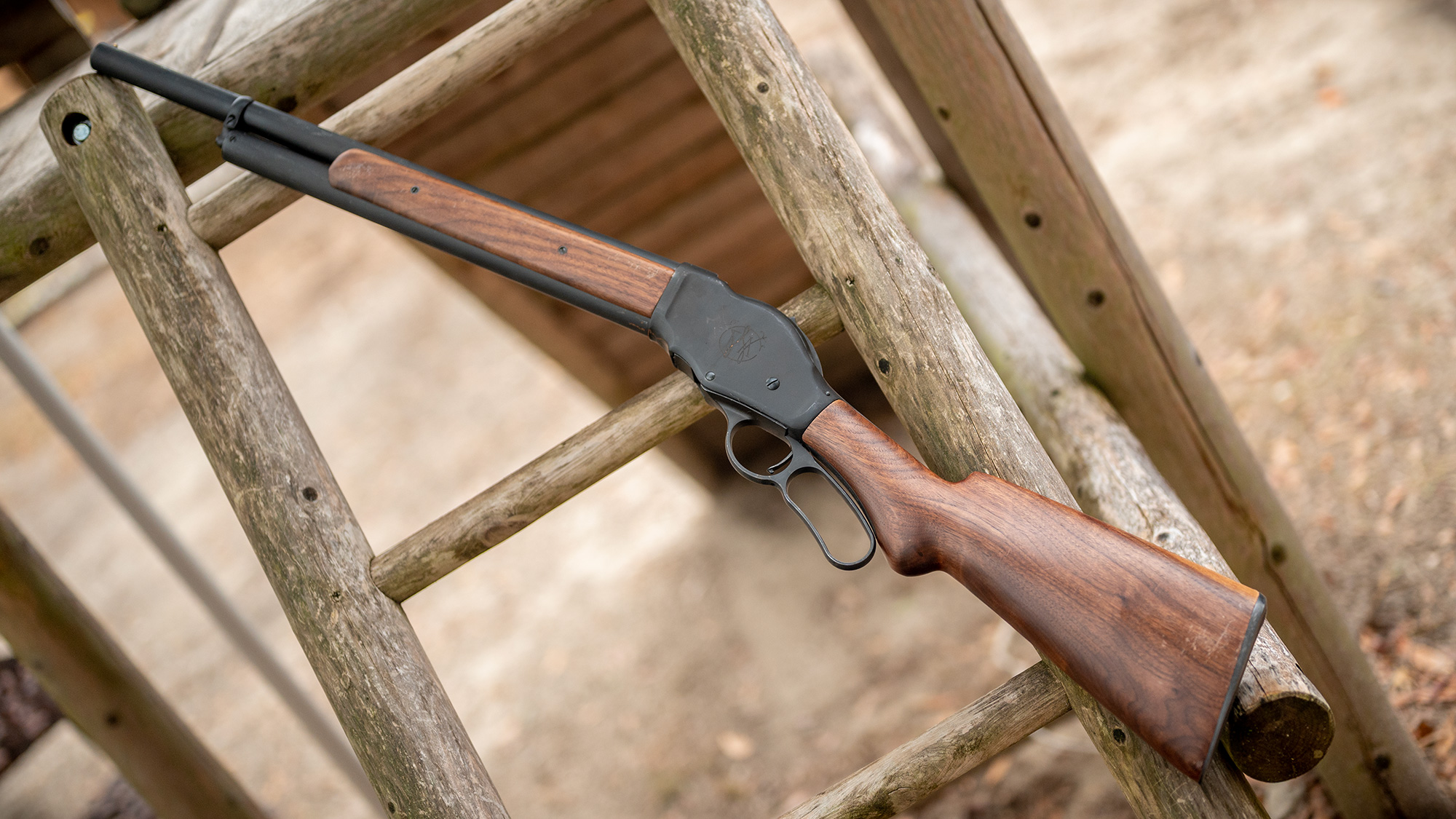
While the Volcanic company ended up shutting its doors after only a single year, its creators went on to found both Winchester Repeating Arms and Smith and Wesson. But there was another very popular repeating arm that was neither a rifle nor a pistol - the 12-gauge Winchester Model 1887
The Lever-Action Shotgun: Winchester 1887
The Winchester Model 1887 was the brainchild of the ultra-prolific firearms designer John Moses Browning. The same man who would invent the M1911, and the .50 BMG M2 HMG “Ma Deuce” that saw decades of military use, and in the case of the HMG, still serves in the United States military today after more than a century.
While most lever-action shotguns today are done for nostalgic or style reasons, whent he 1887 was introduced, all other shotguns were breech-loading. The fastest were double-barreled coach guns, but even they paled in comparison to the speed of the magazine-fed, lever-action 1887. But truth be told, the 1887 didn’t come before the now ubiquitous pump-action shotgun. The first commercially successful one of those was the Spencer 1882.
What’s interesting is that Browning couldn’t simply scale up the design of other lever-action rifles to accommodate the massive shotgun shells; he had to design the internal mechanisms from scratch.
That said, these guns were all about speed in their heyday, and with the invention of semi-automatic firearms, most assumed that lever-action firearms would go the way of the dinosaurs, but the story of lever-actions didn’t end there.
Modern Advantages of Lever-Action Rifles
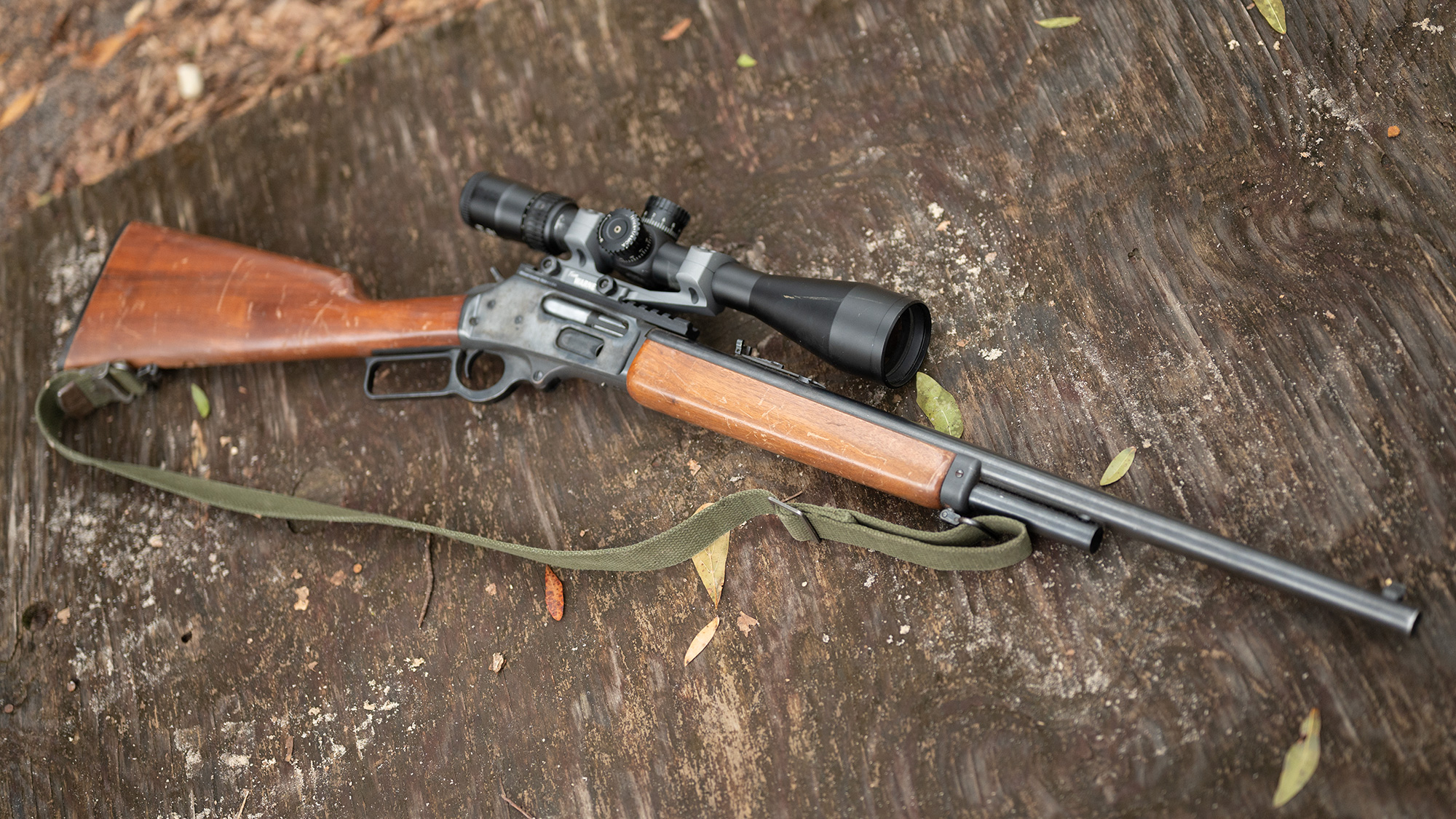
While lever guns can’t compete with semi-autos for speed, they still offer unique advantages.
Big-Bore Power
Lever-action rifles can chamber massive cartridges, including:
- .45-70 Government
- 300–500 grain bullets
- 1,300–2,275 fps
- Up to 3,449 ft-lbs of energy
- Compared to .223 Rem: ~1,338 ft-lbs
This makes .45-70 capable of ethically taking any game animal in North America.
Semi-autos in this caliber would be:
- Massive
- Bulky
- Difficult to design due to rimmed cartridges
- Limited to very low capacity magazines
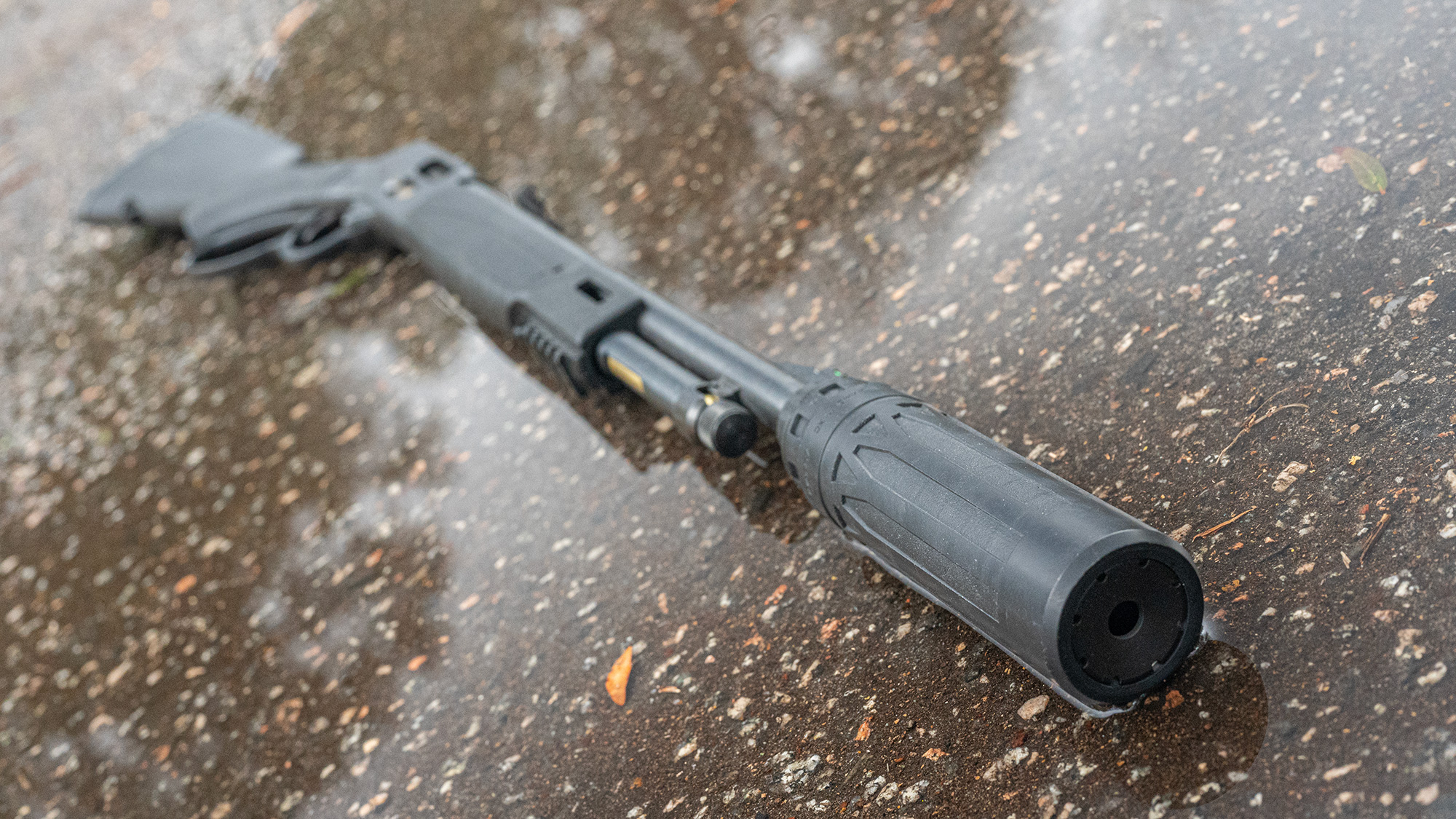
Why Lever-Action Rifles are Great Suppressor Hosts
The other big advantage of lever-actions in modern times is their compatibility with sound suppressors. Like bolt-action rifles, lever-action firearms are manually operated. The reasons this is important for sound suppressor hosts are two-fold: it eliminates the mechanical noise of the gun chambering a new round, and it eliminates reliability issues stemming from the increased backpressure and operating speed of a suppressed firearm.
But other factors come into play when suppressing a lever gun that also make it a great choice. For instance, nearly every traditional lever-action rifle is chambered in a round that has a subsonic version. In some cases, like .357 Magnum and .44 Magnum, the ‘special’ version of the round becomes subsonic out of a rifle-length barrel. And in the case of .44 Special, only specific loadings. As for .38 Special, the only loads that are reliably subsonic are the heavier ones, like 158-grain hardcast lead.
And if you think this sounds like a gimmick, a properly suppressed .38 special carbine is nearly inaudible at 75 yards! Personally, I enjoy using it for ground squirrels since the round lacks lethality at longer ranges, and is not only hearing-safe without hearing protection, but also pleasant.
Best Lever-Action Calibers
Best is always going to be at least somewhat subjective, but there are some calibers predominantly featured in lever-action rifles that are better suited to certain roles than others. So let’s take a closer look.
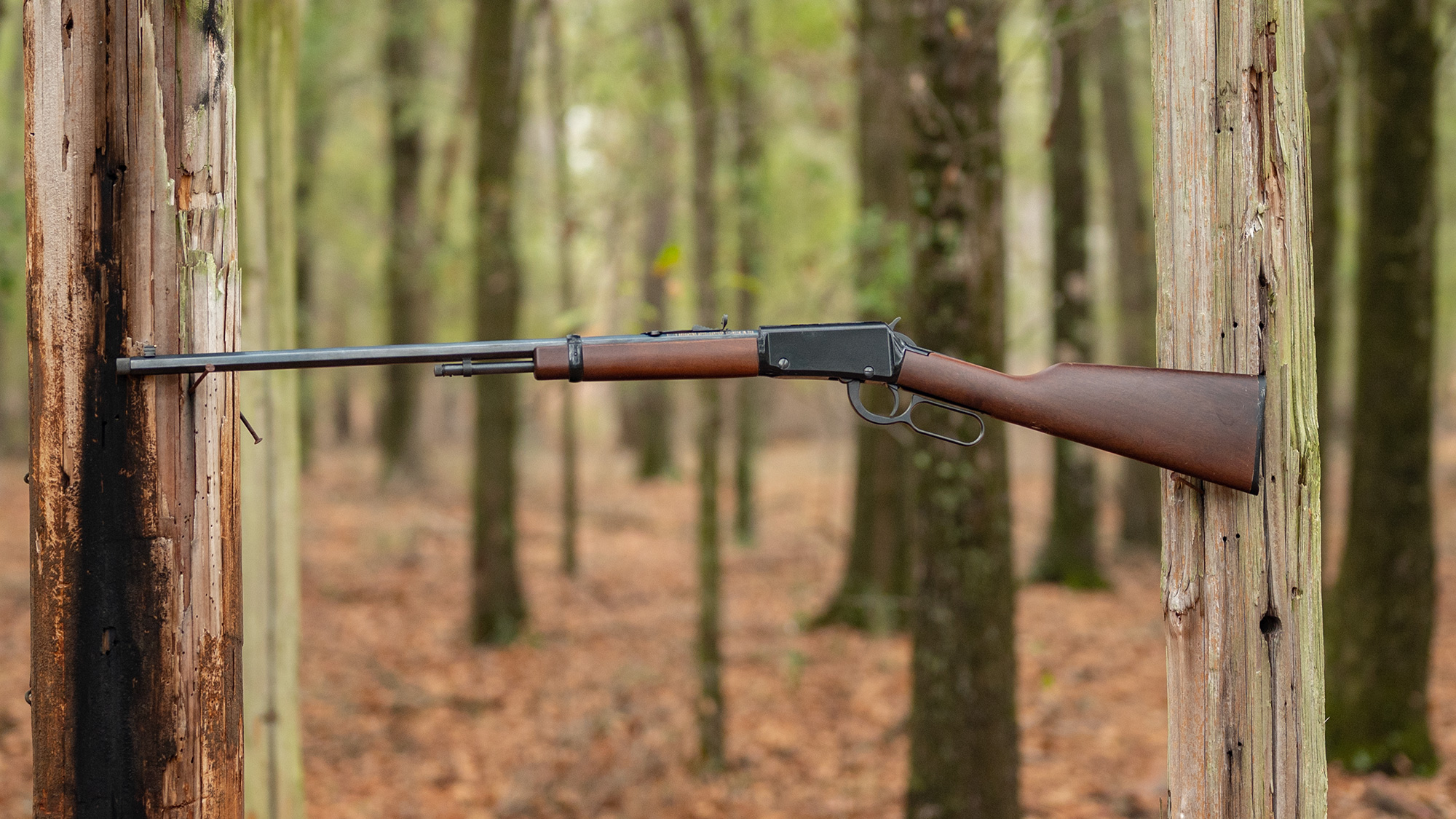
- .22lr - Inarguably the best round for small game hunting, .22lr lever-action rifles have been around for a very long time. And if the introduction and meteoric rise in popularity of the Henry Golden Boy is any indication, rimfire lever-guns aren’t going anywhere. Choose a .22lr lever-action rifle like the Henry Frontier for training new shooters, making an incredibly cheap-but-quiet suppressor host, or just a great all-around fun plinking gun.
- .30-30 Win - Yes, we all talk smack about the hillbilly (I grew up in WV, I’m allowed to say that.) who only has a single lever-action in .30-30, but he’s not wrong to grab it. .30-30 Win lever-action rifles split the difference between a true intermediate round like 7.62x39mm and a full-power cartridge like .30-06. Making it a great round for deer, especially when you want a lightweight rifle to stalk hunt with. The only downsides to the round are that it’s too expensive to use as a plinking round, and it has a limited effective range compared to big-bore rifle rounds like .308 Win.
- .357 Magnum - One of my all-time favorite rounds for both revolvers and lever-action rifles, .357 is probably the best choice for home defense as far as lever-action rifles go. The added barrel length of a carbine or rifle really pushes the terminal ballistics of the Magnum round to new heights, while making it much easier to shoot than from a revolver. And as I mentioned earlier, if you load heavy .38 special rounds in it and suppress the rifle, it is absurdly quiet. If you want a rifle that is versatile, fast-shooting, and hard-hitting within 100 yards without costing a small fortune to shoot - .357 Magnum is your perfect companion.
- .44 Magnum - Do you want most of the advantages of .357 Magnum but with the added capability of slaying bears? Look no further than .44 Magnum. If you thought Dirty Harry’s revolver packed a punch, try adding more than a foot of extra barrel and a stock - now the round’s recoil is tamed while allowing more accurate shots at longer ranges. The only downside to .44 Magnum lever-actions is their cost of ownership. The rounds regularly run over 75 cents per round, with the really good defensive/hunting rounds at over a dollar.
- .45-70 Gov - Want a lever-action rifle capable of ethically harvesting anything in North America? The choice is clear - .45-70 Gov. This hard-hitting round is more than a century old, but its combination of massive projectile and solid velocity still puts dangerous game down with a single shot.
Should You Buy a Lever-Action Rifle?
Yes. Full stop.
OK, maybe not for everyone, but if you want an ultra-reliable, handy rifle with tons of versatility that offers an old-school experience without sacrificing on efficacy, few other options can compete. Sure, I prefer my old Mausers for blasting steel at longer ranges, but if I want to plink or showcase how quiet a suppressor can be, I always bring out the lever guns.