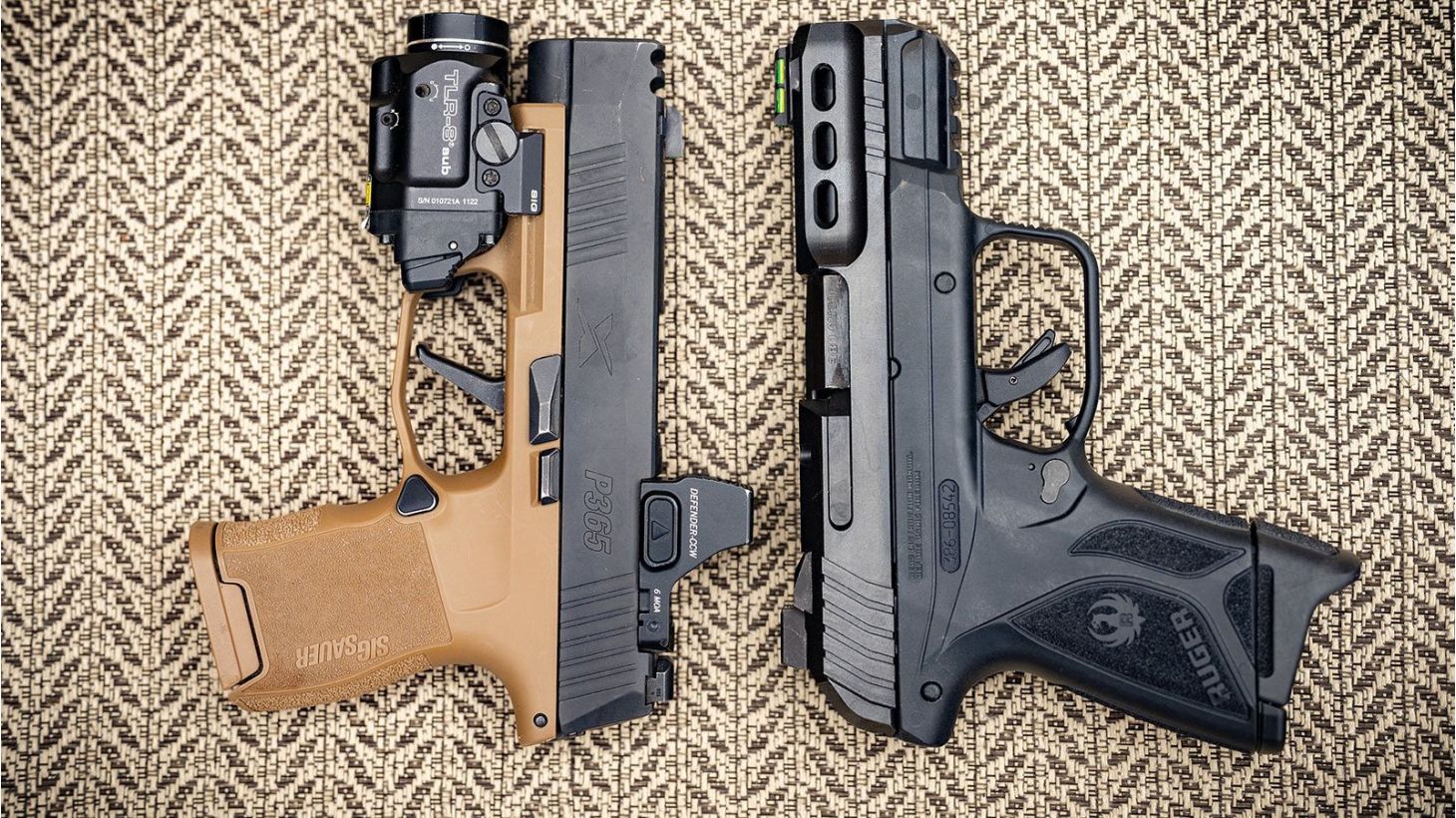
“Glock 17 or Glock 19?” Countless shooters have asked this question since the Glock 19’s inception. I’ve asked myself the same question countless times when mulling over what gun to bring to a class or a competition.
It’s a question that’s given an over-simplified answer by the majority of gun store clerks across the nation. Normally, the clerk won’t even glance up from his gun magazine to reply, ”The 19 is smaller.” And while this is a true statement, it doesn’t fully answer the question - not in a meaningful way, at least. So what is the correct answer?
Like anything worth considering, the answer is, “It depends.” Of course, it is; this is a gun article. When have you ever read a gun article where the answer is a simple one-sentence explanation in the first paragraph?
So, let’s dive into the advantages and disadvantages of both guns to help you make this critical decision.
Glock 17
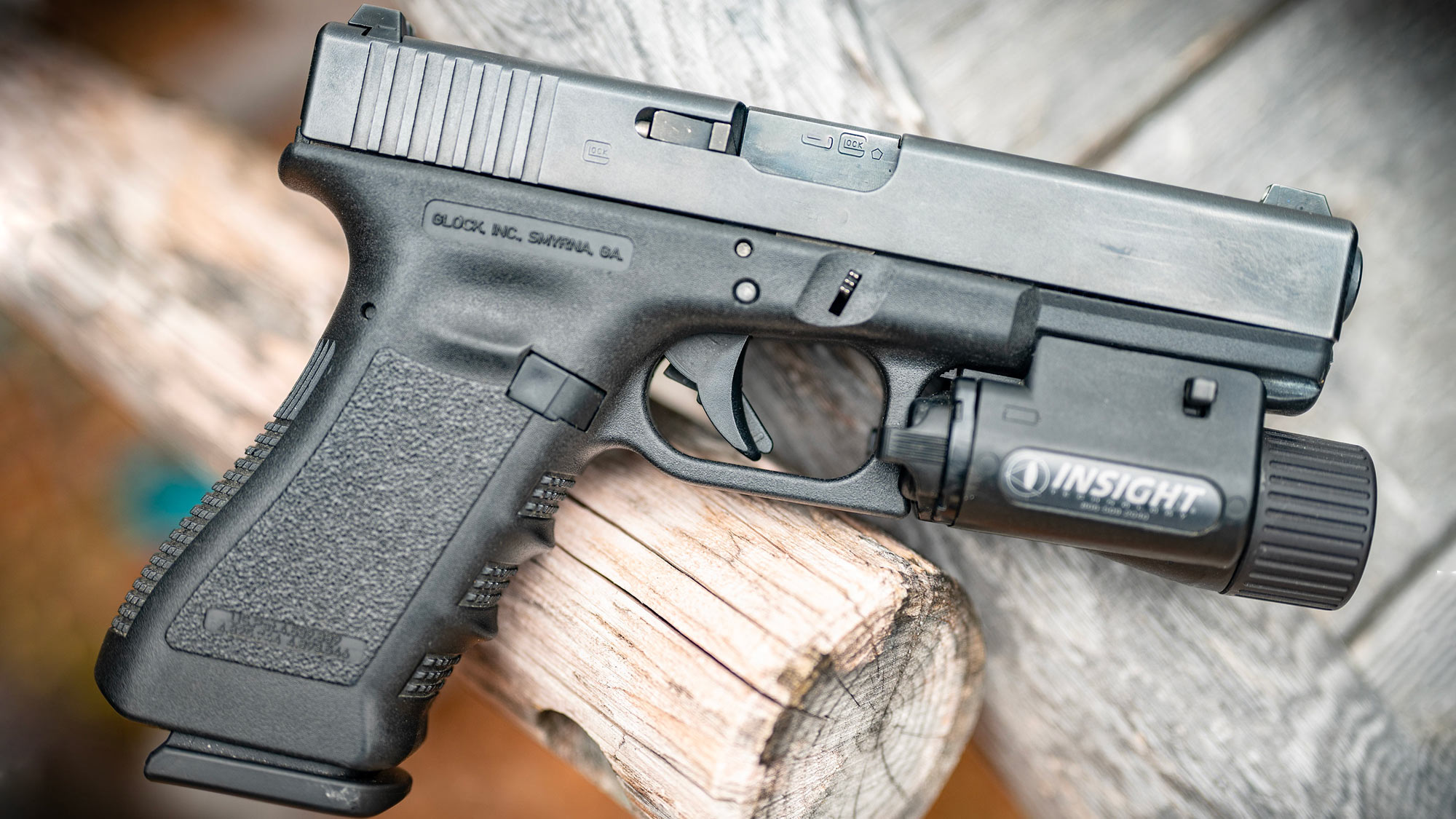
What are the advantages of the Glock 17, and what is it ideal for?
The full-sized 9mm Glock 17 is a perfect stock-class pistol for multiple shooting competitions. For example, IPSC, IDPA, or three-gun, where the gun’s decreased felt recoil resulting from its increased barrel length and size is a tremendous advantage.
And if shooters are running in the iron sights-only divisions, the increased sight radius of the Glock 17 makes hitting further and smaller targets easier. This, combined with the reduced felt recoil, means rapidly engaging multiple targets is measurably easier than with the Glock 19.
The late Gaston Glock’s magnum opus is the gun that started the mighty pistol maker’s ascension to power - the Glock 17. Chambered in 9mm parabellum and feeding from flush-fitting 17-round magazines, the polymer-framed pistol set the new gold standard for reliability and lightweight construction.
In an age where nearly every Wonder 9 was built from steel, aluminum, and wood, these almost post-modern-looking handguns caused quite a stir when they first rolled out. But these guns are full-sized pistols and not really designed for concealed carry. And as such, don’t really lend themselves to great carry guns.
Don’t get me wrong, they’re relentlessly reliable, very durable, and accurate enough for any ethical shot, but they’re thick and fairly large. If you’re open-carrying, sure, the Glock 17 is a fine choice. That said, if you’re very slender and over six feet tall, you can effectively conceal carry anything legal. I knew a 6’5” and 145lbs gentleman who concealed a Desert Eagle in his waistband! In other words, you can make do with anything, but there are definitely better options.
Glock 19
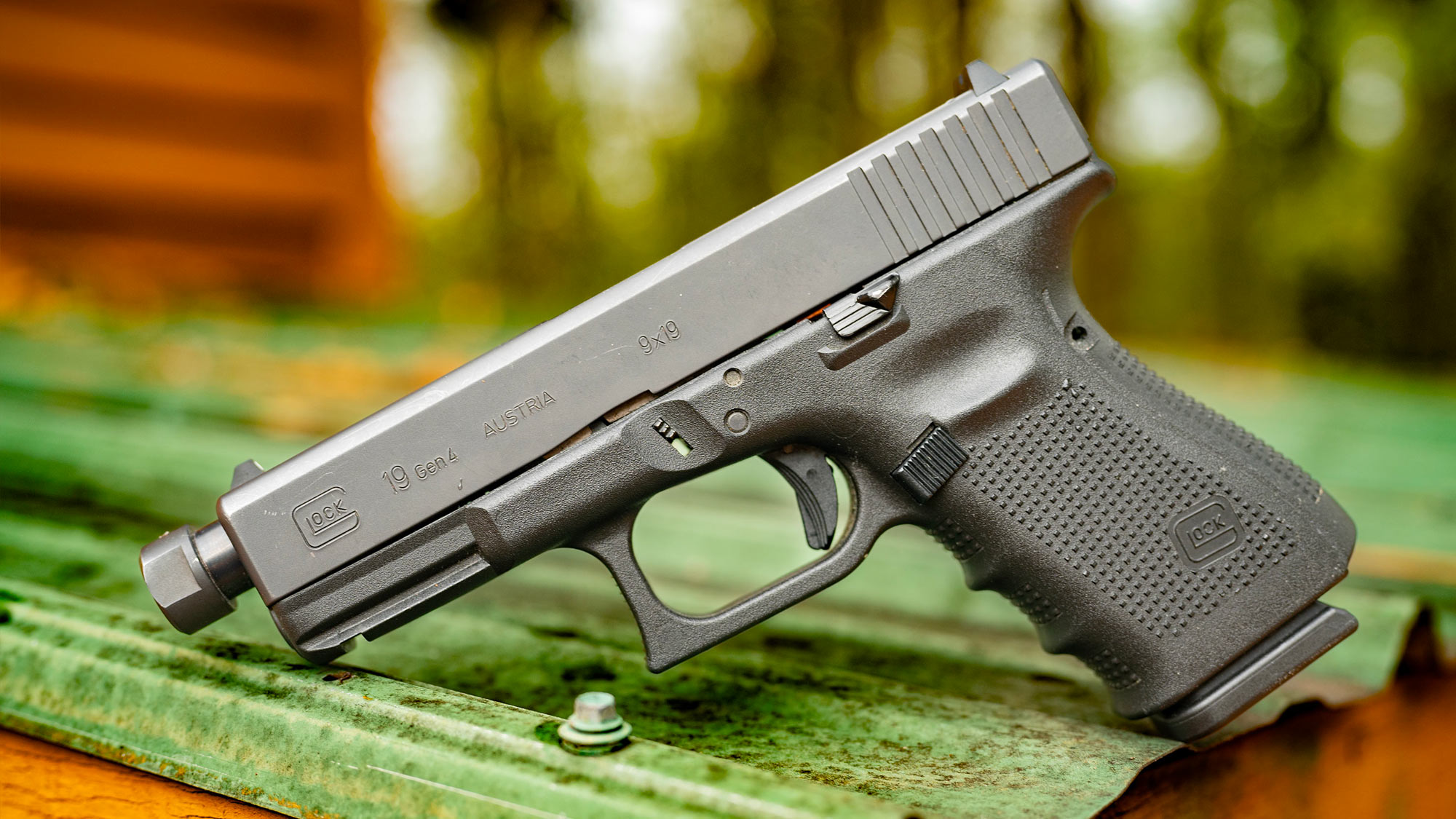
One of these aforementioned better options is the Glock 19. Despite only being half an inch shorter in overall length and roughly 0.75 inches in height, the Glock 19 was the gold standard for concealable fighting pistols for a very long time. That said, there are much better options for concealed carry nowadays, like the ever-increasing market of micro-compacts like the PSA Micro Dagger.
Still, the Glock 19 and its many clones represent a reasonable balance between shootability and concealability. This is why these pistols still represent a huge portion of the American pistol market.
For example, the 19 doesn’t feel like a compact pistol. It has light felt recoil, it’s more than accurate enough for ethical and legal self-defense ranges and has a solid 15+1-round capacity. But part of the reason for this is the width of the pistol. Measuring 1.26 inches in width, the Glock 19 isn’t the best gun for deep concealment, but with proper clothing and a good holster, it is reasonably easy to hide.
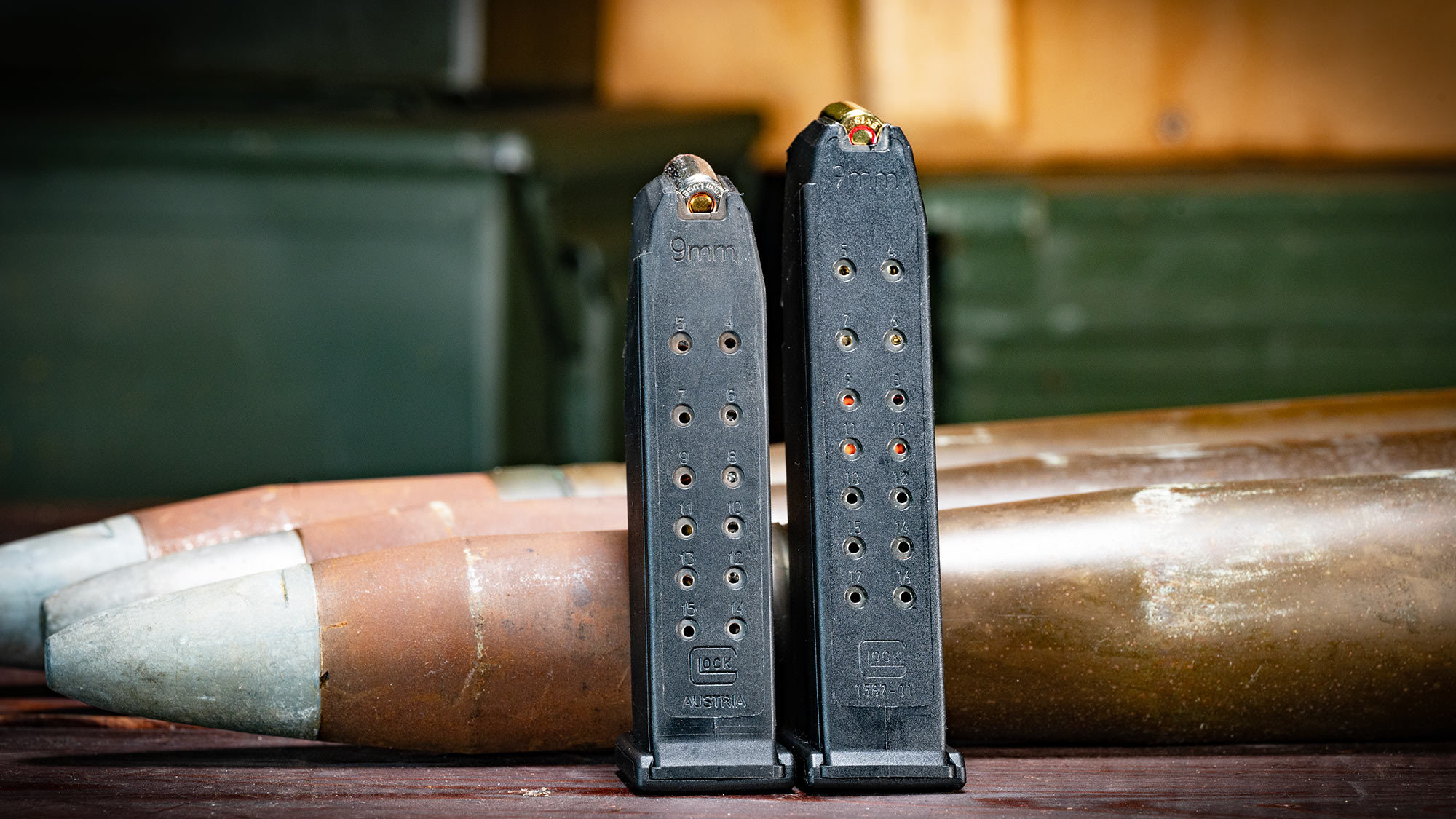
So, what does the Glock 19 do that its full-sized big brother can’t? In the simplest terms, it’s easier to conceal and holds fewer rounds in a flush-fitting magazine. As for capacity, the 19 can still use the 17’s magazines. They just protrude out the bottom a bit. But that doesn’t mean a shooter can’t run a flush-fitting 15-round magazine and carry a 17-round.
Best Use Categories
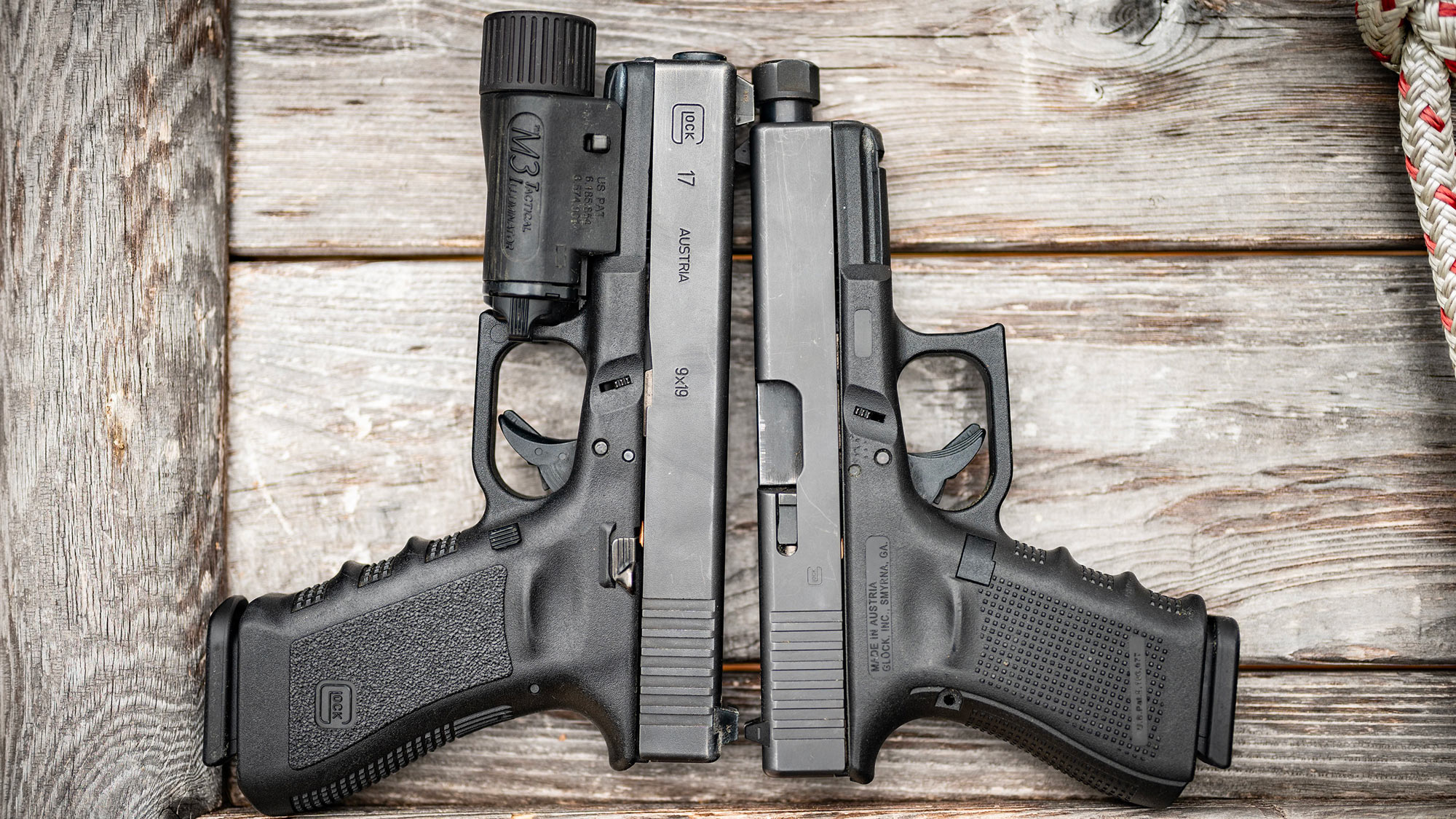
When comparing the Glock 17 to 19, there’s no objective winner - neither gun is a pure upgrade over the other. But there are some categories where one has clear advantages over the other. With that in mind, let’s delve into some of these categories and assign a winner between them to each
Best Home Defense Option: Glock 17
If your own choices for a self-defense pistol are the Glock 17 or the Glock 19, the 17 is the clear winner. It features a longer barrel and greater standard capacity. The benefits of the latter are obvious, but the barrel length benefits might surprise you.
The extra barrel length gives the 9mm round the gun fires extra velocity, which in turn translates into better penetration and terminal ballistic efficacy.
Another excellent benefit of the barrel is the increased sight radius over the Glock 19. While only an inch or so longer, this difference provides a more precise sight picture that translates into more accurate shots.
Best Concealed Carry Option: Glock 19
Personally, a mid-sized Glock isn’t my first pick for concealed carry, but there’s no denying the efficacy of the handgun in that role. The Glock 19’s combination of 9mm caliber rounds, excellent capacity, and reduced size over the 17 make it the clear winner here.
Yes, the gun will have slightly increased felt recoil, but 9mm is already a relatively soft-shooting round. Plus, in the heat of the moment, any increase in recoil will be totally forgotten. Plus the reduced height of the gun makes it easier to conceal with proper attire.
As for the reduction in magazine capacity, it’s mostly a non-issue since the model 19 can use the 17’s increased capacity magazines. And if a shooter wants something a little smaller than that, there are plus two capacity baseplates (and much larger ones) available for the 19’s factory magazines that only add about an inch to the height of the gun.
Best Competition Pistol: Glock 17
Full disclosure: hundreds, if not thousands, of pro shooters run the Glock 19, but objectively, the model 17 is a superior choice.
This is because the increased barrel length of the gun translates to increased velocity and how hard the round hits. Notice I didn’t say anything about terminal ballistics because they don’t matter when shooting paper or steel. But velocity matters for one reason. Reliability, or how reliably the rounds will knock down plates on a steel plate rack.
When shooting a plate rack, if the target is old or you’re the first shooter of the day (and thus the plates haven’t been tuned yet), they can be a little tough to knock down at range. This can be overcome by hitting the plates towards the top, thus giving the hit more mechanical advantage/leverage against the plates. But when speed counts, shooting the top of a target requires more careful aim because the target is technically smaller. A better solution is hitting the target with a more powerful round. But since we’re limited to 9mm, using a longer barrel affords most of the same advantages as shooting a bigger round.
Best Suppressor Host Option: Glock 19
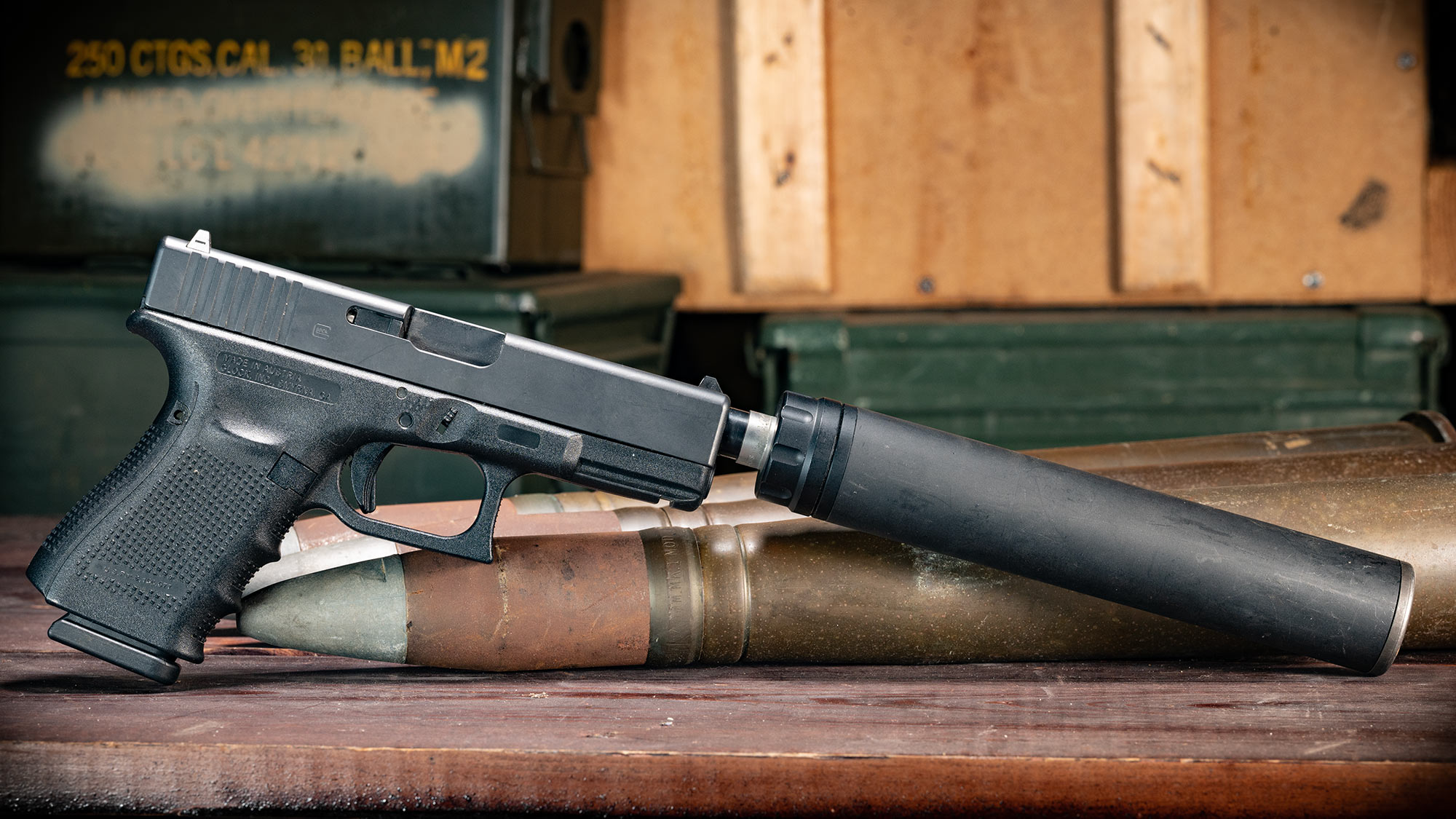
While increased velocity is a good thing when it comes to shooting distant targets or potential threats, lower velocity is better when shooting a suppressed weapon. Why? Because supersonic rounds create a miniature sonic boom when they break the sound barrier.
Yes, there are subsonic 9mm loads on the market, but even with those having a shorter barrel and reduced velocity means the round will be quieter when suppressed (and more likely to stay subsonic).
This is why a suppressed MP5K is quieter than a full-sized MP5 or a 16-inch barrel 9mm carbine. The other advantage of the shorter barrel is that it keeps the entire gun more compact and maneuverable in confined spaces. If you decide to dedicate a suppressed pistol to home defense, ideally, it is small enough to be easily used inside your home. If you’re running a six-inch barrelled pistol with a six-to-eight-inch suppressor on the end, you have a much larger pistol that can be awkward to use in tight areas.
The shorter barrel of the Glock 19 keeps the entire weapon system easier to handle and better balanced.
Verdict
Ultimately, if a shooter wants a first handgun that will be accurate enough to hit potential threats at self-defense ranges, have soft recoil, and be totally reliable, either gun will work fine. If they intend to conceal carry the pistol, they should buy the Glock 19. If they live in a state or region where concealed carry is prohibited or they simply don’t have an interest in it, the Glock 17 is the better option.
Regardless of which handgun a shooter chooses, they’ll have a rock-solid pistol with top-notch reliability and a seemingly inexhaustible amount of aftermarket parts. Meaning that whichever gun they pick, they’ll be able to customize it to their preferences fully.