

The lowly single-shot rifle persists in a market of countless semi-automatics and manually operated firearms. Slower-firing and often limited in modularity, why would anyone buy such a gun? There are actually more reasons than you think. So, let’s look in-depth at modern single-shot rifles and discover why people love them.
What are Single Shot Rifles?
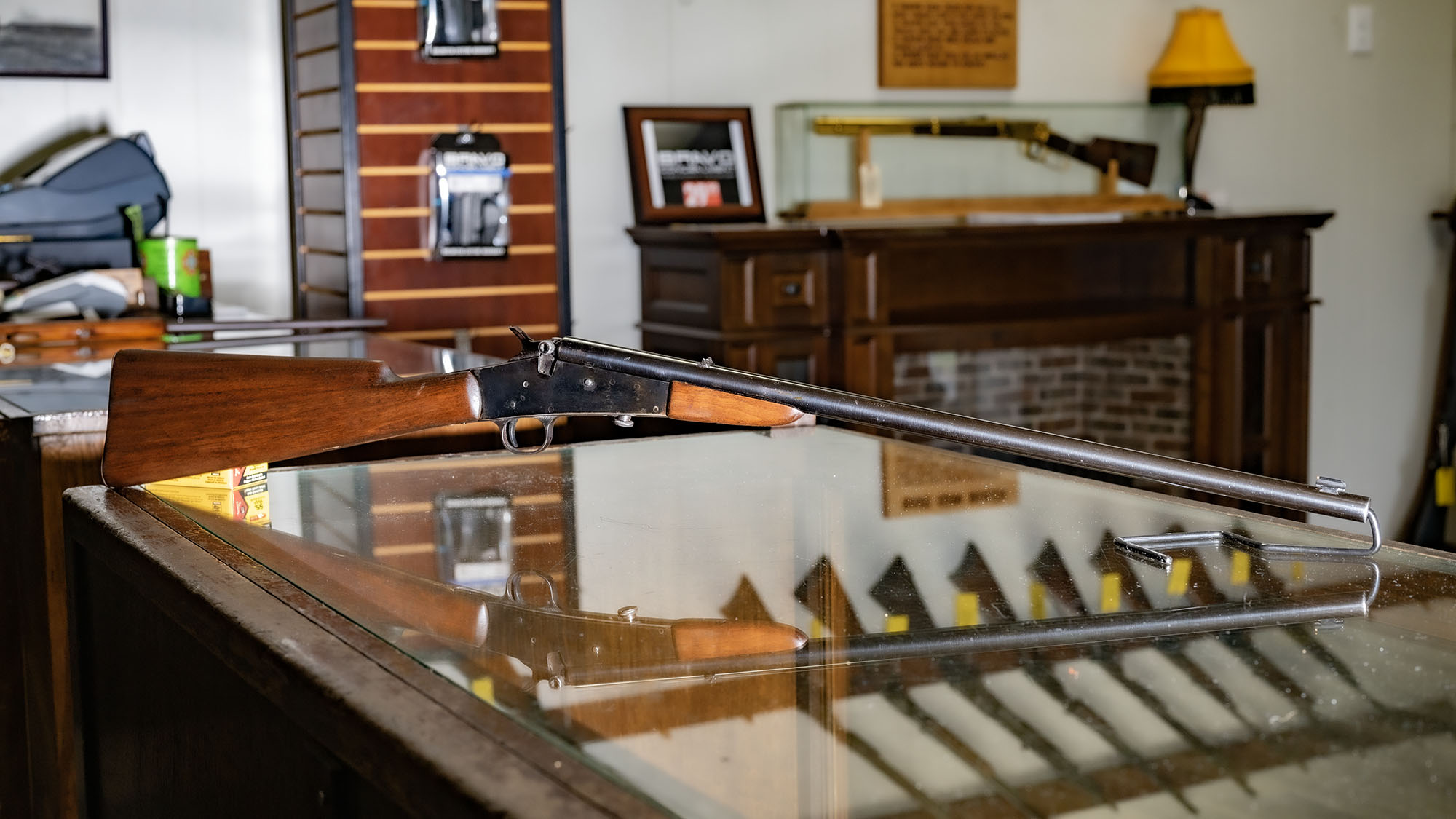
In the simplest terms, a single-shot rifle is one that not only fires a single round at a time but can also only hold one round.
Meaning the gun lacks a magazine of any kind. Historical examples include American Springfield Trapdoor rifles and British Martini-Henry rifles and carbines. At the time of their introduction, these guns represented a quantum leap in firearms technology. Previous guns were either muzzle-loaded or breech-loaded, but all used paper cartridges. These single-shot rifles allowed soldiers to rapidly reload after each shot and cut reloading time by 90 percent!
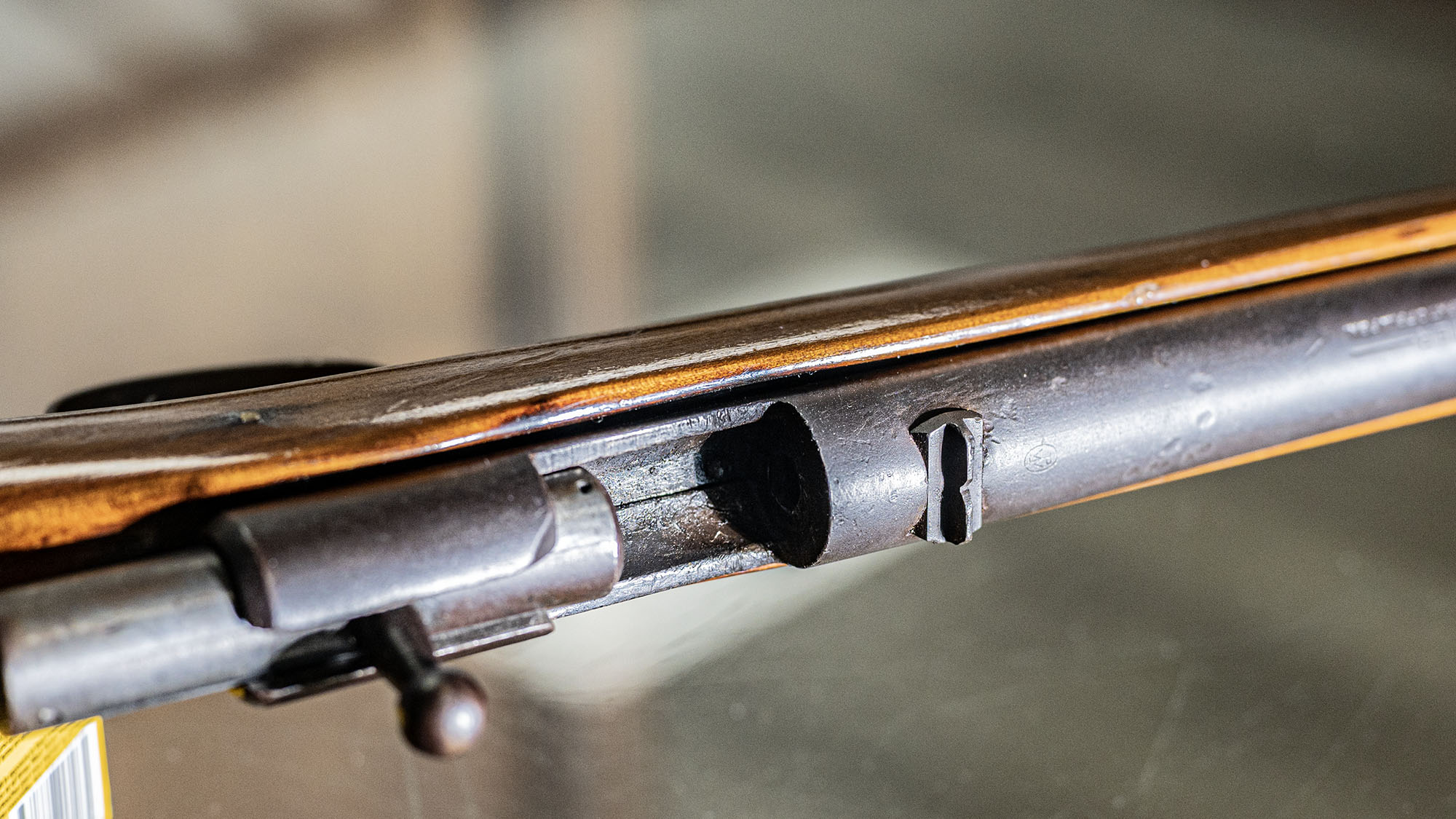
To operate a single-shot rifle, a shooter opens the action or breech and then inserts a cartridge into the chamber. Then, they close the action and prime the hammer. Some designs automatically cock the hammer, while others require the user to do so manually.
Once the action is closed and the hammer primed, a shooter aims the rifle and pulls the trigger to launch their projectile at a given target. To reload, the action is opened, and the spent casing is extracted. Some designs - especially high-end sporting shotguns - eject the spent casing automatically when the action is opened.
It sounds straightforward but also slower than modern repeating weapons. And truth be told, it is. So why would a shooter buy one today?
What are Single Shot Rifles Used For?
Single-shot rifles can be used for almost anything a semi-automatic or repeating rifle can be used for. I wouldn't recommend them for three-gun matches, as you would have a very tough time being competitive under the clock. But they are excellent choices for hunting, target shooting, or teaching a new shooter the fundamentals of marksmanship. This is chiefly due to their simplistic design.
Single-shot rifles are incredibly robust and reliable because they have fewer moving parts than semi-automatic or repeating guns like lever-action or bolt-action rifles. They're also extremely safe since the rifle's condition can be effortlessly checked by simply opening the gun and visually checking if the chamber is clear.
Another benefit of single-shot rifles is their overall light weight and superb balance. Because they lack both a heavy bolt and mechanical components needed for repeating firearms, they tend to be substantially lighter than semi-automatic and manually operated guns. This makes them better for carrying in the woods for hunting and teaching new shooters to aim since they won't become fatigued as quickly.
Additionally, single-shot rifles make fantastic suppressor hosts for several reasons. In terms of performance, they maximize the efficacy of a given suppressor since they direct all hot expanding gasses into the suppressor instead of either siphoning or leaking gas into the action. This equates to a much quieter report. They're also great suppressor hosts because they aren't dependent on the recoil impulse or siphoned gas to operate the action.
Why does that matter?
It matters because suppressors increase back pressure, increasing bolt velocity. If an auto-loading firearm cycles too quickly, it will cause malfunctions. Since the shooter operates single-shot rifles, they are flawlessly reliable with a suppressor.
One of the most significant advantages of single-shot rifles is their price. Because they're so mechanically simple, they can be manufactured easily. Thus, these guns are often found for less than $250, except originals and reproductions of classic single-shot rifles like the Trap Door or the Martini-Henry.
Another aspect of these guns that makes them affordable is their lack of expensive detachable magazines. Since they don't feed from a magazine, there's no need to purchase any to keep the gun fed. This also increases the gun's reliability since magazines are the lynchpin for reliability in firearms today. Don't believe me? Buy one of the countless discount off-brand magazines for your favorite AR-15 built by long-since bankrupt companies. Sure, they're affordable, but even the ultra-reliable AK-47 is little more than an awkward bolt-action with a sub-par magazine. Thankfully, with single-shot rifles, this isn't an issue.
Are Single-Shot Rifles Still Made Today?
Absolutely! Many companies today make single-shot rifles to offer shooters a simple, reliable firearm and a functional reproduction of a classic design. Modern repeating arms makers like Henry Repeating Arms make single-shot rifles and shotguns to provide customers with a quality product at an affordable price.
Rifles like Henry’s Single Shot Youth Rifle in .243 Win are perfect for a new shooter or deer hunter who wants an affordable, rugged rifle capable of hitting and ethically harvesting medium game out to 250 yards.
By far, the most prolific single-shot weapons in existence are single-shot shotguns. While not rifles, their ability to fire slugs allows them to serve a very similar role. Unlike rifles of the same variety, single-shot shotguns can also be used safely to sport clays and hunt small game.
Game like squirrels, pheasants, and ducks are commonly found in flight or up in trees where firing a rifle round is unsafe due to overpenetration and the possibility of a miss. Shotguns used in this role (provided a shooter isn’t using slugs) are only dangerous to around 50 to 75 yards, whereas a full-powered rifle round can travel a mile and still harm bystanders.

Common Single Shot Rounds
One of the best aspects of single-shot rifles is the wide range of calibers they come in. Especially modular single-shot designs like those from Thompson Contender. Those guns can swap barrels, allowing a shooter to have a rifle chambered in both the soft-shooting .223 Rem and the hard-hitting old-school .30-06 round. That said, some calibers are far more common than others in the realm of single-shot rifles.
The most common chambering for single-shot rifles is the ultra-prolific .22lr rimfire round. This is due to both the rounds' affordability and the relatively inexpensive machining costs of building simple guns in the low-powered round. Another reason these are common is the long history of affordable single-shot training rifles built in the caliber over the last 100 years in America.
Rifles like the old Winchester Model 67A were once available in every major department store and hardware store in America. These breech-loaded, bolt-action rifles were designed to mimic the size and operation of a full-powered hunting rifle. As such, they made great training rifles for new or younger shooters.
Another popular round for single-shot rifles in modern times is the .243 Win cartridge. For smaller or inexperienced shooters, this caliber is fantastic for hunting deer without developing bad habits like flinching. This is because, despite its impressive terminal ballistic efficacy, .243 Win has very light felt recoil. The cartridge accomplishes this by depending more on velocity than projectile weight. This means the recoil impulse isn’t punishing even in lightweight single-shot rifles.
For more tactical shooters, .300 Blackout has become a very popular caliber for single-shot rifles. Derived from the old Soviet 7.62x39mm, .300blk is the perfect choice for suppressor enthusiasts who want a quiet yet effective round for their AR-15 or single-shot rifle. Its versatility and suppressed performance make it work so well in single-shot rifles.
When a shooter utilizes supersonic rounds, they have a great tool for home defense as well as hunting deer within 150 yards. But where a single-shot rifle in .300blk really shines is when equipped with a sound suppressor and firing subsonic ammunition like 220gr rounds from AmmoInc or Sellier and Bellot. This combination gets the rifle round about as close to “Hollywood-quiet” as possible. And without any moving components other than the hammer, this combination will be as quiet as possible. So much so that when firing at a steel plate at 100 yards, the impact is vastly louder than the shot itself!
If single-shot rifles are so awesome, why doesn’t everyone use them?
Single-Shot Rifle Pros & Cons
Although single-shot rifles are incredibly versatile and flawlessly reliable, they do have some downsides, namely, the rate of fire. Even all-star shooters like Jerry Miculek can’t operate a single-shot rifle fast enough to be competitive in shooting sports. Indeed, a standard AR-15 will do circles around even the finest single-shot rifle when it comes to speed. This is because auto-loaders and repeaters simply require a shooter to perform fewer actions to get follow-up shots down range.
This makes sense historically. After all, there’s a reason militaries have fielded semi- and fully-automatic weapons over single-shot rifles on the battlefield for a century. When speed counts, auto-loading and repeating firearms are superior.
This isn’t to say auto-loaders totally eclipse single-shot rifles, but when speed is of the essence, they dominate. But when a shooter needs a 100% reliable firearm that is extremely cost-effective and requires vastly less maintenance and training to safely operate, single-shot rifles still reign supreme.